





On this page8 sections
- What an apostille is and when Portugal asks for one
- Which documents does Portugal want apostilled?
- Apostille or consular legalisation: which route applies?
- How to get an apostille from the US
- How to get an apostille from the UK
- How to get an apostille from Canada
- Getting an apostille in Portugal for a Portuguese document
- Timing and mistakes that cost people weeks
What an apostille is and when Portugal asks for one
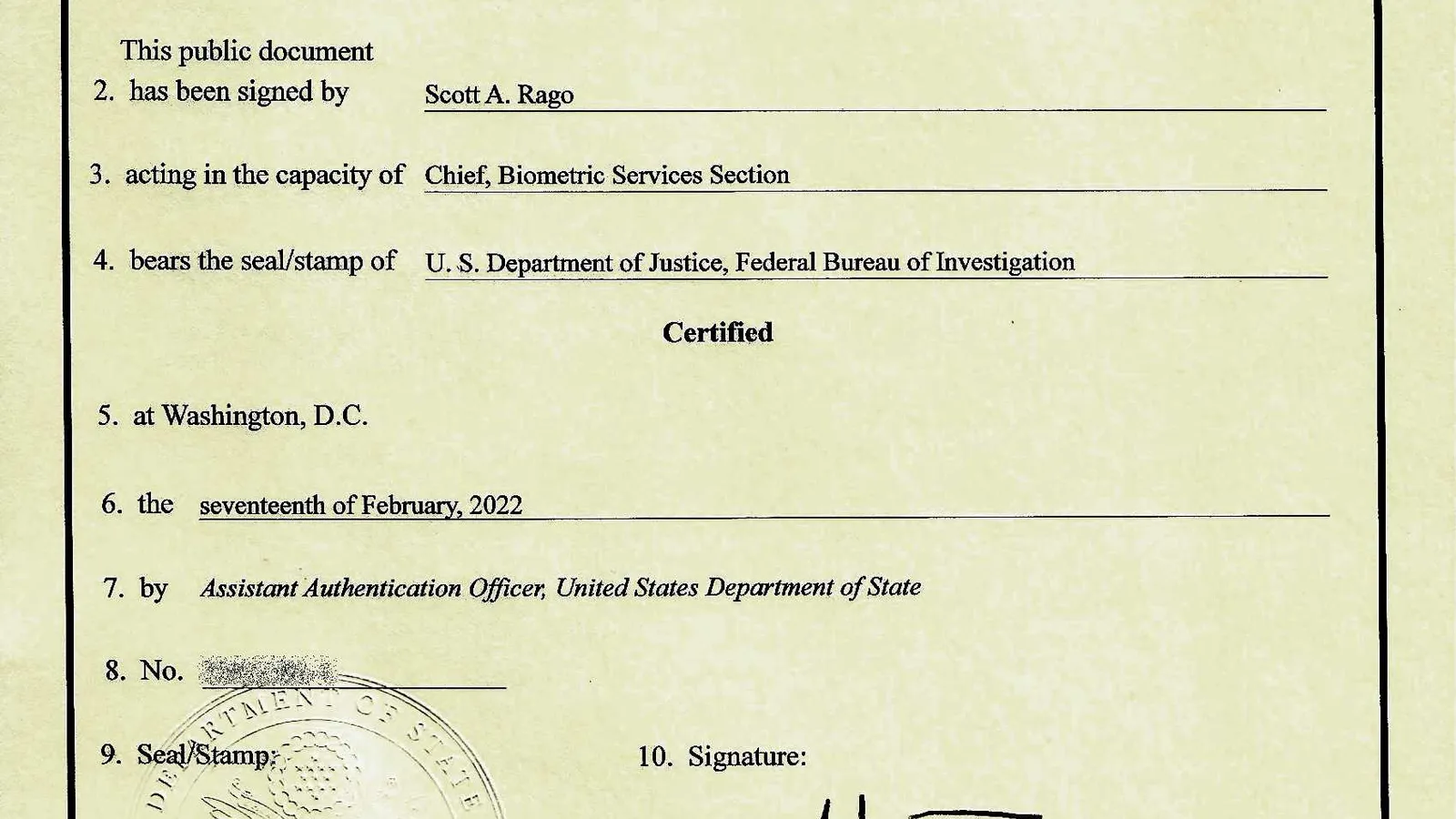
An apostille is a certificate, issued by the country that produced a document, that lets another member of the Hague Apostille Convention accept it without further stamps. Portugal has been a party since 4 February 1969, so documents from fellow members need an apostille instead of a chain of consular legalisations, according to the HCCH status table.
Most newcomers meet it through one document: the criminal record certificate for a residency visa. Portugal’s visa portal lists it among the general documents, issued by the authority of your country of nationality or of the country where you have lived for over a year, with the Hague apostille “or legalised”. Applicants under sixteen are exempt. The portal also says the consular post may request additional documents at its discretion, so read your own consulate’s checklist before you pay for anything.
An apostille confirms where a document came from. It does not vouch for what the document says.
Which documents does Portugal want apostilled?
The only one I can source firmly is the criminal record certificate for the visa. Everything else depends on which Portuguese office is asking, so treat the rest of this section as “ask first”.
For the visa, two consulates show how the wording varies. The Newark consulate (jurisdiction: New Jersey, Pennsylvania, Delaware) wants a certificate from the competent federal authority, issued within 3 months before your appointment, with an apostille from the competent federal authority. The Toronto consulate’s D7 checklist accepts an RCMP fingerprinted criminal record or a local police background check, with the Hague apostille “if applicable” or legalised, and it exempts applicants under sixteen. If you are building a D7 file, our D7 visa guide covers the rest of the paperwork.
Other documents come up when a service asks for them:
- Birth and marriage certificates. Family-related applications and civil registry steps may ask for these. Ask the office which certificates it wants and whether they need an apostille.
- University diplomas. Degree recognition is its own process, and the recognising body sets the document rules. See our guide to foreign diploma recognition in Portugal and ask what it expects before you send a diploma off.
- Anything else. If a checklist says “legalised” or “apostilled” and you are unsure which route your document takes, ask the office that issued the checklist.
Do not apostille a stack of documents on a hunch. Each one costs money and weeks.
Apostille or consular legalisation: which route applies?
If the country that issued your document is a party to the Convention, you get an apostille. If it is not, the document goes through legalisation, which the visa portal also accepts. The HCCH table lists 130 contracting parties.
The three countries most of my readers come from are all in. The United States joined on 15 October 1981, the United Kingdom on 24 January 1965 and Canada on 11 January 2024. Canada is the recent one, so older guides may describe a different process for Canadian documents. If your country is not on the HCCH table, ask your consulate to explain the legalisation steps for it.
How to get an apostille from the US
For a criminal record, you need two steps: an FBI check with authentication, then the State Department apostille. The cost is $18 plus $20 per document, before postage and fingerprinting.
Step 1: the FBI check. The FBI’s Identity History Summary FAQ gives the fee as $18, the same by mail or electronically, with $18 for each additional sealed copy. The FBI authenticates results by placing its seal and a division official’s signature on them at the time of submission, and it does not accept requests to authenticate results already processed. Ask for authentication when you submit, not afterwards.
If you are already in Portugal, the US Embassy in Lisbon’s criminal background check page says the US COOP office at the embassy takes fingerprints on form FD-258 for €63, with two cards provided. The embassy cannot apostille anything. The authenticated FBI record goes to Washington for that.
Step 2: the State Department apostille. The Office of Authentications charges $20 per document (not per page), nonrefundable, by check or money order payable to the U.S. Department of State. Send:
- the original document
- Form DS-4194, with Portugal listed as the country of use
- a self-addressed prepaid return envelope
Mail goes to Office of Authentications, U.S. Department of State, 44132 Mercure Circle, PO Box 1206, Sterling, VA 20166-1206. Check the page for the current address before you post. Mail-in requests are processed within about 5 weeks of receipt. A walk-in option exists for travel 2 to 3 weeks away, processed within 7 business days.
Documents issued by a US state, such as a state birth certificate or a state police check, generally go to that state’s Secretary of State instead of the federal office. Look up your state’s own apostille page for fees and turnaround. If you are planning the whole move, our guide to moving to Portugal from the USA puts this step in order.
How to get an apostille from the UK
The UK’s Foreign, Commonwealth and Development Office (FCDO) charges £45 per document on paper, usually up to 25 working days, or £35 as an e-Apostille, up to 2 working days, as listed on GOV.UK. Postage is extra on the paper route.
The catch is which documents can use the cheaper digital route. E-Apostilles are not available for GRO certificates (birth, death, marriage), ACRO police certificates, DBS certificates, Scottish or Northern Ireland disclosure certificates, or fingerprint certificates. If your criminal record is one of those, plan for the paper timeline.
Eligible documents include court documents, public registry documents and documents signed by a UK notary or solicitor. The FCDO also offers Next-Day (£40) and Restricted Urgent (£100) services, but only to registered businesses. Fees are not refunded if a document cannot be legalised, so confirm it qualifies before you post it.
Which UK certificate your consulate wants is a question for the consulate. Ask before you order. Our guide to moving to Portugal from the UK covers the wider move.
How to get an apostille from Canada
Canadian apostilles have been available since 11 January 2024, from Global Affairs Canada or, for some documents, a provincial authority. As of October 2026, Global Affairs Canada says it is processing requests received 25 business days ago, plus 5 to 10 business days of mailing within Canada, and there is no expedited service.
Some provinces issue apostilles for documents from their own jurisdiction. Use the Global Affairs search tool to find the right authority for your document. The document must be on paper with an original recognised signature. You do not need a third-party company, and I would skip one. Check the page for the current fee.
That is more than five weeks before the paper is back in your hands. For the visa, Toronto’s checklist accepts an RCMP fingerprinted record or a local police check, so decide which one you are ordering before the clock starts. Our guide to moving to Portugal from Canada has the wider checklist.
Getting an apostille in Portugal for a Portuguese document
The Procuradoria-Geral da República (PGR) issues apostilles on Portuguese public documents for €10.20 each, waived on proof of economic insufficiency. Its Serviço de Apostilas FAQ explains who can apply and where.
Eligible documents include public acts from ministries, courts, registries (conservatórias), notaries, public schools, câmaras and juntas de freguesia. Recognitions or certifications by lawyers and solicitadores also qualify. Documents from private schools must first go through DGEstE (basic and secondary) or DGES (higher education). Documents made by diplomatic or consular agents, and administrative documents tied to commercial or customs operations, are not eligible.
For digitally signed documents, request an electronic apostille through the e-apostille platform at apostila.ministeriopublico.pt.
In person, the offices are:
- Lisbon (Campus de Justiça, by prior booking only)
- Porto (Palácio da Justiça, Campo Mártires da Pátria)
- Coimbra (Rua da Sofia, Tuesday to Friday)
- Guimarães (Largo João Franco 248)
- Évora (Palácio Barahona)
- Funchal and Ponta Delgada
Hours are typically 09:30 to 12:30 and 13:30 to 16:00. Lisbon accepts acts from anywhere in Portugal, while the other offices mainly handle their own judicial district. If you live in the north, Porto or Guimarães saves a trip.
By post, a PGR notice dated 6 September 2023 says to send the request form from the FAQ page, the original document, a copy of your ID and proof of payment of €10.20 to Procuradoria-Geral da República, Rua da Escola Politécnica 140, 1269-269 Lisboa. Payment can be by cheque to IGCP, postal order or bank transfer. Documents come back by ordinary post, or by registered post if you enclose a stamped addressed envelope. The same notice says walk-in service without booking has been suspended in Lisbon since 7 September 2023 while appointments continue, so confirm the current arrangement before you travel.
Timing and mistakes that cost people weeks
Work backwards from your appointment date, and order the criminal record last. Newark asks for a certificate issued within 3 months before the appointment. A Canadian apostille that takes five-plus weeks, or a US one at about 5 weeks by mail, can eat much of that window. Ask your consulate whether the 3 months count from the certificate’s issue date or from the apostille.
An apostille does not extend a certificate’s life. It attaches to a document that is already dated, so a stale record stays stale.
A few other traps:
- Authentication in the US. The FBI will not authenticate a result after the fact, so ask at submission.
- Country of use. Form DS-4194 must list the country where the document will be used, which is Portugal.
- Wrong route. UK e-Apostilles are unavailable for several common certificates, so check eligibility first.
- Translations. If a document is not in Portuguese, ask the consulate who may certify the translation and whether it should happen before or after the apostille.
- Extra copies. Each additional sealed FBI copy is $18, and the State Department charges $20 for each document it apostilles, so count before you order.
If you are also thinking about nationality later, the paperwork stage is covered in our guide to Portuguese citizenship by residency. Ask the registry which of your documents it will want apostilled before you order extra copies.
Frequently asked questions
Does my FBI background check need an apostille for a Portuguese visa?
Yes, if you apply through a consulate that asks for it. Portugal's visa portal lists a criminal record certificate with the Hague apostille, and the Newark consulate asks for one from the competent federal authority. In practice that means $18 for the FBI check, authenticated when you submit it, plus $20 for the State Department apostille.
Can the US Embassy in Lisbon apostille my documents?
No. The embassy says US embassies and consulates are not legally empowered to authenticate or legalise criminal background checks or other state-issued public documents. It can collect fingerprints on form FD-258 for €63, but the authenticated FBI record still goes to the State Department in Washington for the apostille.
How much does a UK apostille cost, and can I get an e-Apostille?
The FCDO charges £45 per document on paper, usually up to 25 working days, and £35 for an e-Apostille, up to 2 working days. E-Apostilles are not available for GRO birth, death or marriage certificates, ACRO or DBS certificates, or Scottish and Northern Irish disclosure certificates, so those take the paper route.
How long does a Canadian apostille take?
As of October 2026, Global Affairs Canada says it is processing requests received 25 business days ago, plus 5 to 10 business days of mailing within Canada. There is no expedited service. Some provinces issue apostilles for their own documents, so check the Global Affairs search tool before you post anything.
How much is an apostille in Portugal itself?
The Procuradoria-Geral da República charges €10.20 per apostille, and the fee is waived on proof of economic insufficiency. You can apply in person at offices such as Porto or Guimarães, by post to Lisbon, or online through the e-apostille platform if the document is digitally signed.
Sources
This guide cites the following official sources. We link directly so you can verify every claim yourself.
- Hcchhcch.net
- Ministério dos Negócios Estrangeiros — Vistosvistos.mne.gov.pt
- Newarknewark.consuladoportugal.mne.gov.pt
- Torontotoronto.consuladoportugal.mne.gov.pt
- Traveltravel.state.gov
- FBIfbi.gov
- U.S. Embassy Portugalpt.usembassy.gov
- UK Governmentgov.uk
- Internationalinternational.canada.ca
- Ministeriopublicoministeriopublico.pt
- Comarca Bejacomarca-beja.ministeriopublico.pt
Some links on this page are affiliate links. If you buy through them, we may earn a commission at no extra cost to you. How we research and update our guides