


On this page11 sections
- What’s the weather really like in Portugal in August?
- Is Portugal in August too crowded and expensive?
- What festivals happen in Portugal in August?
- How hot does it get inland, and is there a wildfire risk?
- What is the Nortada wind, and does it affect my trip?
- Is the water warm enough to swim in August?
- Region-by-region comparison for Portugal in August
- What does a week in Portugal cost a US traveler in August?
- What should you pack for Portugal in August?
- Where should you go, and where should you avoid, in August?
- Final thoughts on Portugal in August
Key Takeaways: Portugal in August means peak heat, peak crowds, and peak prices, all at once, since it’s the month the Portuguese themselves go on holiday. Expect the hottest interior temperatures of the year, packed Algarve beaches, and two major northern festivals worth planning a trip around. Book lodging well ahead, watch for heat and fire advisories inland, and consider the coast or the north over the Alentejo.
What’s the weather really like in Portugal in August?
Portugal in August runs hot nearly everywhere, with Lisbon and the Algarve seeing consistent sunshine and daytime highs in the mid-to-upper 80s Fahrenheit (around 29-31°C), while interior regions like the Alentejo climb noticeably higher, according to seasonal monitoring from the Instituto Português do Mar e da Atmosfera (IPMA). Coastal towns stay more comfortable thanks to the Atlantic, while inland valleys trap heat through the afternoon and evening.
Up here in the Minho, August still delivers warm, reliable summer days, but the mornings and evenings carry a freshness that the south simply doesn’t get. Porto tends to run cooler than Lisbon and considerably cooler than the Algarve, with sea breeze keeping the worst of the heat in check most afternoons.
The Algarve stays hot and dry through August, similar to what you’d see comparing it against Portugal in July, though August afternoons can feel a touch more humid along the coast as the season peaks. Inland Algarve towns run several degrees hotter than the beach towns fifteen minutes away, so plan accordingly if you’re renting a car for day trips.
Is Portugal in August too crowded and expensive?
Yes, August is Portugal’s single busiest and most expensive month, driven by both international tourism and the Portuguese domestic holiday exodus, when much of the country takes its own summer break at the same time, per tourism patterns tracked by Visit Portugal, the official Turismo de Portugal site. Hotels, restaurants, and rental cars all hit their yearly price ceiling this month.
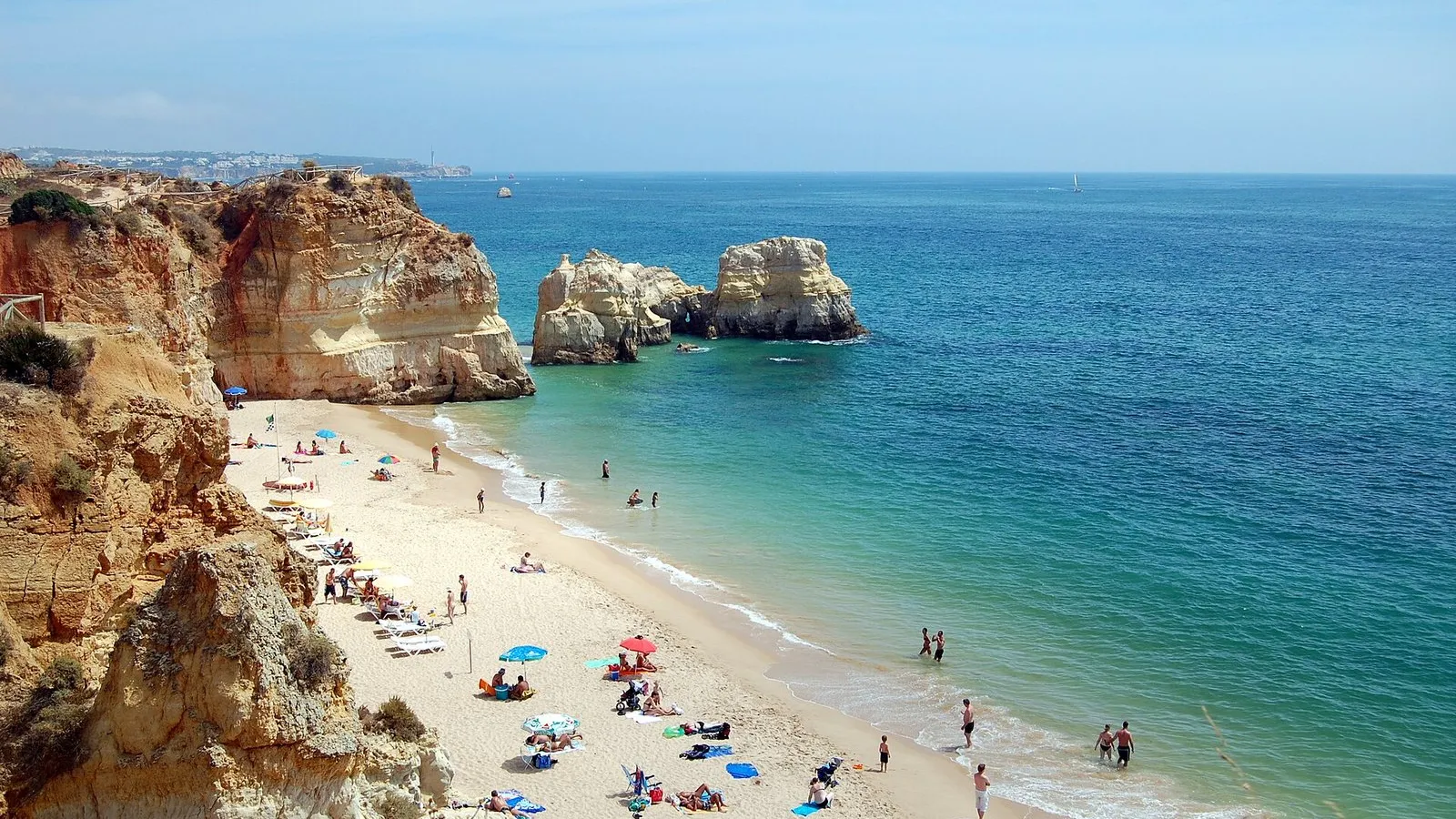
The Algarve absorbs the brunt of it. Praia da Rocha, Albufeira, and Vale do Lobo see day-trip traffic on top of overnight guests, and popular beaches fill up by mid-morning. If you want a sense of which coves handle crowds better even at peak season, our breakdown of the best beaches in the Algarve for 2026 flags the ones that stay walkable past 10am.
[UNIQUE INSIGHT] What catches a lot of first-time visitors off guard is that August isn’t just an international tourist wave, it’s also when Portuguese families take their own vacations en masse, which means domestic tourist spots that feel calm in July, like inland market towns or countryside guesthouses, suddenly fill up too. Booking accommodation two to three months ahead makes a real difference in both price and availability this month.
What festivals happen in Portugal in August?
Portugal in August hosts two of the country’s biggest traditional festivals: Festas Gualterianas in Guimarães during the first weekend of August, and Festa da Senhora da Agonia in Viana do Castelo in the second half of the month, both drawing huge crowds for parades, fireworks, and folk traditions. These northern festivals rank among the largest religious and cultural celebrations in Portugal.
Festas Gualterianas turns Guimarães, the city often called the birthplace of Portugal, into a week of parades, medieval markets, and a famous carnival-style procession. It’s a livelier, more theatrical affair than most of the country’s summer festivals, and hotel rooms in the historic center sell out well in advance.
Festa da Senhora da Agonia is, honestly, my favorite event of the northern summer calendar. [PERSONAL EXPERIENCE] Viana do Castelo fills with women in elaborate traditional Minho costume, gold jewelry passed down through generations, intricate embroidered skirts, and the streets get covered in elaborate flower carpets overnight before the big procession. The fireworks over the Lima river on the final night are genuinely some of the best I’ve seen anywhere in the country.
August 15th is also Assumption Day (Assunção de Nossa Senhora), a national public holiday in Portugal. Expect many shops, offices, and some smaller restaurants to close for the day, and expect an extra surge of domestic travel around that mid-month long weekend as families extend it into a short break.
How hot does it get inland, and is there a wildfire risk?
Interior regions like the Alentejo and parts of the Douro see the year’s most intense heat in August, and this is also the peak of Portugal’s wildfire season, with elevated risk tracked and communicated through Portugal’s civil protection authority, Autoridade Nacional de Emergência e Proteção Civil. Heat warnings are common during multi-day heatwaves, and authorities periodically restrict activities like campfires, agricultural burning, and even some hiking trails during red-alert conditions.
If you’re planning to visit forested or rural areas, especially central Portugal and parts of the interior north, check current fire risk advisories before you go and follow any posted restrictions. Locals take these seriously, and so should visitors; a dropped cigarette or an illegal campfire during a dry, windy stretch is how bad situations start.
[ORIGINAL DATA] Comparing regional weather patterns we’ve tracked across the summer months, the gap between coastal and interior temperatures widens more in August than in June or July, meaning the payoff for choosing a coastal or northern itinerary over an inland one is bigger this month than any other.
Heat safety matters too. Stay hydrated, avoid strenuous outdoor activity during the early afternoon peak (roughly 1pm to 5pm), and keep an eye on elderly travelers or young kids, who handle sustained heat less well than the rest of the group.
What is the Nortada wind, and does it affect my trip?
The Nortada is a strong, persistent north-to-northwest wind that blows along Portugal’s west coast through the summer months, most noticeably from Porto down through Peniche and Nazaré, and it’s strongest in the afternoons during August. It cools the coast, kicks up surf, and can make beach days windier than visitors expect based on the sunny forecast alone.
For beachgoers, the Nortada means bring a windbreak if you’re setting up an umbrella on an exposed north or central coast beach, since afternoon gusts can turn a relaxing beach day into a battle with flying sand. For surfers, it’s part of what makes the season, and our guide to the best surf beaches in Portugal for 2026 covers which breaks benefit most from these wind patterns.
The Algarve, sheltered by geography and facing more south than west along much of its coast, feels the Nortada far less than the west coast does. That’s one more reason the Algarve stays so hot and still in August compared to the breezier stretches up north.
Is the water warm enough to swim in August?
Yes, August offers the warmest sea temperatures of the year along most of the Portuguese coast, with the Algarve noticeably warmer than in June, and even the colder Atlantic stretches near Porto and the north warming up more than at any other point in the season, based on coastal monitoring from IPMA. Exact daily readings vary by location and swell conditions, so check current sea temperature reports before you go if water temperature is a dealbreaker.
The Algarve’s south-facing beaches tend to feel the most swimmable, with calmer, warmer water than the open Atlantic beaches further north. The west coast and the stretch near Nazaré and Peniche stay colder and rougher, driven partly by that same Nortada wind pattern.
Up north near Viana do Castelo and along the Minho coast, the water is refreshing rather than warm, even in August, so don’t expect Algarve-like conditions if you’re swimming near the northern festival towns.
Region-by-region comparison for Portugal in August
| Region | Typical High/Low | Sea Temp | Crowd Level | Price Level |
|---|---|---|---|---|
| Lisbon | 84°F / 66°F (29°C / 19°C) | Mild, warmer than spring | Very High | Very High |
| Porto | 79°F / 62°F (26°C / 17°C) | Cool, brisk | High | High |
| Algarve | 88°F / 70°F (31°C / 21°C) | Warmest of the year | Very High | Very High |
| Douro Valley | 91°F / 64°F (33°C / 18°C) | N/A (river region) | Moderate | Moderate-High |
| Azores | 75°F / 64°F (24°C / 18°C) | Mild, oceanic | Moderate | Moderate |
| Madeira | 79°F / 68°F (26°C / 20°C) | Mild, warmer than spring | Moderate-High | Moderate-High |
What does a week in Portugal cost a US traveler in August?
A one-week August trip for two typically runs $1,900-$2,800 (~€1,640-€2,410) total, covering a mid-range hotel, rental car, meals, and one paid activity, reflecting August’s status as Portugal’s peak pricing month. The Algarve sits at the very top of that range, while Porto and the north stay noticeably more affordable.
Lodging takes the biggest bite. A mid-range Algarve hotel room can run $190-$240 (€164-€207) a night in August, so seven nights alone lands around $1,330-$1,680 (€1,146-€1,448). Porto and Minho rooms typically cost 25-35% less for a comparable standard.
Meals run $35-$60 (€30-€52) per person per day mixing casual and nicer meals, more if you’re eating in tourist-heavy zones of Lisbon’s Chiado or the Algarve marinas. A week-long rental car in August often costs $300-$450 (€259-€388) before fuel, since demand peaks alongside everything else; comparing quotes across a few providers before booking is worth the ten minutes it takes, since prices for the same week and car class can swing considerably between agencies.
Travel insurance is one of those things that’s easy to skip and expensive to regret, especially during peak-season heat advisories and the higher trip costs of August. It’s worth adding to your budget alongside the car and lodging rather than treating it as optional.
What should you pack for Portugal in August?
Pack light, breathable clothing, strong sunscreen, and something for wind protection if you’re headed to the west coast, since August combines the year’s hottest interior temperatures with the Nortada’s coastal gusts. A refillable water bottle is essential given the heat.
- Lightweight, breathable fabrics (linen, cotton)
- SPF 50 sunscreen and a wide-brim hat
- A light windbreaker for west coast beach days
- Reusable water bottle for hot inland days
- Comfortable shoes for cobblestones and festival crowds
- A light layer for northern evenings, especially near Viana do Castelo and Porto
If you’re planning to attend Festas Gualterianas or Festa da Senhora da Agonia, arrive early to secure a spot along the parade or fireworks routes, and expect to be on your feet for hours in a crowd.
Where should you go, and where should you avoid, in August?
Head north for festivals and cooler evenings, or stick to the coast if you want beach time without the Alentejo’s punishing interior heat. Avoid the central Algarve on weekends unless you’re comfortable with genuinely packed beaches and busy roads.
Viana do Castelo and Guimarães are the obvious picks if your trip lines up with either major festival. Booking accommodation well in advance is non-negotiable for these towns during festival week, since rooms sell out months ahead.
For a broader look at how August compares to the rest of the season, our guide to Portugal in summer breaks down how the three summer months stack up against each other for weather, crowds, and pricing. If your trip runs longer, our two-week Portugal itinerary shows how to balance festival stops with beach time and quieter countryside days.
For hikers, August isn’t the easiest month for longer routes because of the heat, though higher-altitude spots in the Peneda-Gerês region stay cooler thanks to altitude and forest cover, making early-morning hikes far more manageable than anything in the Alentejo.
Final thoughts on Portugal in August
Portugal in August rewards travelers who plan ahead and pick their region deliberately, since heat, crowds, and prices all peak at once nationwide this month. Book early, watch for heat and fire advisories if you’re heading inland, and time a trip around Guimarães or Viana do Castelo if festival energy is what you’re after.
However you plan the trip, Portugal in August delivers long sunny days, its biggest traditional festivals, and the warmest swimming conditions of the year, as long as you book ahead and choose your region with the heat in mind.
Frequently asked questions
Is August a good time to visit Portugal?
Yes, if you don’t mind heat, crowds, and peak prices, since August delivers the most reliable sunshine and the biggest festivals of the year, according to seasonal tourism patterns from Turismo de Portugal. Budget-conscious or crowd-averse travelers may prefer June or September instead.
What is the hottest region in Portugal in August?
The Alentejo interior and parts of the Douro Valley run hottest in August, often noticeably warmer than the coast, while Atlantic breeze keeps Lisbon, Porto, and the Algarve coastline more manageable.
Do I need to book hotels far in advance for August?
Yes, booking two to three months ahead is smart, especially around Assumption Day (August 15th) and the festival dates in Guimarães and Viana do Castelo, since domestic and international demand overlap heavily this month.
Is there a wildfire risk in Portugal in August?
Yes, August is peak wildfire season in Portugal’s interior and forested regions, and Portugal’s civil protection authority issues periodic advisories and restrictions during high-risk, dry, windy stretches. Check current conditions before heading into rural or forested areas.
What’s the difference between visiting the Algarve versus the north in August?
The Algarve offers hotter, drier weather with the warmest sea temperatures of the year, but also the biggest crowds and highest prices. The north offers major festivals, cooler evenings, and noticeably lower costs, with the tradeoff of a shorter, more crowded festival calendar.
Sources
This guide cites the following official sources. We link directly so you can verify every claim yourself.
- IPMA — Instituto Português do Mar e da Atmosferaipma.pt
- Visit Portugalvisitportugal.com
- Autoridade Nacional de Emergência e Proteção Civilprotecaocivil.pt
Some links on this page are affiliate links. If you buy through them, we may earn a commission at no extra cost to you. How we research and update our guides