



On this page8 sections
- How does daycare work in Portugal?
- What is Creche Feliz and who qualifies?
- What does free creche cover, and what does it not?
- How much does private daycare cost?
- How do I find a creche and get a place?
- What documents and steps does a new family need?
- What happens at age 3: jardim de infância?
- Final thoughts
Key Takeaways: Daycare in Portugal is called creche and covers children from birth to 3. Under the Creche Feliz programme it is free for children born on or after 1 September 2021, in social-sector creches and in public or private creches that joined the scheme. Applications have been online through the Segurança Social portal since April 2026, so you need a NIF and a NISS first. From age 3, children move to pre-school, which is the next free step.
How does daycare work in Portugal?
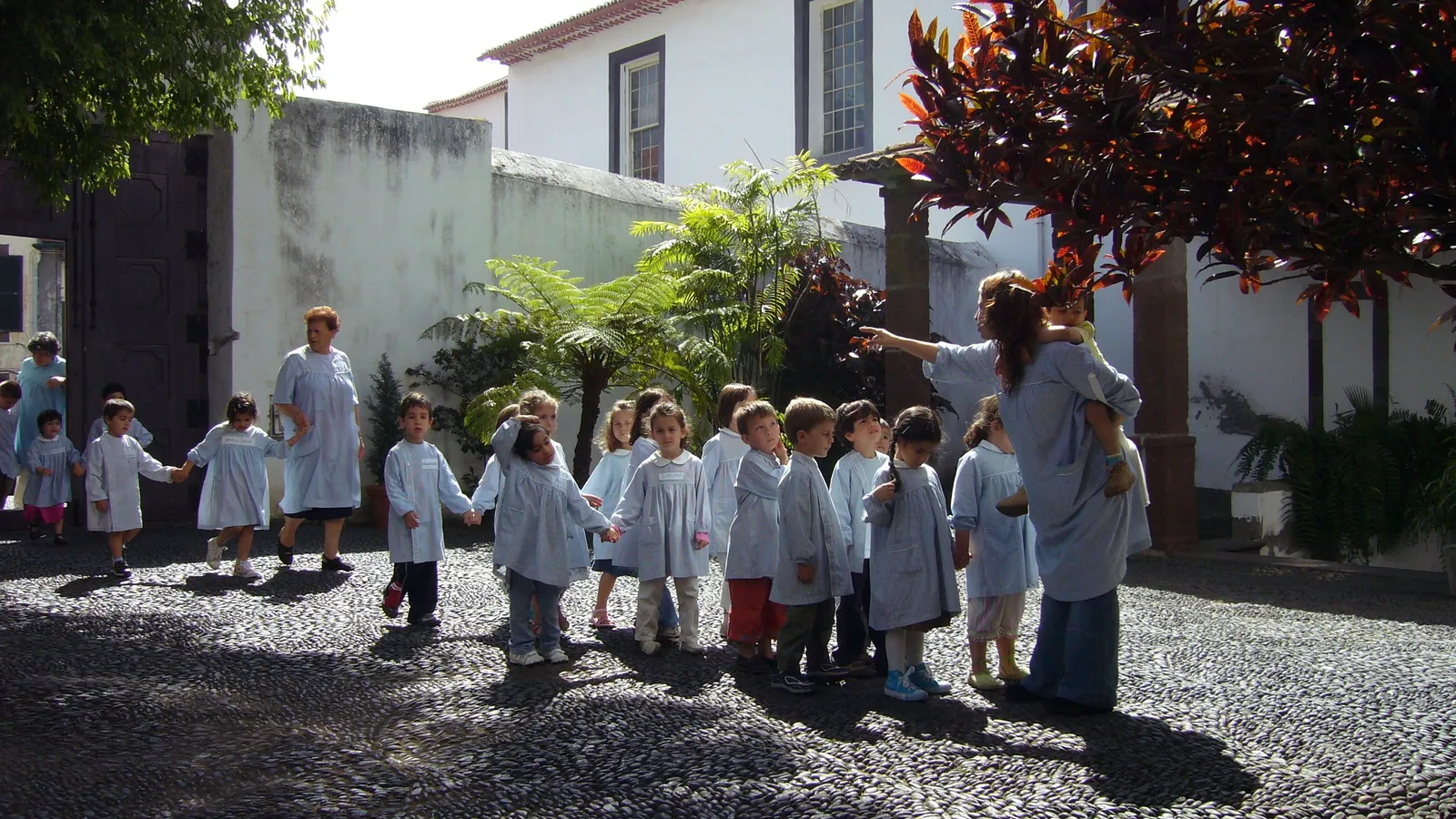
Daycare is a creche, a licensed facility for children from a few months old up to 3 years. After that, children move into pre-school (educação pré-escolar), which belongs to the education system.
Creches come from several kinds of operator. The Segurança Social (the Portuguese social security system) pays for places in the social and solidarity network, which includes IPSS (Instituições Particulares de Solidariedade Social, private non-profit social institutions) and the Misericórdias. There are also for-profit creches run by companies or sole traders, and some creches run by municipalities, public institutes or universities. Portaria 305/2022 describes the for-profit category as including companies, individual entrepreneurs and licensed social institutions without a cooperation agreement.
| Creche | Jardim de infância | Private creche outside the programme | |
|---|---|---|---|
| Ages | 0 to 3 | From 3 until primary school | 0 to 3 |
| Cost to parents | Free where covered by Creche Feliz | Education component free in the public network | Set by the creche |
| Who runs it | Social sector, public bodies, joined private creches | Public schools, plus private and solidarity options | For-profit or social entity not in the programme |
| How you apply | Segurança Social portal | Portal das Matrículas | Directly with the creche |
What is Creche Feliz and who qualifies?
Creche Feliz is the government programme that makes creche free. The core rule is simple: the child must have been born on or after 1 September 2021 and attend a creche that falls under the scheme.
The programme grew in steps. The Segurança Social has paid for creches and family creches in the social sector since September 2022, for children born from that date, according to Carta Social. From 1 January 2023, Portaria 305/2022 added for-profit creches that join a pool of participating creches (bolsa de creches aderentes). From 1 January 2024, free places were extended to creches run by local authorities, public universities, public institutes and other public entities, as gov.pt announced. Europe’s Eurydice network summarises the position since 2024: all children up to 3 who enter creche or continue into the second and third year have the right to free attendance, whatever the type of provider, as Eurydice reports.
Two details matter in practice.
- Older children. Children in the first and second brackets of the family contribution scale (escalões) keep free attendance at any age in the social sector, per Carta Social.
- Continuity. Once a child has a free place, the original rules say it continues in later school years at the same creche if the parents want it. Portaria 305/2022 spells this out for participating private creches.
What about foreign residents? The legal text we reviewed does not list nationality or a type of residence permit as a condition. The conditions are the birth date, the kind of creche, and attendance. You will still need a NISS to use the Segurança Social portal, and that is where your paperwork status matters in practice. If your case is unusual, such as a pending residence application, ask the Segurança Social before you count on a place.
What does free creche cover, and what does it not?
Free means the creche cannot bill you for its core service. Portaria 305/2022 lists what is included: the usual creche activities and services, meals including special diets with a medical prescription, registration and insurance costs, and extended hours and weekly extension.
It also lists what stays with you:
- optional activities outside the pedagogical project
- diapers
- uniforms and school clothing
- transport and other optional services
- a reservation deposit, which cannot exceed €25 (about $29) and is returned when the service contract is signed
Do not assume that every creche quotes these extras the same way. Ask for a written list before you sign, and keep a copy. If anything on that list looks like a charge for the core service, such as meals or extended hours, raise it with the creche and, if needed, with the Segurança Social, because those items are meant to be covered.
How much does private daycare cost?
Private daycare prices vary by city, creche and hours, and we did not find an official national figure, so we do not quote one here. If a creche is in the free programme and has a free place for your child, the core service costs you nothing. If it is not, you pay whatever it charges.
When you call a private creche, ask four things:
- Is it on the Creche Feliz list of participating creches?
- Does the monthly fee include meals, extended hours and insurance?
- What is billed on top: registration, diapers, activities, a deposit?
- What happens to the place if the creche leaves the programme?
For a wider budget picture, see our guide to the cost of living in Portugal.
How do I find a creche and get a place?
Search for vacancies on the Segurança Social portal and apply there. Since 9 April 2026, requests for free creche places are made online instead of in person, and TSF reports that the system works in real time with notifications when places open and no formal waiting list.
Reports on the new system say you can search by district, municipality and parish, and apply to up to three creches at once. The creche has a few days to validate the request. Families who registered in person before 9 April 2026 and whose admission was already confirmed by the creche do not have to apply again, according to Caixa Geral de Depósitos.
Social-sector creches rank applicants using admission and priority criteria set by ordinance. Those criteria include siblings who already attend a service run by the same entity, and single-parent or large families who live in the creche’s area, as the Child Guarantee office summarises. Ask each creche for its full ranking list before you apply.
A place is not guaranteed. Apply to your three realistic options, not your three favourites. If a creche is far from home, remember that living in the creche’s area can count in your favour. Check the commute at drop-off time, not on a map at midnight, because a free creche you cannot reach by 8:30 is not much use.
To explore what exists in your area first, use the Carta Social search. It maps social facilities from the public, solidarity and private for-profit networks, creches included.
Apply early. Places are scarce in many areas. If you know your move date, look at creches before you land and start the paperwork the moment you can.
What documents and steps does a new family need?
The order matters: tax number, then social security number, then the application.
- Get your NIF. Our guide to getting a NIF in Portugal covers it.
- Register with the Segurança Social and get your NISS. See social security in Portugal for expats.
- Sort your legal residence in Portugal. Lei 61/2025 ended the route of entering as a tourist and regularising later, so do not plan around that.
- Search for places on the portal and apply to up to three creches.
- Register your child with the health service once you have an address. Our page on SNS registration and the utente number shows how.
- Sign the contract with the creche, and confirm in writing what you will be charged on top.
CGD notes that families may need to prove a residence or workplace address if it differs from the registered one. Keep a rental contract or employer letter ready.
What happens at age 3: jardim de infância?
At age 3, free education continues in pre-school. Portugal’s jardim de infância is part of the national education network, and Lei 22/2025 of 4 March makes pre-school universal from the year a child turns 3, taking effect with the following State Budget, and Eurydice notes that its educational component is free.
For public pre-school you enrol through the Portal das Matrículas. A school notice for 2026/27 gives the dates: enrolment ran from 22 April to 1 June 2026. Expect a similar spring window each year. You log in with the Citizen Card, the Digital Mobile Key or Tax Authority credentials. Late enrolments are ranked after the others.
A few details from that notice:
- Children who turn 3 between 16 September and 31 December are enrolled only conditionally, depending on whether there is room.
- The child’s data includes an ID document number, NIF if they have one, the SNS utente number and the NISS.
- A parent can use proof of address and household composition to claim residence-based priority.
This is also the point to plan for primary school. Our guide to schools in Portugal for expats explains the next stage, and if you want English-language teaching, the international schools list compares the paid options.
Pre-school education may be free, but ask each school what it charges for meals or after-hours care. We did not verify those costs.
Final thoughts
For children born from September 2021, Portugal’s daycare system can cost nothing for the core service. The catch is access. You need your NIF and NISS in place, you need to apply online, and you may not get your first choice.
Start with the paperwork, shortlist creches near home or work, and apply to three. Check the extras in writing. And mark the spring window for pre-school enrolment, because the same system continues when your child turns 3.
Frequently asked questions
Is daycare free in Portugal?
It can be. Under the Creche Feliz programme, children born on or after 1 September 2021 attend free in social-sector creches and in public or private creches that joined the programme. The state pays the creche directly. Extras such as diapers, uniforms, transport and optional activities stay with the parents.
Can foreign families use Creche Feliz?
The rules we reviewed set conditions about the child's birth date, the type of creche and attendance, and do not list nationality. In practice you need a Social Security number (NISS) to use the portal, so sort your NIF and NISS first. If your situation is unusual, ask the Segurança Social office before relying on a place.
At what age does Portuguese daycare end?
Creche covers children up to 3. From age 3 children move to pre-school (jardim de infância), which is part of the education system. A child who turns 3 between 16 September and 31 December can be enrolled, but only conditionally, depending on whether there is room in the existing groups.
How do I find a creche with a free place?
Use the vacancy search on the Segurança Social portal, which covers social-sector and participating private creches. Since April 2026 requests are made online and you can pick up to three creches. The Carta Social website also maps every licensed creche, which helps you shortlist places near home or work.
When do I enrol in pre-school in Portugal?
Public pre-school enrolment runs through the Portal das Matrículas in spring. For 2026/27 the window was 22 April to 1 June 2026. Late enrolments are ranked after all on-time ones, so plan ahead. You log in with a Citizen Card, Digital Mobile Key or Tax Authority credentials.
Sources
This guide cites the following official sources. We link directly so you can verify every claim yourself.
- Sisscontentsisscontent.seg-social.pt
- Cartasocialcartasocial.pt
- Garantiainfanciagarantiainfancia.gov.pt
- Eurydiceeurydice.eacea.ec.europa.eu
- CGDcgd.pt
- TSFtsf.pt
- Governo de Portugalgov.pt
- Garantiainfanciagarantiainfancia.gov.pt
- Diário da Repúblicadiariodarepublica.pt
- Decodeco.proteste.pt
- Escolasescolas.aglousa.com
- Cartasocialcartasocial.pt
Some links on this page are affiliate links. If you buy through them, we may earn a commission at no extra cost to you. How we research and update our guides