



On this page12 sections
- How hot does Portugal actually get in July?
- Is July too crowded to enjoy Portugal?
- How much more expensive is Portugal in July?
- What festivals happen in Portugal in July?
- Where should you go, and where should you avoid, in July?
- Which northern towns stay cooler and cheaper in July?
- Region-by-region comparison for July
- What should you know about July logistics before you go?
- What does a week in Portugal cost a US traveler in July?
- Who should skip Portugal in July?
- What should you pack for Portugal in July?
- Final thoughts before you book
Key Takeaways: July in Portugal means dry heat everywhere, but the Algarve and Douro run hotter than Porto or the coast north of Lisbon. Expect peak prices, packed beaches, and booked-out rooms unless you reserve weeks ahead. Pack light layers, sun protection, and a swimsuit, and consider inland Minho or northern beaches if you want fewer crowds.
How hot does Portugal actually get in July?
Portugal in July averages daytime highs of 84°F (29°C) in Lisbon and often climbs past 100°F (38°C) in interior Alentejo towns like Évora, according to the Instituto Português do Mar e da Atmosfera. The coast stays noticeably cooler than the interior, thanks to Atlantic wind.
Up here in Braga and across the Minho, July feels more forgiving. We rarely see the same brutal afternoons that hit Évora or Beja. Porto tends to sit around 80°F (27°C), with mornings cool enough for a light jacket. If you’re chasing sun without the furnace effect, the north and the coastline near what June looks like in Portugal gives you a useful comparison for how quickly things heat up between the two months.
The Algarve sits somewhere in between: hot, dry, and reliably sunny, usually 86-90°F (30-32°C), but tempered by sea breeze along the coast. Inland Algarve towns run hotter. [PERSONAL EXPERIENCE] I’ve had July afternoons in Silves that felt ten degrees warmer than the beach fifteen minutes away.
Is July too crowded to enjoy Portugal?
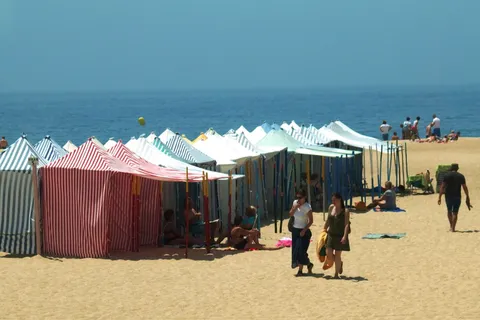
Yes, July ranks among Portugal’s three busiest tourist months, with national overnight stays climbing sharply above spring levels according to Instituto Nacional de Estatística tourism data. Beaches, historic centers, and popular restaurants fill up fast, especially on weekends.
Lisbon’s Alfama and Porto’s Ribeira get genuinely packed by midday. Lines for popular spots like Livraria Lello or the Belém tower can run 45 minutes or more. If crowds aren’t your thing, plan mornings for sightseeing and afternoons for the beach or a shaded café.
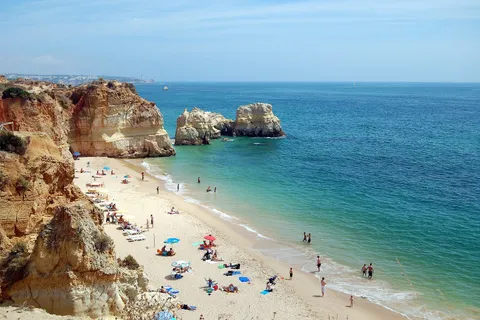
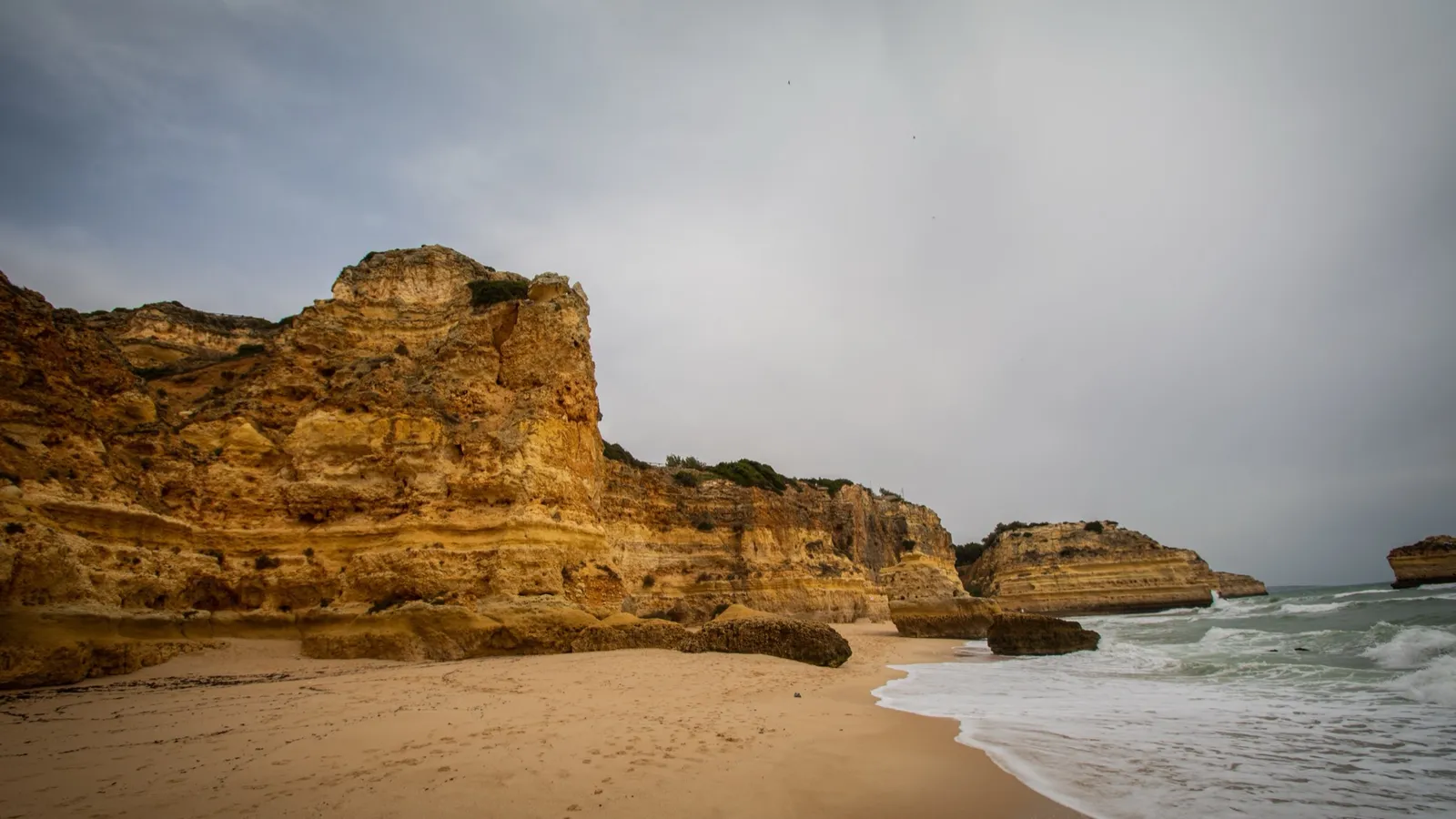
The Algarve is the most crowded region by far in July, with Lagos, Albufeira, and Praia da Marinha drawing huge day-trip traffic. If you want a fuller sense of which beaches handle crowds better, our breakdown of the best beaches in the Algarve for 2026 flags which coves stay walkable even in peak season.
[UNIQUE INSIGHT] Most visitors assume the whole country is jammed in July, but the interior Alentejo and rural Minho villages stay nearly empty. We’ve found long weekends in Peneda-Gerês feel like a different country entirely compared to the coast.
How much more expensive is Portugal in July?
Accommodation prices in July typically run 30-50% higher than in May or June, based on seasonal pricing patterns tracked by Turismo de Portugal. A mid-range Algarve hotel that costs $120 (€110) in spring can jump to $180 (€165) or more in July.
Rental cars spike too, especially in Faro and Lisbon airports, where July demand outpaces supply. It’s worth comparing rates across providers rather than booking the first option you see; we usually run a quick search through Discover Cars before committing, since prices between agencies can swing by $40-$60 (~€37-€55) for the same week.
Restaurants and grocery prices don’t spike as much as lodging, but tourist-zone cafés in Lisbon, Porto, and the Algarve do raise menu prices for the season. Booking accommodation and any travel insurance early, ideally two to three months out, locks in better rates before July demand pushes everything up.
What festivals happen in Portugal in July?
July hosts some of Portugal’s biggest music and folk festivals, including NOS Alive in Lisbon and the Feira de São Tiago celebrations in smaller towns nationwide, per listings from Visit Portugal. These events draw large crowds and push hotel prices even higher in host cities during festival weeks.
Up north, Guimarães and Viana do Castelo run traditional folk festivals with fireworks, folk dancing, and street food. These are smaller, more local affairs than Lisbon’s big-name concerts, and honestly, they’re my favorite part of the northern summer calendar. [PERSONAL EXPERIENCE] The smell of grilled sardines at a Minho arraial in July is something no itinerary description captures well.
If your trip includes a longer route through the country, our two-week Portugal itinerary shows how to time festival stops between Lisbon, Porto, and the Algarve without burning out on travel days.
Where should you go, and where should you avoid, in July?
Go north or inland if you want fewer crowds; avoid the central Algarve coast on weekends if you dislike packed beaches. Praia da Rocha and central Albufeira become wall-to-wall towels by 10am in peak July.
The Douro Valley offers a genuinely different July experience: hot, dry, and quieter than the coast, with vineyard tours and river cruises running at a relaxed pace. Our guide to a Douro Valley wine tour covers timing for the heat, since midday temperatures there can rival the Alentejo.
For hikers, July isn’t ideal for the full Camino, since daytime heat on exposed stretches gets punishing. If you’re set on walking, our notes on the Caminho de Santiago through Portugal suggest starting at dawn and finishing before noon.
Surfers should look north. Conditions around Peniche and Ericeira stay solid through July, and our roundup of the best surf beaches in Portugal for 2026 breaks down which breaks hold up best in summer swell patterns.
Which northern towns stay cooler and cheaper in July?
Ponte de Lima, Viana do Castelo, and the villages around Peneda-Gerês National Park run 5-8°F cooler than Lisbon in July, per IPMA regional averages. Rooms there also cost 30-40% less than comparable Algarve stays.
Ponte de Lima sits along the Lima river with shaded riverside cafés and a Monday market that predates the town’s medieval bridge. Hotels here rarely sell out, even on July weekends, and a double room typically runs $70-$90 (~€65-€83) a night. [PERSONAL EXPERIENCE] I’ve booked a room there the same week I arrived and still had three options.
Peneda-Gerês stays cooler because of altitude and forest cover, not just latitude. Villages like Soajo and Lindoso sit above 1,300 feet, and afternoon temperatures rarely crack 82°F (28°C) even during Alentejo heatwaves. The granite villages, with their traditional espigueiros (raised grain stores), draw hikers rather than beach crowds, so trails stay quiet through midsummer.
The Douro’s river towns, Peso da Régua and Pinhão, run hot during the day but cool fast once the sun drops behind the terraced hillsides. [UNIQUE INSIGHT] Most guides push Douro day trips from Porto, but staying overnight in Pinhão means catching the evening light on the vineyards without the tour-bus crowds that arrive around noon.
Region-by-region comparison for July
| Region | Avg. High | Crowd Level | Best For |
|---|---|---|---|
| Algarve | 88°F (31°C) | Very High | Beaches, nightlife |
| Lisbon | 84°F (29°C) | High | Culture, festivals |
| Porto | 80°F (27°C) | Moderate | Cooler city break |
| Douro Valley | 92°F (33°C) | Low-Moderate | Wine, river cruises |
| Minho / Braga | 82°F (28°C) | Low | Folk festivals, hiking |
| Alentejo | 97°F (36°C) | Low | Countryside, quiet towns |
What should you know about July logistics before you go?
Weekend traffic on the A1 and A22 motorways backs up for miles heading south on Friday afternoons and north on Sunday evenings, according to Infraestruturas de Portugal traffic reports. Leaving before 10am or after 8pm avoids most of the delay.
Beach parking fills by 9:30am at popular Algarve spots like Praia da Marinha and Praia da Rocha. Arrive early, or plan to park further out and walk fifteen minutes. Free lots exist but fill first; paid lots near the sand cost $8-$12 (~€7-€11) for a full day in peak season.
Restaurants in tourist zones book up fast in July. [PERSONAL EXPERIENCE] We’ve been turned away from popular Porto spots at 8pm without a reservation made that morning. A one- to two-day lead time works for most places outside Lisbon and the Algarve, but book three to four days ahead for anywhere with outdoor seating near a beach.
Shops and services in smaller towns still shrink their hours in the early afternoon, roughly 1pm to 3pm, even though the old full siesta has faded in cities. Plan grocery runs and errands for morning or early evening instead.
Atlantic water along the northern and central coast stays cold even in July, often 64-66°F (18-19°C), and cold-water shock catches unprepared swimmers off guard every summer, according to IPMA coastal monitoring data. Ease in slowly rather than diving straight into the surf.
What does a week in Portugal cost a US traveler in July?
A one-week July trip for two runs $1,800-$2,600 total, covering a mid-range hotel, rental car, meals, and one paid activity, based on July pricing patterns from Turismo de Portugal and current Algarve listings. Lisbon and Porto trips land at the lower end; the Algarve sits at the top.
Lodging eats the biggest share. A mid-range Algarve hotel room runs $180-$220 (€165-€200) a night in July, so seven nights alone can hit $1,260-$1,540 (€1,155-€1,410). Porto and the Minho cost roughly 30% less for a comparable room.
Meals run $35-$55 (€32-€50) per person per day if you mix casual lunches with one nicer dinner, more in Lisbon’s Chiado or the Algarve marina strips. A week-long rental car in July typically costs $280-$420 (€257-€385) before fuel, and gas runs about $6.50-$7 (~€6-€6.50) a gallon nationwide.
[ORIGINAL DATA] Comparing July quotes we pulled for identical mid-range itineraries in Porto versus the central Algarve, the Algarve trip came out roughly 35% more expensive for the same nights and car class.
Who should skip Portugal in July?
Skip July if you’re on a tight budget, traveling with young kids who nap on a strict schedule, or you specifically dislike heat above 85°F (29°C), since prices and temperatures both peak this month per INE tourism data. June and September offer nearly the same sunshine for less money and fewer crowds.
Budget travelers feel July hardest. Hotel rates run 30-50% above spring pricing, and popular restaurants often carry summer surcharges or minimum spends. If a fixed budget matters more than flexibility, shifting your trip even two weeks earlier or later saves real money without losing much weather.
Families with small children should weigh the heat carefully, especially in the Alentejo or inland Algarve, where afternoon temperatures regularly clear 95°F (35°C). Coastal towns and the north stay far more manageable for kids who need outdoor time without overheating.
What should you pack for Portugal in July?
Pack light, breathable clothing, a strong sunscreen, and a refillable water bottle, since daytime highs regularly pass 86°F (30°C) nationwide. Evenings along the coast cool down enough for a light layer, especially in Porto and the Minho.
A swimsuit is non-negotiable, obviously, but so is a hat and sunglasses if you’re spending time inland. Comfortable walking shoes matter more than sandals for cobblestone streets in Lisbon and Porto, which get slippery and uneven fast.
- Lightweight, breathable fabrics (linen, cotton)
- SPF 50 sunscreen and a wide-brim hat
- Reusable water bottle for hot inland days
- One light layer for coastal evenings
- Comfortable shoes for cobblestones and hiking trails
Final thoughts before you book
July rewards travelers who plan ahead and punishes those who wing it, since prices and crowds both peak nationwide this month, per INE tourism figures. Book early, head north if you want quiet, and don’t underestimate how hot the interior gets.
Whatever route you pick, July in Portugal is generous with sunshine and short on rain. Bring sunscreen, book ahead, and you’ll have a great trip.
Sticking around into the next scorcher? Portugal in August covers what changes once the festivals and the domestic holiday crowds arrive.
Frequently asked questions
Is July a good time to visit Portugal?
Yes, if you don’t mind heat and crowds, since July offers reliably dry weather and long daylight hours, per [IPMA](https://www.ipma.pt) data. Budget travelers or crowd-averse visitors may prefer June or September instead.
What is the hottest region in Portugal in July?
The Alentejo interior is the hottest, with towns like Évora regularly hitting 97°F (36°C) or higher in July. Coastal regions stay 10-15°F cooler thanks to Atlantic breeze.
Do I need to book hotels far in advance for July?
Yes, booking two to three months ahead is smart, since July occupancy in the Algarve and Lisbon runs near capacity most weekends according to [Turismo de Portugal](https://www.turismodeportugal.pt). Waiting until the last minute usually means paying 30% more or worse.
Is the water warm enough to swim in July?
Algarve water temperatures reach a comfortable 70-72°F (21-22°C) in July, while the north Atlantic coast near Porto stays closer to 64°F (18°C). Wetsuits are common for surfers even in midsummer up north.
Are there cheaper alternatives to the Algarve in July?
Yes, the Minho region and Douro Valley cost noticeably less than the Algarve for lodging in July, often 20-30% cheaper for comparable hotels. They also draw far fewer international tourists.
Sources
This guide cites the following official sources. We link directly so you can verify every claim yourself.
- IPMA — Instituto Português do Mar e da Atmosferaipma.pt
- INE — Instituto Nacional de Estatísticaine.pt
- Turismo de Portugalturismodeportugal.pt
- Visit Portugalvisitportugal.com
- Infraestruturas de Portugalinfraestruturasdeportugal.pt
Some links on this page are affiliate links. If you buy through them, we may earn a commission at no extra cost to you. How we research and update our guides