



On this page8 sections
- Is February a good time to visit Portugal?
- What is Carnaval like in Portugal in February?
- Where can you see almond blossoms in Portugal in February?
- What’s the weather like in Portugal in February by region?
- Is Portugal still cheap to visit in February?
- Can you see whales and dolphins in Portugal in February?
- What should you do in Portugal in February besides Carnaval?
- How does February compare to Portugal’s other months?
Portugal in February sits in that quiet stretch between winter and spring: mild by American standards, still rainy in the north, and genuinely cheap outside Carnaval week. Daytime highs run 55-62°F (13-17°C) in Lisbon and the Algarve, cooler and wetter in Porto and the Minho, and properly cold with snow up in the Serra da Estrela. It’s the best month for almond blossoms in the Algarve and the Douro, the start of whale and dolphin season in the Azores, and Carnaval, the country’s biggest street party after New Year’s. Crowds are thin, hotel prices are still near their winter floor, and you’ll want a real rain jacket no matter where you land.
Key Takeaways: February is Portugal’s second-cheapest month after January, with Carnaval (parades in Torres Vedras, Ovar, and Loulé) as the headline event. Expect rain in the north, sun-and-clouds in the south, and almond blossoms turning the Algarve and Douro pink and white by month’s end. Whale-watching season in the Azores starts ramping up, and this is a solid window for a longer, slower stay before spring prices kick in.
Is February a good time to visit Portugal?
Yes, if you don’t need beach weather and you like a bargain. February keeps the January-level low prices on flights and rentals while adding Carnaval, almond blossoms, and slightly longer daylight (about 10.5 hours by month’s end versus 9.5 in January). The trade-off is the same as January’s: the north is wet, some Algarve resort towns are half-shuttered, and evenings are cool enough that you’ll want layers even in the south. If you’ve already read our Portugal in January guide, February plays like its slightly warmer, more festive cousin. For a broader seasonal picture, our winter overview covers what carries over between the two months.
For US travelers specifically, February also happens to line up with a natural gap between the December holidays and spring break, which makes it an easy month to grab a week off without competing with school calendars. Domestic flight schedules into Lisbon and Porto are lighter than summer, so nonstop options from the US East Coast can be more limited, but the fares themselves tend to be the cheapest of the year outside a rare holiday-season deal. If your schedule is flexible, aim for the first half of the month before Carnaval pushes prices up in the towns hosting parades.
What is Carnaval like in Portugal in February?
Carnaval is the single biggest reason to time a February trip around a specific date, and in 2026 it falls in mid-February, so check the exact date before booking. Torres Vedras, about 40 minutes from Lisbon, calls itself the “most Portuguese Carnaval” and leans into satire, costumes, and neighborhood parades rather than Rio-style spectacle. Ovar in the north runs one of the country’s oldest and largest Carnaval parades, with samba schools that rival Brazilian ones in scale. Loulé in the Algarve puts on a colorful, family-friendly parade through the old town. If you’re building a trip around this, book accommodation early. Small towns fill up fast, and prices in Torres Vedras and Ovar spike for the weekend even though the rest of February stays cheap.
Lisbon and Porto also hold their own Carnaval events, smaller in scale but easier to reach without a car. Expect masked balls, themed club nights, and pop-up street performances rather than a full parade route. If you’d rather skip the crowds entirely, this is also a fine week to head to a quiet inland town instead, since most of the country’s Carnaval energy concentrates in a handful of well-known locations.
Where can you see almond blossoms in Portugal in February?
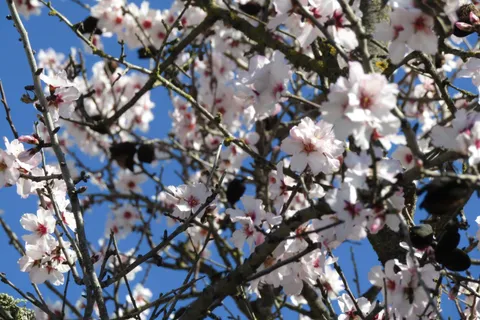
The Algarve is the classic answer, particularly inland around Silves, Alte, and Monchique, where almond trees bloom in white and pale pink from late January through February depending on the year’s weather. It’s a local legend worth knowing even if it’s more folklore than fact: a Moorish king supposedly had almond trees planted across the hillsides so his homesick Nordic queen would see something like snow. The Douro Valley also gets an almond bloom, though it tends to peak a little later, closer to early March, alongside its own famous almond-based pastries. Either region makes a nice day trip if you’re staying in Lisbon or Porto and want a burst of color between rainy days.
If you’re renting a car for the Algarve leg of a trip, give yourself a full day for the inland loop rather than trying to squeeze it in on the way to the coast. The N124 and the back roads around Alte are narrow and slow, but that’s the point: you’re driving through orchards, not highway. Bring a camera with a wide lens, since the hillsides genuinely do look snow-dusted from a distance when the blossoms are at their peak, usually in the back half of February.
What’s the weather like in Portugal in February by region?
Expect a real north-south split. Lisbon and the Algarve see more sun and less rain than Porto and the Minho, though everywhere gets some wet days. Here’s how the regions compare, based on climate normals from Portugal’s national weather institute, IPMA.
| Region | Avg High | Avg Low | Rain Days | Sea Temp |
|---|---|---|---|---|
| Lisbon | 60°F (16°C) | 48°F (9°C) | ~11 | 60°F (15°C) |
| Porto | 57°F (14°C) | 44°F (7°C) | ~14 | 58°F (14°C) |
| Faro | 62°F (17°C) | 48°F (9°C) | ~9 | 61°F (16°C) |
| Madeira (Funchal) | 64°F (18°C) | 57°F (14°C) | ~12 | 64°F (18°C) |
| Azores (Ponta Delgada) | 61°F (16°C) | 54°F (12°C) | ~15 | 62°F (17°C) |
| Serra da Estrela | 43°F (6°C) | 32°F (0°C) | ~13 | n/a |
Numbers are approximate averages, not forecasts, so pack for variability either way. If snow is on your list, the Serra da Estrela guide covers skiing and snow access, which is usually at its most reliable in February.
Is Portugal still cheap to visit in February?
Mostly, yes, outside Carnaval weekend. Flights from the US stay near their winter lows, and city-center apartments in Lisbon and Porto are easy to find for less than half what they’d cost in August. Here’s a rough sense of how a typical day’s costs shift between February’s low season and July’s peak season, based on the general seasonal spread we track locally (treat these as ballpark, not fixed prices).
| Item | February (low season) | July (peak season) |
|---|---|---|
| City-center 1BR rental, per night | $55 (~€47) | $120 (~€103) |
| 3-star hotel double, per night | $75 (~€64) | $180 (~€154) |
| Round-trip flight, US East Coast | $450 (~€385) | $850 (~€727) |
| Dinner for two, mid-range restaurant | $45 (~€38) | $60 (~€51) |
| Rental car, per day | $28 (~€24) | $55 (~€47) |
If you’re weighing a monthlong stay instead of a short trip, February and March are usually the best window to negotiate a longer-term rental before landlords start filling their calendars for spring. Our guide to renting an apartment in Portugal walks through what to expect on lease terms, deposits, and how to avoid overpaying as a first-time renter.
Can you see whales and dolphins in Portugal in February?
The Azores whale-watching season technically runs closer to spring through fall, but late February is when the first sperm whale sightings of the year start picking up around São Miguel and Pico, as the archipelago’s resident and migratory species begin moving back through the channel. Dolphins, especially common and bottlenose, are seen year-round off the Azores and are a realistic sighting even in February, though the water is choppier and boats run less frequently than in summer. If whales specifically are your goal, April through June is more reliable, but a February trip to the Azores still gets you dramatic volcanic scenery, hot springs, and far fewer other tourists than the peak months.
Getting to the Azores in February also means cheaper flights and near-empty trails on São Miguel’s crater lakes, though you should build in flexibility since inter-island flights and boat tours both get cancelled more often in winter weather. If your schedule can absorb a weather day, it’s worth it. If you’re on a tight itinerary connecting through mainland Portugal, treat the Azores as a separate trip rather than a rushed add-on.
What should you do in Portugal in February besides Carnaval?
Lean into food, wine, and slower city time. February is a great month for a long lunch culture, since restaurants are quieter and easier to book without reservations made weeks out. Our Lisbon dining guide is worth a look if you want a shortlist that doesn’t require fighting summer crowds, and our broader Portuguese food guide covers regional dishes worth seeking out this time of year, like caldo verde and hearty bean stews that make more sense in cool weather than in August heat. If beaches are still on your mind despite the season, the Algarve beaches guide is honest about which ones are worth a cold-weather walk and which are better saved for summer. And Valentine’s Day lands squarely in February, so Porto’s riverside restaurants and Lisbon’s Alfama miradouros both get a small bump in couples traveling for a low-key, off-season romantic weekend.
How does February compare to Portugal’s other months?
It’s warmer and slightly sunnier than January, but still solidly winter, not an early spring like Portugal in March can feel some years. 2026 isn’t a leap year, so February runs its usual 28 days, one fewer travel day than in a leap year if you’re planning a full-month stay. For the complete month-by-month picture, including how February stacks up against the shoulder months on either side, our 2026 Portugal travel guide breaks down the whole year. According to tourism data tracked by Statistics Portugal (INE), winter months consistently see the lowest visitor volumes of the year, which is exactly why prices and crowd levels stay so favorable through February. The official Visit Portugal tourism board also lists Carnaval and regional gastronomy events on its calendar each year, which is a useful way to double-check dates before you book, since Carnaval’s timing shifts with the lunar calendar and doesn’t fall on the same date every year.
February rewards travelers who don’t mind a little rain in exchange for empty museums, cheap flights, and a front-row seat to Carnaval. Pack layers, pick your region with the weather table in mind, and don’t skip a detour for almond blossoms if you’re anywhere near the Algarve’s interior or the Douro. It’s not Portugal’s prettiest month on paper, but it might be its most honest one.
Frequently asked questions
Do I need a rain jacket in Portugal in February?
Yes, especially in Porto and the north, where rain is common. A packable rain shell layered over a sweater works better than a heavy coat, since afternoons can still turn mild and sunny between fronts.
Is the Algarve open in February?
Partially. Larger towns like Lagos, Faro, and Albufeira stay open year-round with a reasonable number of restaurants and shops running, but smaller resort-focused villages built around summer tourism can feel noticeably quiet, with some businesses closed until March or April.
What should I pack for Portugal in February?
Layers are the key word: a warm sweater, a waterproof jacket, comfortable walking shoes for wet cobblestones, and at least one nicer outfit if you’re going out for Carnaval or a Valentine’s dinner. Evenings get cold enough for a scarf and gloves, particularly in Porto and inland areas.
Is Carnaval in Portugal like Carnival in Brazil?
Not really. Portuguese Carnaval is smaller and more community-focused, closer to a series of local parades and street parties than Rio’s stadium-scale spectacle. Torres Vedras and Ovar are the two towns most known for putting real effort into costumes and satire, but it’s a much more low-key, family-friendly affair overall.
Can you ski in Portugal in February?
Yes, in the Serra da Estrela, mainland Portugal’s only ski area. February is typically one of the more reliable snow months there, though conditions vary year to year and it’s a modest setup compared to the Alps, more of a fun day trip than a full ski vacation.
Sources
This guide cites the following official sources. We link directly so you can verify every claim yourself.
- IPMA — Instituto Português do Mar e da Atmosferaipma.pt
- INE — Instituto Nacional de Estatísticaine.pt
- Visit Portugalvisitportugal.com
Some links on this page are affiliate links. If you buy through them, we may earn a commission at no extra cost to you. How we research and update our guides