


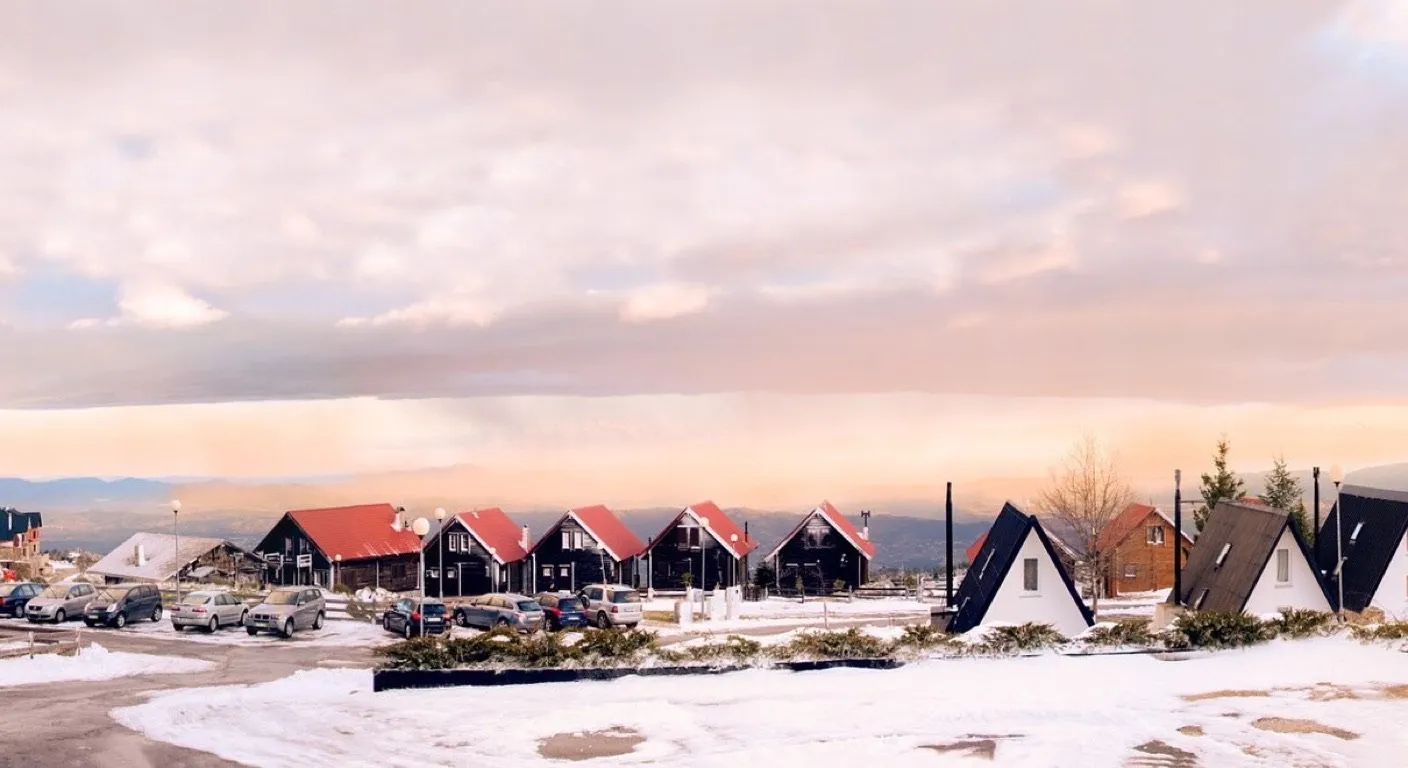

Serra da Estrela is mainland Portugal’s highest mountain range, topping out at Torre at 1,993 meters (6,539 feet), and it’s the only part of continental Portugal that gets real snow most winters. It sits inland in the Centro region, roughly three hours from Lisbon and two and a half from Porto. There’s a small ski area at the summit, a protected natural park covering about 100,000 hectares, a glacial valley carved by the Zêzere river, and a cheese that Portuguese people will argue about for hours. If your mental image of Portugal is tiled rooftops and Atlantic beaches, this place will scramble it.
Key Takeaways: Torre reaches 1,993 m (6,539 ft), making Serra da Estrela the only reliable snow in mainland Portugal, typically January through March. The ski area is genuinely small: think a handful of short runs, not Colorado. Summer is arguably better, with hiking in the Zêzere valley, swimming in river pools, and cheese season. Budget roughly $115 to $200 (~€100 to €175) per day for two people.
Does it actually snow in Serra da Estrela?
Yes, and it’s the only place in mainland Portugal where you can plan around it. The Portuguese weather institute (IPMA) records sub-zero temperatures at the Torre station through much of winter, and snow cover above 1,500 meters is normal from January into March. Some years it’s a dusting. Some years the road to Torre closes for days.
Here’s the honest version. Snowfall varies enormously year to year, and warmer winters over the last decade have made early-season snow less dependable. December can be green. March can be buried. I’ve driven up in February to find bare granite and driven up in late March through walls of plowed snow.
What’s consistent is the cold. Torre regularly sits 15 to 20°F below whatever Lisbon is doing on the same day. Bring an actual winter coat, not the fleece you packed for the Algarve. If you’re planning a broader cold-season trip, our guide to Portugal in winter covers what else stays open when the coast empties out.
One practical note: the final stretch of road to Torre is often gated when conditions are bad, and chains or winter tires may be required. Check IPMA warnings the morning you go, not the night before.
How do you get there from Lisbon or Porto?
Driving is the only sensible option, and it’s straightforward. From Lisbon, take the A1 north then the A23 toward Covilhã: roughly 3 hours and 300 km. From Porto, the A25 toward Guarda gets you there in about 2.5 hours. Tolls run approximately $12 to $18 (~€10 to €16) each way.
Public transport exists but doesn’t get you where you actually want to be. Trains reach Covilhã and Guarda, and buses connect the larger towns, but the park’s best parts sit at the end of mountain roads with no service. Rent a car. If you’re already planning a loop through the north, this pairs naturally with a Northern Portugal road trip.
The mountain roads themselves deserve a warning for American drivers. They’re narrow, well-maintained, and full of blind hairpins with no shoulder. Locals drive them fast. You don’t have to. In winter, allow at least double the time your GPS suggests, and don’t assume a rental car has winter tires unless you asked for them.
Which town should you use as a base?
| Town | Elevation | Best for | Trade-off |
|---|---|---|---|
| Manteigas | ~720 m | Hiking, Zêzere valley, Poço do Inferno | Tiny, limited dining after 9pm |
| Covilhã | ~700 m | Closest city to Torre, most hotels and restaurants | Urban, steep, less scenic |
| Seia | ~530 m | Western approach, cheese museum, family stays | Farther from the ski area |
| Gouveia | ~650 m | Quiet, good value, northern trailheads | Fewest visitor services |
| Loriga | ~780 m | Dramatic glacial setting, river beach | Very small, seasonal openings |
My default recommendation is Manteigas. It sits inside the Zêzere valley with the mountain walls rising on both sides, and you can reach most of the park’s highlights within 45 minutes. Covilhã wins if you want restaurant choice and a proper hotel.
What is there to do besides ski?
More than you’d guess, and honestly the non-ski months are better. ICNF, which manages the Serra da Estrela Natural Park, maintains marked trails across roughly 100,000 hectares of protected terrain, including glacial lakes, waterfalls, and granite plateaus. Summer brings river swimming at temperatures Americans find shocking.
Poço do Inferno is the easy win: a waterfall in a wooded gorge above Manteigas, reachable by car with a short walk. It freezes solid in hard winters, which is a strange thing to see in Portugal.
Covão dos Conchos is the one everybody photographs. It’s a funnel-shaped spillway in a reservoir that looks like a hole punched into the lake, and reaching it takes a moderate hike of roughly 5 km each way from the trailhead near Lagoa Comprida. Go early. It gets busy on summer weekends, and the water level determines whether the funnel is visible at all.
The Zêzere glacial valley is the geological headline. It’s a textbook U-shaped valley carved by ice, running about 13 km, and driving the N338 through it from Manteigas is one of the best short drives in the country. Pull over at the miradouros. Most people don’t, which is a shame.
Then there are the praias fluviais, river beaches with dammed pools, in Loriga and Valezim. In August, when Lisbon is 100°F, the mountain water is bracing enough to make you yelp. If you like this sort of thing, we’ve collected more of it in our roundup of Portugal’s hidden gems.
Is the ski resort worth it for Americans?
Let’s be direct: the Vodafone Ski Resort at Torre is the only ski area in mainland Portugal, and it’s small. You’re looking at a handful of short runs served by a few lifts, plus a beginner area and sledding zones. Total skiable terrain is a fraction of a single mid-sized Colorado mountain. Day passes typically run around $27 to $40 (~€24 to €35).
If you’ve skied Vail, Jackson, or even a decent New England hill, you will not be impressed by the skiing. That’s the wrong frame, though. Nobody flies to Portugal for the vertical.
What it’s actually good for: a novelty half-day, teaching kids to snowplow, sledding, and the simple pleasure of standing in snow at the highest point in mainland Portugal with a Portuguese flag and a giant stone tower behind you. Rentals are available on site, and you don’t need to bring gear.
Expect crowds on snowy weekends. Portuguese families drive up in numbers the moment IPMA forecasts snow, and the parking at Torre fills by mid-morning. Weekdays are calmer by a wide margin.
There’s also a shopping complex at Torre selling wool blankets, cheese, and mountain liqueurs. It’s touristy. The blankets are still genuinely good.
What should you eat and drink up there?
Queijo Serra da Estrela DOP is the reason food people come here. It’s a raw sheep’s-milk cheese set with thistle rennet rather than animal rennet, protected under EU DOP status, and produced only between roughly November and March. A whole small wheel typically costs $23 to $35 (~€20 to €30) direct from a producer.
The texture is the point. A properly ripened wheel is soft enough to eat by cutting off the top rind and spooning the inside out. It’s nothing like a Spanish manchego, and if someone hands you a firm rubbery version, it’s either velho (aged, also legitimate) or it isn’t the real thing.
Beyond cheese: mountain-cured presunto, hearty bean and sausage stews, roast kid goat, and trout from the local rivers. Portions are large and prices are low compared to Lisbon. Expect roughly $18 to $28 (~€16 to €24) per person for a full lunch with wine at a village restaurant. Our Portuguese food guide unpacks the wider menu vocabulary.
And the dogs. The Cão da Serra da Estrela is a huge, thick-coated livestock guardian breed that’s been working these slopes for centuries. You’ll see them at farms and occasionally loose near flocks. They’re calm and not aggressive toward people, but they’re guarding animals. Give the flock space and don’t approach the dog.
When should you go?
It depends entirely on what you want. Visit Portugal promotes the range year-round, and that’s fair: this is one of the few Portuguese destinations with four genuinely distinct seasons. Snow peaks January through March. Wildflowers and hiking peak May through June. Cheese season runs winter.
| Month | Typical conditions at altitude | What it’s good for | Crowds |
|---|---|---|---|
| Dec | Cold, snow possible but not guaranteed | Cheese season starts, Christmas markets in towns | Moderate |
| Jan–Feb | Coldest; best odds of real snow cover | Skiing, sledding, frozen waterfalls | Heavy on snowy weekends |
| Mar | Variable; late snow is common | Ski tail end, quiet villages | Light |
| Apr–Jun | Cool, green, meltwater running high | Best hiking, wildflowers, waterfalls at full flow | Light to moderate |
| Jul–Aug | Warm days, cool nights, dry | River beaches, Covão dos Conchos, long daylight | Heavy in August |
| Sep–Oct | Mild, clear, stable | The sweet spot: hiking without the heat or crowds | Light |
| Nov | Wet, foggy, first cold snaps | Cozy stays, low prices | Very light |
If I had to pick one window, it’d be late September into early October. The light is good, the trails are dry, the reservoirs are still photogenic, and you’ll have the miradouros to yourself. November is cheap but genuinely gloomy up there, which we get into in our Portugal in November breakdown.
What does a Serra da Estrela trip cost?
Less than most American mountain destinations, by a wide margin. Portugal’s national statistics office (INE) consistently reports the interior Centro region among the country’s lowest for accommodation rates. A two-person weekend with a rental car typically lands around $290 to $460 (~€250 to €400) all in, excluding flights.
| Item | Budget | Mid-range | Notes |
|---|---|---|---|
| Double room per night | $52–$75 (~€45–€65) | $93–$150 (~€80–€130) | Guesthouses vs. rural hotels; ski weekends cost more |
| Lunch or dinner, per person | $12–$18 (~€10–€16) | $23–$35 (~€20–€30) | Village tascas are excellent value |
| Rental car, per day | $35–$52 (~€30–€45) | $58–$81 (~€50–€70) | Winter tires cost extra and are worth asking about |
| Fuel + tolls, round trip from Lisbon | $70–$105 (~€60–€90) | Same | A23 tolls are electronic |
| Ski day pass | $27–$40 (~€24–€35) | Plus rentals | Sledding areas are cheaper |
| Park access and hiking | Free | Free | Some parking areas charge in summer |
These are approximate and shift with season and demand. The single biggest variable is whether you’re visiting on a snow weekend, when Covilhã and Manteigas rooms get scarce and prices climb. Book ahead if IPMA is forecasting snow. For wider trip planning across the country, see our 2026 Portugal travel guide.
The honest summary
Serra da Estrela isn’t the Portugal on the postcards, and that’s exactly why it’s worth the drive. You get granite, glacial valleys, working sheep farms, and a version of the country that most visitors never see because it isn’t near a coastline. The skiing is a novelty. The landscape isn’t.
If you’re an American living here, this is the closest thing to a mountain weekend you’ll find without crossing into Spain, and it’s about a tank of gas away from anywhere in the country. Go in early autumn if you want the trails, or gamble on February if you want snow. Either way, bring warm layers, buy the cheese from a producer, and take the N338 slowly.
Frequently asked questions
How high is Torre and can you drive to the top?
Torre sits at 1,993 meters (6,539 feet), the highest point in mainland Portugal. Yes, you can drive right to the summit on the N339, and there’s a large parking area, shops, and the ski area. The road closes during heavy snow or ice, so check conditions with IPMA the morning of your trip.
Is Serra da Estrela good for beginner skiers?
It’s fine for absolute beginners and children learning to snowplow. There’s a nursery slope, rental gear on site, and instructors. Intermediate and advanced skiers will exhaust the terrain in under an hour. Treat it as a fun snow day rather than a ski trip, and you won’t be disappointed.
Can you visit Serra da Estrela as a day trip from Porto or Lisbon?
From Porto it’s doable at roughly 2.5 hours each way, though you’ll spend more time driving than exploring. From Lisbon at three hours each way, a day trip is punishing. Two nights is the minimum that makes sense, and three lets you cover the Zêzere valley, Torre, and Covão dos Conchos without rushing.
Do I need a 4×4 or snow chains in winter?
Usually no, but conditions decide. Main roads to Covilhã, Manteigas, and Seia are cleared promptly. The final climb to Torre can require chains or winter tires, and authorities gate it when it’s unsafe. Confirm with your rental company what the car is equipped with before you commit to a summit day.
Where can you buy real Queijo Serra da Estrela DOP?
Buy directly from producers, village markets, or the cheese museum in Seia rather than supermarkets. Look for the DOP seal and a production date between November and March. A small whole wheel typically runs $23 to $35 (~€20 to €30). It travels fine in a cooler bag but won’t survive a warm car all day.
Sources
This guide cites the following official sources. We link directly so you can verify every claim yourself.
- IPMA — Instituto Português do Mar e da Atmosferaipma.pt
- ICNFicnf.pt
- Visit Portugalvisitportugal.com
- INE — Instituto Nacional de Estatísticaine.pt
Some links on this page are affiliate links. If you buy through them, we may earn a commission at no extra cost to you. How we research and update our guides