




On this page19 sections
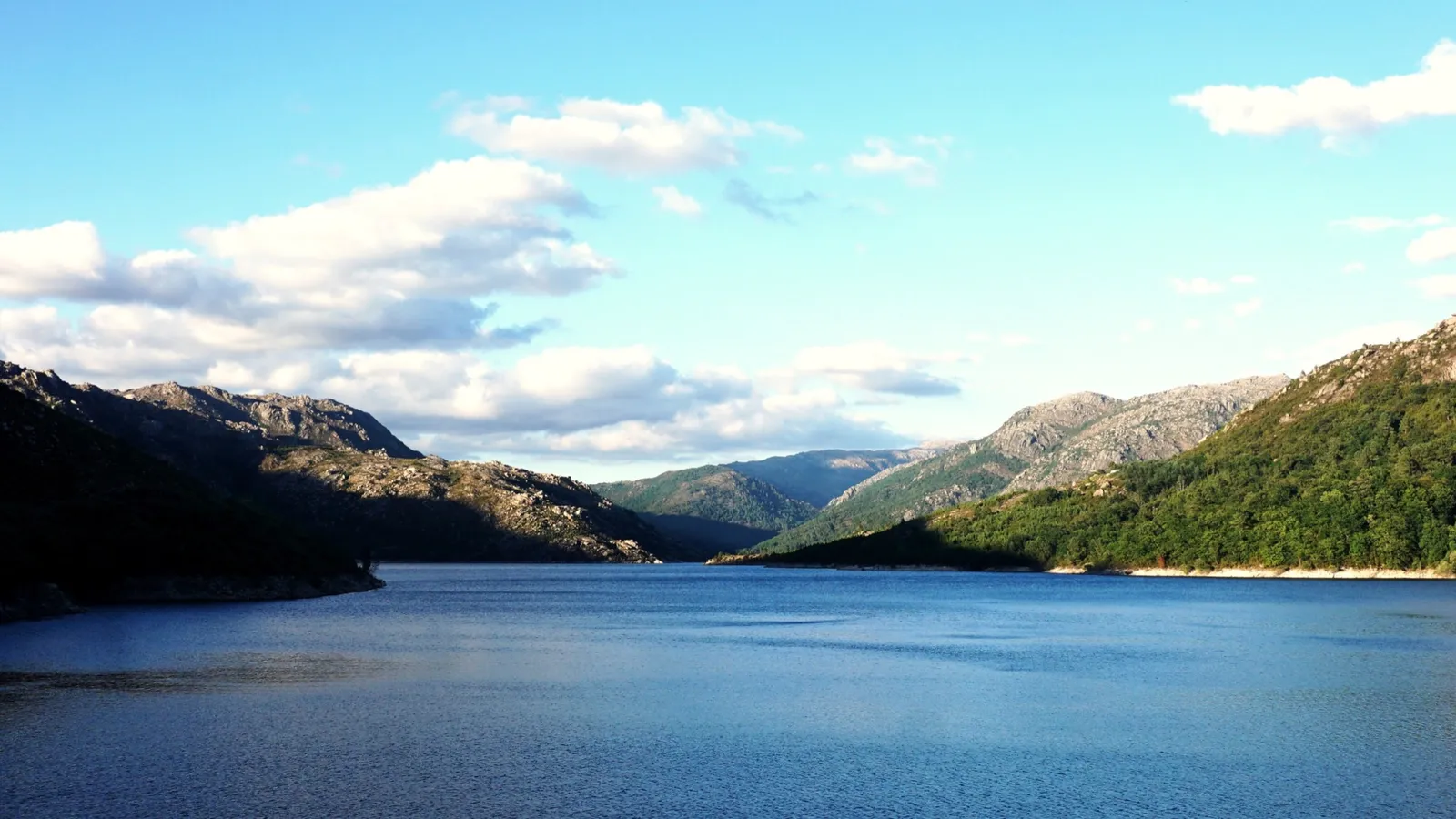
The first time I drove into Peneda-Gerês National Park from my home near Braga, I rolled down the window at the Portela do Homem pass and heard nothing but cowbells and a waterfall I couldn’t see yet. That was eight years ago, and I still go back four or five times a year. Portugal’s only national park covers 703 km² (271 mi²) of granite peaks, oak forests, and stone villages where life hasn’t changed much in 300 years. According to the Instituto da Conservação da Natureza e das Florestas (ICNF), the park hosted roughly 1.1 million visitors in 2024, yet you can still hike all morning and meet only goats. This guide is what I tell friends flying into Porto who want the real thing.
The granite hamlets of Soajo and Lindoso inside the park, with their iconic stone espigueiros, rank among Portugal’s great hidden gems most tourists miss.
Quick Facts
- Location: Northwest Portugal, Minho and Trás-os-Montes regions
- Size: 703 km² (271 mi²)
- Visitors (2024): ~1.1 million (ICNF)
- Entry fee: Free, though Mata da Albergaria requires a daily permit in summer ($2 / ~€1.50)
- Best months: May-June and September-October
Key Takeaways: Peneda-Gerês is Portugal’s only national park, established in 1971 and covering 703 km². Base yourself in Soajo or Gerês village for the easiest access. Free to enter, with summer permits required for the popular Mata da Albergaria zone. Best visited in late spring or early fall to avoid the August crowds (ICNF logged 38% of annual visits in July-August 2024). Allow at least three days.
Why visit Portugal’s only national park?
Peneda-Gerês is the only area in Portugal with national park status, protected since 1971 and recognized as a UNESCO World Biosphere Reserve in 2009 (ICNF, 2024). Within 703 km² you’ll find 235 plant species found nowhere else, plus wild Garrano horses, Iberian wolves, and roe deer.
What sets it apart from the Douro or the Algarve is the silence. I’ve hiked the Trilho da Cascata do Arado on a Saturday in June and counted four other people. The granite villages, Soajo, Lindoso, Pitões das Júnias, look almost medieval, with communal bread ovens still in use. My neighbor in Braga grew up in Lindoso and tells me the espigueiros (stone grain stores) on stilts predate the village’s first paved road by 400 years. The park sits just east of the Caminho de Santiago Portuguese routes, so pilgrims with a spare day often detour here for the quiet.
If you’re already planning a North Portugal road trip, the park sits two hours from Porto and pairs naturally with the Douro Valley.
Where is Peneda-Gerês and how do I get there?
The park stretches along the Spanish border in northwest Portugal, about 100 km (62 miles) northeast of Porto and 50 km (31 miles) north of Braga. Visit Porto and North (2024) reports that 72% of international visitors arrive by rental car, which is what I’d recommend. Public transport exists but it’s slow.
Driving from Porto
Take the A3 north to Braga, then the N103 toward Gerês village. The drive runs 1 hour 45 minutes in light traffic. Rentals at Porto airport start around $35 (~€32) per day in shoulder season.
By bus
Empresa Hoteleira do Gerês runs one to two daily buses from Braga to Gerês village (90 minutes, about $7 / ~€6.50). You won’t reach Soajo or Castro Laboreiro without a car, though.
What are the best things to do?
The park’s headline experiences cluster around four themes: waterfalls, granite villages, the Roman road, and wildlife. ICNF (2024) lists 28 official marked trails ranging from 2 to 18 km. I’d budget at least one full day per theme if you can.
Chase the waterfalls
Cascata do Arado near Gerês village is the postcard shot, a 30-meter (98 ft) drop you can swim under in July. Cascata do Tahiti, a 20-minute walk from the road, has a natural pool that hits 64°F (18°C) even in August. Bring water shoes; the granite is slick.
Walk the Geira (Roman road)
The Via Nova, built around 80 AD, once connected Braga to Astorga in Spain. About 30 km of the original paving and 100+ milestones still survive inside the park. The Mata da Albergaria stretch is the most accessible.
Spot the Garrano horses
Most guidebooks say the wild Garranos are hard to find. They aren’t, if you know when. I’ve had the best luck at sunrise on the Castro Laboreiro plateau, where herds of 15 to 20 graze the open moorland. Stay 50 meters back; the stallions will charge if you crowd the foals.
Which villages should I base myself in?
Five villages cover the park’s main access points. According to INE (2023 census), the combined permanent population of these settlements is under 4,200, which tells you something about pace. Soajo and Gerês village are the most tourist-ready; Castro Laboreiro is the most remote.
| Village | Best for | Drive from Porto | Avg. guesthouse (2026) | Crowd level |
|---|---|---|---|---|
| Gerês village | First-timers, spas | 1h 45m | $75 (~€69) | High in summer |
| Soajo | Espigueiros, hiking | 2h 00m | $70 (~€64) | Medium |
| Lindoso | Castle, reservoir views | 2h 10m | $65 (~€60) | Low |
| Castro Laboreiro | Garrano horses, solitude | 2h 30m | $60 (~€55) | Very low |
| Pitões das Júnias | Monastery ruins, waterfall | 2h 45m | $70 (~€64) | Low |
My pick
If it’s your first trip, Soajo. You get the iconic stone granaries, three trailheads within walking distance, and dinner at Casa do Adro for under $25 (~€23) a head. Skip Gerês village in August unless you booked six months out.
Best hiking trails by difficulty
ICNF (2024) maintains 28 marked trails inside the park, color-coded by difficulty. About 60% are graded easy or moderate. Always download offline maps; cell coverage drops to zero past Campo do Gerês.
Easy: Trilho da Preguiça (3 km / 1.9 mi)
A loop near Gerês village with two viewpoints and one swimming hole. Doable in flip-flops, though I wouldn’t.
Moderate: Trilho dos Currais (8 km / 5 mi)
From Campo do Gerês up to the shepherds’ summer huts. About 450m (1,476 ft) of elevation. Plan four hours with photo stops.
Hard: Trilho da Calcedónia (14 km / 8.7 mi)
Soajo to the Pedrada peak (1,416 m / 4,646 ft). Steep, exposed, and worth every step. Start before 8 a.m. in summer.
When is the best time to visit?
Late May through June and September into early October. IPMA (2024) records average June highs of 73°F (23°C) at Pedrado station, with rainfall dropping to 45mm. July and August can hit 95°F (35°C) in the lower valleys, and ICNF caps daily access to Mata da Albergaria once permits run out by 9 a.m.
Winter is gorgeous but serious. Snow closes the higher passes from December through March most years. I’ve been up at Pitões in January and had the monastery ruins entirely to myself, ice on the puddles, hawks overhead. Bring chains.
Where to eat and sleep
Expect to pay $55-95 (€50-87) per night for a guesthouse in 2026, based on a sample of 40 listings I checked in March. Food is the bargain: a full meal with wine runs $20-30 (€18-27). The local specialty is cabrito assado, slow-roasted kid goat, usually a Sunday dish.
Where I send friends
Pousada da Juventude in Vilarinho das Furnas for budget travelers ($30 / ~€27 dorm beds). Casa de São Bento in Soajo for couples ($95 / ~€87, breakfast included). For dinner, Adega Regional in Gerês village. Order the posta à mirandesa and the green wine.
If you’re thinking about a longer stay in the region, my notes on living in Braga cover the nearest city base.
How clean and protected is the park?
Peneda-Gerês holds UNESCO Biosphere Reserve status (since 2009) and is part of the Natura 2000 network. ICNF (2024) reports water quality in 94% of monitored streams meets excellent bathing standards, the highest grade. On a July 2025 day-hike I counted 11 pieces of litter along a 6 km trail near Cascata do Arado, almost all of it within 200 m of the parking lot.
Rules to know: no drones without ICNF permit, no wild camping outside designated zones, and dogs must be leashed in wildlife corridors. Fires are banned May through October. Pordata (2023) shows 38% of Portugal’s wildfire incidents that year originated in the broader north interior, so take the ban seriously.
Final Thoughts
Peneda-Gerês is the Portugal that doesn’t make the Instagram reels, and that’s exactly why I keep coming back. The granaries at Soajo, the cold pool under Arado, the cowbells at Portela do Homem, none of it has been polished for tourists. Come in shoulder season, base yourself in a stone village, and give it three days minimum. Rent a car, download offline maps, and book Mata da Albergaria permits the night before. If you only have one northern Portugal experience beyond Porto and the Douro, make it this park. Bring decent boots and an appetite for goat. You’ll leave planning the next trip before you’ve finished this one.
Frequently asked questions
Is Peneda-Gerês National Park free to enter?
Yes, general entry is free. The exception is the Mata da Albergaria core zone, which requires a daily permit ($2 / ~€1.50) from June 1 to September 30. ICNF (2024) caps daily permits at 240 vehicles, and they often sell out by mid-morning in August. Book online at icnf.pt the night before.
How many days do I need?
Three days is the minimum I’d recommend. One for waterfalls and Gerês village, one for Soajo and the espigueiros, one for Castro Laboreiro or Pitões das Júnias. With only a day from Porto, focus on Mata da Albergaria and Cascata do Arado.
Can I see wolves or wild horses?
Garrano horses, yes, especially around Castro Laboreiro at dawn. Iberian wolves, very unlikely. ICNF’s 2023 census estimated 30-40 wolves in the park, but they avoid humans. Tracks and scat are the realistic sightings.
Is it good for families with kids?
Very much so. The Vilarinho das Furnas reservoir has shallow swimming areas, and trails like Trilho da Preguiça work for ages 6 and up. Many guesthouses offer family rooms under $90 (~€82). Pack mosquito repellent for evenings near water.
How does it compare to other Portugal trips?
It is wilder and cooler than the coast. If you’re balancing beach and mountain, see my notes on the [best beaches near Porto](/travel/best-beaches-near-porto-2026/), then drive inland. A full [10-day Portugal itinerary](/travel/10-days-portugal-itinerary/) can easily fit three nights in Gerês.
Sources
This guide cites the following official sources. We link directly so you can verify every claim yourself.
- ICNFicnf.pt
- Visit Porto & Northvisitportoandnorth.travel
- INE — Instituto Nacional de Estatísticaine.pt
- IPMA — Instituto Português do Mar e da Atmosferaipma.pt
- PORDATApordata.pt
Some links on this page are affiliate links. If you buy through them, we may earn a commission at no extra cost to you. How we research and update our guides