




Key Takeaways: Portugal’s best hidden gems sit far from the Lisbon-Porto-Algarve tourist trail. The schist village of Piódão, the granite hamlet of Monsanto, the Berlengas islands off Peniche, and the wild Costa Vicentina reward travelers who rent a car and drive an extra hour. The north and interior stay green and uncrowded even in peak August, and most of these spots cost a fraction of the headline destinations. Go in June or September for the best weather-to-crowd ratio.
Most Americans plan a Portugal trip around three places: Lisbon, Porto, and the Algarve. Those are wonderful, and they’re also where every other tourist goes. After years living in the north, I’ve watched visitors burn a whole week in the crowds while some of the country’s most striking places sit an hour up the road, half-empty. This is a local’s list of hidden gems in Portugal that tourists routinely miss — schist and granite villages, islands you can reach by ferry, and a coastline wilder than anything in the Algarve. None of it requires special access. It just requires knowing it’s there.
What are the best hidden gems in Portugal?
The best hidden gems in Portugal are the historic villages of the interior (Piódão, Monsanto, Sortelha), the Berlengas nature-reserve islands off Peniche, the Costa Vicentina’s empty beaches in the southwest, and the green river valleys of the Minho and Trás-os-Montes in the far north. These places see a fraction of the foot traffic of Sintra or Lagos, yet they hold the country’s most distinctive scenery and architecture. Portugal’s official tourism board, Visit Portugal (Turismo de Portugal), promotes many of them, but they stay quiet simply because they’re a 60-to-90-minute detour from the main routes.
Here’s the honest trade-off: nearly all of them are far easier to reach with a rental car than by bus or train. If you only have a Lisbon city break planned, a few are doable as day trips — our guide to the best day trips from Lisbon covers the closest. For the rest, build in two or three days of driving.
Hidden gems in Northern Portugal
The north is Portugal’s secret weapon. It’s greener, cooler, cheaper, and far less touristy than the south — and it stays comfortable through August while the Algarve bakes. This is my home turf, so I’ll be blunt about which spots actually deliver.
- Soajo and Lindoso (Peneda-Gerês). Two granite villages inside Portugal’s only national park, both famous for their clusters of espigueiros — centuries-old stone grain stores raised on stilts that look like a field of tiny stone chapels. The park itself, managed by the ICNF (Instituto da Conservação da Natureza e das Florestas), is full of waterfalls and wild ponies. Start with our Peneda-Gerês guide.
- Ponte de Lima. Often called Portugal’s oldest town, it sits on the Lima River with a Roman bridge, riverside gardens, and some of the best vinho verde wine estates in the country. Almost no international tourists, excellent food, very low prices.
- Bragança and Trás-os-Montes. The forgotten northeast — a walled citadel, the wild Montesinho Natural Park, and a food culture built on smoked sausages and game. You’ll hear far more Portuguese than English here.
- Viana do Castelo. A handsome seaside city at the heart of the Minho, with a hilltop basilica reached by funicular and broad Atlantic beaches just across the river.
If wine country is your thing, the Douro Valley sits just east of Porto and pairs naturally with any northern loop.
Hidden gems in Central Portugal
Central Portugal — Beira, the Serra da Estrela, the schist-village belt — is the part of the country most foreign visitors never see at all. It’s where Portugal feels most untouched, and twelve of its villages carry an official designation: see our guide to the historic villages of Portugal.
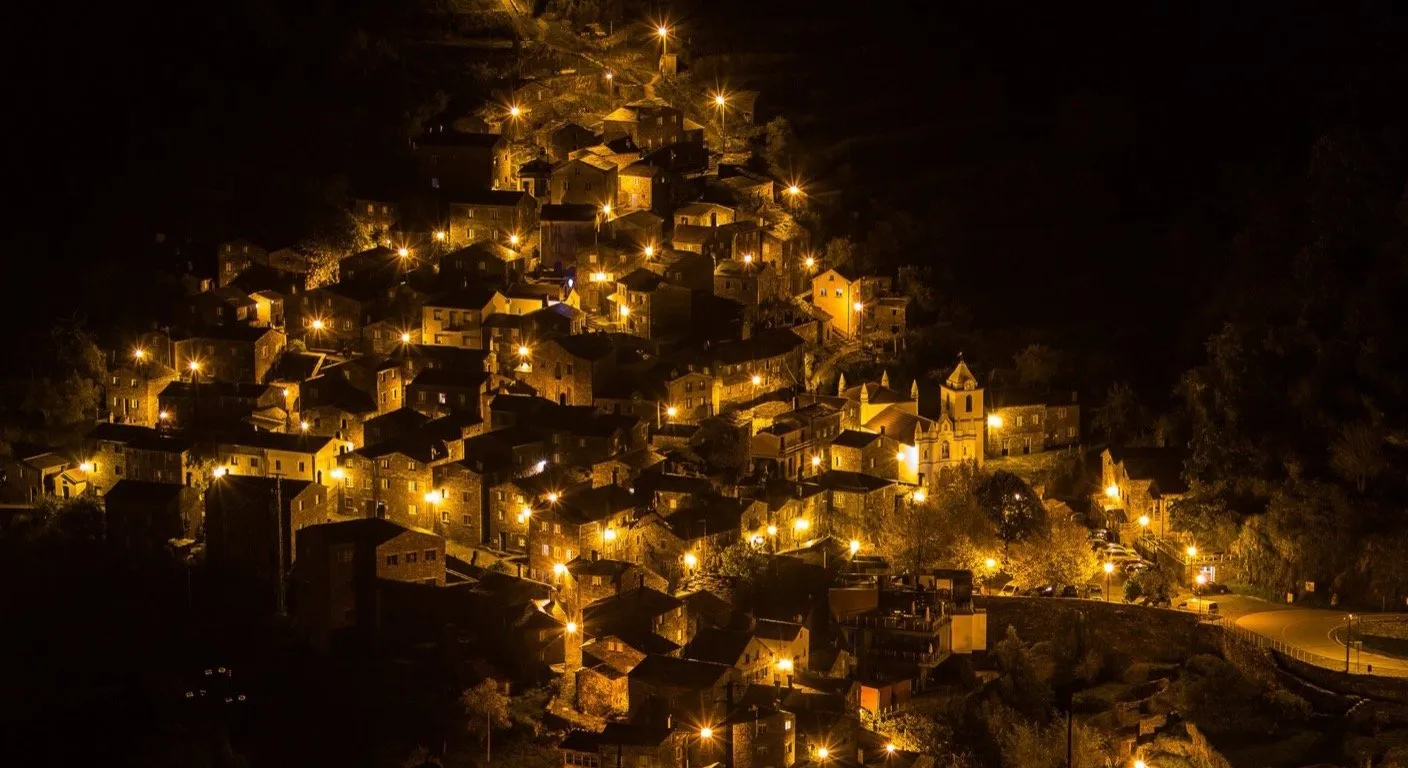
- Piódão. The best-known of Portugal’s schist-built villages, and an Aldeia Histórica: a cascade of slate houses with blue-painted doors tumbling down a green mountainside in the Serra do Açor. It’s remote, it’s photogenic beyond reason, and it’s worth the winding drive.
- Monsanto. A village built into, around, and under colossal granite boulders — some houses use a single boulder as their roof. Voted “most Portuguese village” decades ago, it later doubled as a filming location for a major fantasy series, yet it still sees few tourists midweek.
- Sortelha and the historic villages. A perfectly preserved medieval walled village near the Spanish border, part of the Aldeias Históricas de Portugal network. Walk the ramparts at sunset and you’ll likely have them to yourself.
- Serra da Estrela. Mainland Portugal’s highest mountains — glacial valleys, the source of the famous queijo da Serra cheese, and the country’s only ski area in winter.
Hidden gems in Southern Portugal beyond the Algarve
The Algarve’s central strip (Albufeira, Lagos, Vilamoura) is gorgeous and absolutely mobbed in July and August. The trick is to go either west or inland, where the crowds thin out fast, or north into the Alentejo.
- Costa Vicentina (Aljezur, Odeceixe, Carrapateira). The southwest Atlantic coast is a protected natural park of cliffs, surf beaches, and tiny villages. It’s the wild, windswept antidote to the polished resorts an hour east.
- Tavira and the Ria Formosa. The eastern Algarve’s most charming town — Moorish architecture, a Roman bridge, and barrier-island beaches you reach by ferry across a lagoon protected as a natural park.
- Mértola and the Alentejo interior. A whitewashed hill town above the Guadiana River with deep Islamic-era roots, surrounded by the empty, golden plains of the Alentejo.
- Monsaraz. A walled hilltop village overlooking the vast Alqueva reservoir — also one of Europe’s first certified Dark Sky reserves, so the stargazing is extraordinary.
Three more underrated stops worth the detour
A handful of places don’t fit neatly into a region but absolutely belong on this list:
- Marvão. An eagle’s-nest fortress village perched on a granite ridge in the high Alentejo near the Spanish border. The views from the castle walls stretch for miles across two countries, and the cobbled lanes inside are almost silent. The novelist José Saramago called it the place from which “you can see the whole land.”
- Aveiro and Costa Nova. Often billed as the “Venice of Portugal” for its canals and moliceiro boats, Aveiro is genuinely charming and underrated. Just west, the beach village of Costa Nova is lined with candy-striped wooden houses that make for some of the most photogenic streets in the country.
- Marvão’s neighbor, Castelo de Vide. A short drive away, this spa town has one of Portugal’s best-preserved medieval Jewish quarters and a relaxed pace that rewards an overnight stay rather than a rushed photo stop.
None of these draw tour buses, and all three sit comfortably within a longer road-trip loop through central and eastern Portugal.
Secret beaches and islands most tourists never find
Portugal’s coastline runs far beyond the Algarve postcards, and some of its best beaches sit on islands or hidden coves.
- Berlengas Islands. A small archipelago an hour by boat from Peniche, protected as a UNESCO biosphere reserve and managed by the ICNF. Crystal water, a 16th-century fort on its own islet, and a strict daily visitor cap that keeps it pristine. Book the ferry well ahead in summer.
- Praia da Ursa. A dramatic, hard-to-reach cove below the cliffs near Cabo da Roca — continental Europe’s westernmost point — just outside busy Sintra.
- Comporta. An hour south of Lisbon, a stretch of white-sand dunes and rice paddies that’s quietly become Portugal’s understated luxury escape, without the Algarve’s high-rises.
- Beaches near Porto. The northern coast has wide, wild Atlantic beaches that locals love and tour buses skip — see our roundup of the best beaches near Porto.
Hidden gems compared: where to go and when
Here’s a quick reference for planning. “Crowd level” is for peak season (July-August); most of these stay calm even then.
| Place | Region | Why go | Best months | Easiest access |
|---|---|---|---|---|
| Piódão | Centro | Schist village, dramatic setting | May–Oct | Car only |
| Monsanto | Centro | Boulder houses, film location | Apr–Jun, Sep | Car only |
| Soajo / Lindoso | Norte (Gerês) | Stone granaries, national park | Jun–Sep | Car |
| Berlengas | Centro coast | Island nature reserve | Jun–Sep | Ferry from Peniche |
| Costa Vicentina | SW Algarve | Wild surf beaches | Jun–Sep | Car |
| Tavira | E Algarve | Charming town, island beaches | May–Oct | Train + ferry |
| Monsaraz | Alentejo | Walled village, dark skies | Apr–Jun, Sep | Car |
| Ponte de Lima | Norte (Minho) | Oldest town, vinho verde | May–Sep | Car |
According to IPMA, Portugal’s national weather service, the north and interior stay noticeably cooler and greener than the south through summer — another reason these inland and northern gems beat the coast in a heatwave.
How to actually reach these places
The single biggest unlock is a rental car. Portugal’s trains and buses are great between cities, but most of these villages and beaches simply aren’t on a public-transport line. Comparison sites like Discover Cars or the major agencies at Lisbon and Porto airports make it straightforward, and rates are reasonable by US standards — often $30–45 (~€28–42) a day in shoulder season. If you want a ready-made route that strings several of these northern gems together, our 7-day north Portugal road trip itinerary maps the whole loop out of Porto.
Two practical notes. First, many Portuguese highways use electronic-only tolls; a rental usually comes with a transponder, but confirm it so you don’t get a surprise fine — our Via Verde guide explains how the system works. Second, for paying deposits, booking rural guesthouses, or splitting costs, a multi-currency account like Wise or Revolut sidesteps the ugly card-conversion fees most US banks charge abroad. For the villages, family-run turismo rural guesthouses on Booking.com often cost less than a chain hotel and put you right in the heart of the place.
For a full mountain weekend rather than a single stop, our guide to Serra da Estrela covers the Zêzere valley, Torre and where to base yourself.
Frequently asked questions
What is the most beautiful hidden village in Portugal?
Piódão, in the Serra do Açor mountains of central Portugal, is widely considered the most striking. Its slate-roofed houses with blue-painted doors cascade down a steep green hillside, and its remoteness keeps crowds away. Monsanto, with homes built around giant granite boulders, is a close second.
Where can I avoid crowds in Portugal in summer?
Head north and inland. The Minho, Trás-os-Montes, the Serra da Estrela, and the schist villages of central Portugal stay quiet even in August, and they’re cooler than the Algarve. On the coast, the Costa Vicentina in the southwest and the beaches north of Porto are far less crowded than the central Algarve.
Do I need a car to see Portugal’s hidden gems?
For most of them, yes. Villages like Piódão, Monsanto, and Soajo, and the Costa Vicentina beaches, aren’t served well by public transport. A rental car for two or three days opens up nearly everything on this list. A few spots — Tavira, and day trips from Lisbon — are reachable by train and bus.
When is the best time to visit Portugal to avoid tourists?
Late May to mid-June and the second half of September offer warm weather with far thinner crowds and lower prices than July and August. Spring brings green landscapes and wildflowers; autumn brings the grape harvest in the Douro and Minho.
Are Portugal’s hidden gems expensive to visit?
No — they’re generally cheaper than the headline destinations. Rural guesthouses, village restaurants, and inland towns cost a fraction of Lisbon or Algarve resort prices. Your main costs are the rental car and fuel, which are modest by US standards.
Sources
This guide cites the following official sources. We link directly so you can verify every claim yourself.
- Visit Portugalvisitportugal.com
- ICNFicnf.pt
- IPMA — Instituto Português do Mar e da Atmosferaipma.pt
Some links on this page are affiliate links. If you buy through them, we may earn a commission at no extra cost to you. How we research and update our guides