




Key Takeaways: The Douro Valley is the world’s oldest demarcated wine region (1756) and a UNESCO World Heritage Site with 250+ quintas stepped into terraced hillsides along the Douro river. From Porto, reach it in 2 hours by scenic CP train to Pinhão (€13-€30), rental car, or a guided tour (€80-€250). Plan for 2-3 quinta visits max, pre-book every tasting, and go during the September vindima harvest if you want to stomp grapes. Overnight stays turn it from good to unforgettable.
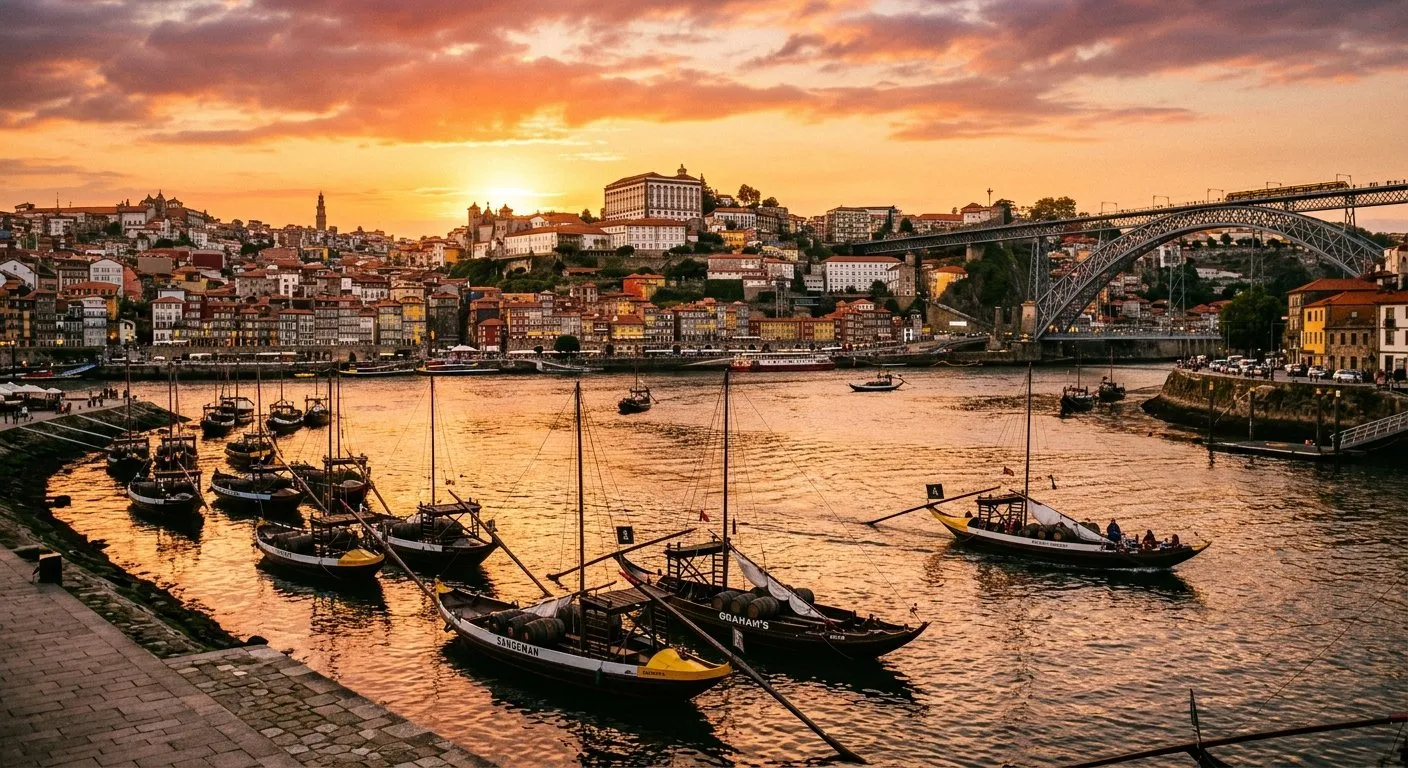
I’ve done the Douro about a dozen times — by train, by car, on a luxury cruise my parents booked, and stumbling out of a Quinta do Crasto tasting after what I told myself was “just a taste” of 40-year tawny. It’s the most photographed landscape in Portugal for a reason: terraced vineyards cascading down to a river that turns copper at sunset, punctuated by 18th-century stone quintas that have been making wine for longer than most countries have existed.
This guide covers the four ways to actually visit (ranked honestly), the quintas worth your time, when to go, what to eat, and how to avoid the classic first-timer mistake of booking five tastings and remembering none of them. Let’s start with logistics.
How to Get to the Douro Valley From Porto
From Porto, the Douro is 100-150 km east. You have four options: the scenic CP train from São Bento to Pinhão (2h, €13-€30 each way, most beautiful second half), your own rental car via A4 (2h, maximum flexibility for multiple quintas), an organized day tour (€80-€250, handles logistics and pours), or a river cruise (1-day €65-€95, multi-day €500-€3,000+).
The train is the most underrated option. Trains leave São Bento every 1-2 hours; the last hour from Régua to Pinhão hugs the river and is one of the great train rides in Europe. Buy 5+ days ahead at cp.pt for Promo fares. Sit on the right-hand side going east.
Rental car gives you access to higher-elevation quintas the train can’t reach. The N-222 between Régua and Pinhão was voted the world’s best driving road by Avis in 2015 (sample-size questionable, views not). Booking.com car rental comparison saves €40-€80 for a day hire from Porto.
Organized tours via GetYourGuide run €85-€140 for a small-group day with 2-3 tastings, a terrace lunch, and usually a 1-hour river cruise. Non-drinkers, non-drivers, or anyone not wanting to plan: book this.
Cruises range from 1-day Porto → Régua round trips (€65-€95) to luxury 7-night Viking or CroisiEurope sailings (€1,800-€3,500+). The scenery’s the same; the wine’s the difference.
Best Quintas to Visit (and How to Book Them)
Most visitors try to cram in 4-5 tastings and remember nothing. Pick 2-3, book each online 1-2 weeks ahead, and space them: one morning, one afternoon, lunch in between. My top five based on a dozen visits: Quinta do Crasto (iconic view), Quinta do Bomfim (education), Quinta do Seixo (modernity), Quinta da Pacheca (sleep in a barrel), and Quinta do Vallado (lunch heaven).
Quinta do Crasto — The Infinity Pool
Crasto’s infinity pool overlooking the river is the photo you’ve seen a hundred times. Standard tasting €15 (4 wines, 45 minutes); premium flight with vintage ports runs €30-€45. Book through their site. The driveway is a hairpin test of your rental — drive up slow. Their LBV and Reserva Tinto are the takeaways.
Quinta do Bomfim (Symington Family) — The Educational Tour
Owned by the Symingtons (the family behind Dow’s, Warre’s, and Graham’s), Bomfim’s tour is the most rigorous in the valley — €20 for a 75-minute tour through the lagares and cellars, ending with a flight of Dow’s ports. Book online 1 week ahead. Their 20-year tawny is worth the upgrade.
Quinta do Seixo (Sandeman) — Modern, Group-Friendly
Sandeman’s visitor center is the slickest in the valley — modern architecture, expansive terrace, and English-speaking guides fluent in group tours. €18-€35 depending on flight. Best option if you’re traveling with non-wine-geeks.
Quinta da Pacheca — Sleep in a Wine Barrel
Pacheca runs full-tilt Insta-destination operations: wine barrel rooms (€280-€400/night), a panoramic terrace restaurant, and €18-€25 tastings. The experience is polished to a shine; authenticity purists will roll their eyes but your Instagram won’t. Booking.com is the easiest way to check barrel availability.
Quinta do Vallado — Lunch Heaven
Vallado’s restaurant is the best lunch stop in the valley. €65/person for a 4-course tasting menu paired with their wines. Book a week ahead. Their 30-year tawny is a religious experience.
Best Seasons to Visit the Douro
The Douro has four distinct personalities. September is vindima (harvest) — you can stomp grapes in lagares at participating quintas, and the hills buzz with pickers. April-May is lush green with wildflowers. October brings flaming autumn colors on the vines. June and July are gorgeous but hot (35-40°C is normal) and booked solid. Avoid winter — many quintas close.
September vindima is the answer if you can only pick one month. Quinta da Pacheca, Quinta Nova, and a handful of others run grape-stomping evenings — you’ll literally get in a stone lagar with a dozen other tourists and crush grapes by foot for an hour, followed by dinner and a dance. It’s a tourist experience now, but it’s a genuine tradition, and you’ll remember it.
April-May is the photographer’s favorite. Vines are green, rivers are full, and temperatures sit in the low 20s°C. Crowds are thinner. My favorite time to take friends.
October after harvest is quieter and cheaper. Hotels drop 20-25% and quintas have bandwidth to give you proper attention during tastings.
Skip November-March. Cold, short days, many quintas shut to visitors. Not worth it unless you’re a serious collector doing private cellar tours.
Where to Stay Overnight
Stay overnight. Seriously. A day trip from Porto misses the valley at sunset and sunrise — the two hours you’ll remember most. Pinhão village has affordable mid-range hotels (€90-€200), while quinta stays (€180-€600) and the handful of luxury wine hotels (Six Senses Douro Valley, The Vintage House, €400-€800+) raise the ceiling dramatically.
- Pinhão budget-to-mid: Vintage House Hotel (€180-€320, riverfront, old-world), LBV House Hotel (€90-€140, small and charming)
- Quinta stays: Quinta do Crasto (€350-€550, book 3+ months ahead), Quinta Nova (€280-€450), Quinta da Pacheca (€280-€400, the barrel rooms)
- Luxury: Six Senses Douro Valley (€500-€1,200, infinity pool that ruins all other pools), The Yeatman Porto (not in the Douro, but Douro-themed, €450-€900)
Book via Booking.com 2-4 months ahead for September-October weekends. Everything good sells out.
What to Eat in the Douro
Douro food is hearty, meat-forward, and built to stand up to tannic reds and sweet ports. Must-eats: cabrito assado (roast kid goat, sublime at Quinta do Vallado), cozido à portuguesa (mixed meat and veg stew), posta mirandesa (thick beefsteak from the north), olives the size of grapes, local cheeses (Serra da Estrela, Terrincho), and arroz de cabidela for the adventurous (chicken rice cooked in its own blood — genuinely delicious).
For lunch off the tour circuit: DOC in Folgosa (chef Rui Paula, €90-€140 tasting menu, river terrace) is the valley’s standout fine-dining option. Castas e Pratos in Régua does great modern Portuguese at €35-€55/person. Cozinha da Clara at Quinta Nova is my sleeper pick — €55 for a leisurely 3-hour lunch with paired wines.
Cost Breakdown — What You’ll Actually Spend
| Tour Style | Cost/Person | Effort Level | Experience Quality | Best For |
|---|---|---|---|---|
| DIY train to Pinhão | €50-€90 (train + 2 tastings) | Moderate (logistics on you) | Flexible but limited to walkable quintas | Budget travelers, couples |
| Rental car day trip | €80-€140 (car + tastings + lunch) | High (narrow mountain roads) | Full access, 3 quintas possible | Confident drivers, groups of 2-4 |
| Small-group day tour | €85-€140 | Zero | Solid, 2-3 quintas + lunch | First-timers, non-drivers |
| Private day tour | €250-€500 total | Zero | Tailored, premium quintas | Groups of 3-6, special occasions |
| 1-day river cruise | €65-€95 | Zero | Scenery-focused, light on wine | Non-drinkers, photographers |
| Multi-day luxury cruise | €1,800-€3,500+ | Zero | Comfortable, full-service, low-wine | Older travelers, cruise fans |
| Overnight quinta stay | €300-€700 for 2 days | Moderate | Best overall experience | Anyone who can afford it |
Port Wine Types Explained (Briefly)
- Ruby — youngest, fruit-forward, €8-€20. Entry level.
- Tawny — aged in oak, nutty and caramel. 10, 20, 30, 40-year labels. €20-€120. My favorite style.
- Late Bottled Vintage (LBV) — single year, aged 4-6 years in barrel. €15-€30. Great value.
- Vintage — only declared in great years, aged 2 years in barrel then in bottle. €50-€300+. Collector territory.
- White Port — overlooked. Mix with tonic over ice for the perfect summer aperitif (€8-€15).
If you’re new to port, work your way through a tawny flight (10, 20, 30-year) at Bomfim or Graham’s. That’s where port makes sense.
Common Mistakes
- Not booking tastings in advance. Most quintas require it. Walk-ups regularly get refused.
- Trying to visit 5 quintas in one day. You’ll be drunk by lunch and remember nothing. Max 3.
- Skipping lunch for more tastings. The tasting pours are small but they add up. Eat real food.
- Day-tripping from Porto. You miss the best light. Stay one night minimum.
- Not arranging transport between quintas. They’re 5-30 minutes apart by car. Walking isn’t viable.
- Ignoring the table wines. Douro DOC reds (Quinta do Vale Meão, Quinta Vale D. Maria) rival Bordeaux at a third the price. Try them.
- Driving after tastings. Portuguese BAC limit is 0.5 — tight. Use a driver, tour, or train.
Final Thoughts
The Douro is one of those places that looks exactly as advertised and then somehow exceeds it. If you have the time, stay two nights, rent a car, and do three quintas spread across two relaxed days with long lunches. If you have one day and want zero stress, book a small-group tour and ride the train home buzzed and happy. Either way, don’t skip it for a third day in Porto.
Porto itself makes a natural base for Douro visits — more on that in our guide to Living in Porto 2026: Complete Expat Guide. If you’re building a bigger Portugal trip, see our 10 Days in Portugal: The Perfect Itinerary for First-Time Visitors itinerary, and for reference on how Lisbon-based day trips compare, check out our rundown of the 8 Best Day Trips from Lisbon (2026 Guide).
Frequently asked questions
When is vindima (harvest)?
Late August through early October, peaking mid-September. Exact dates shift yearly with weather. Book grape-stomping experiences at Quinta da Pacheca or Quinta Nova 2-3 months ahead — they sell out.
Is it worth staying overnight in the Douro?
Absolutely. A day trip from Porto gives you 4-5 hours in the valley. An overnight gives you sunset, sunrise, a proper dinner, and no stress about missing the last train. The extra €150-€300 is the best money you’ll spend on a Portugal trip.
Do I need to book tastings ahead?
Yes, for every quinta worth visiting. Smaller family quintas often won’t let you in without a reservation. Book through the quinta’s own website or via [GetYourGuide](/) combos. 1-2 weeks ahead in shoulder season, 3+ weeks ahead September-October.
Is the Douro worth it for non-drinkers?
Yes. The river cruises are spectacular, the countryside rivals Tuscany, and the food is terrific independent of wine. Most quintas offer non-alcoholic tasting alternatives (grape juice, regional olive oils) if you ask. A 1-day river cruise without tastings is still a knockout day.
Can I ship wine home to the US or UK?
Most big quintas (Symington properties, Sandeman, Taylor’s) ship internationally for €40-€90 per 6-bottle case plus import duties. US shipping is state-dependent — some states don’t allow direct wine imports. UK shipping is straightforward post-Brexit but duty-heavy. Confirm with the quinta before paying.
Some links on this page are affiliate links. If you buy through them, we may earn a commission at no extra cost to you. How we research and update our guides