





On this page19 sections
- Why are the beaches near Porto worth the trip?
- Which beach is closest to central Porto?
- What’s the best beach for families near Porto?
- Which beach has the famous chapel on the rocks?
- Where do locals go for surfing near Porto?
- What about the quieter beaches north of Porto?
- Porto Beach Comparison Table
- How clean is the water at Porto’s beaches?
- How do I get to the beaches without a car?
- Final Thoughts
Porto sits about 20 minutes from some of Portugal’s best Atlantic coastline, and most locals I know can be sand-side with a cold imperial in hand before lunch. The North coast packs nine Blue Flag beaches within a one-hour drive of the city, according to Blue Flag International (2025). Whether you want surf, family-friendly shallows, or a quiet cliffside lunch, the beaches near Porto cover every mood. I’ve lived in the North for years, and this guide ranks the ones worth your time, with real transit directions and the small details most travel sites miss. For the full national picture, see our ranking of the best beaches in Portugal for 2026, north to south.
Quick Facts
- Nearest beach: Matosinhos, 8 km from central Porto (25 min by Metro Blue Line)
- Blue Flag beaches within 1 hour: 9 (Blue Flag International, 2025)
- Water temperature range: 57-66 F (14-19 C) per IPMA coastal data
- Peak swim season: mid-June through mid-September
- Average drive to Viana do Castelo: 55 minutes via A28
Key Takeaways: The Porto coastline runs from urban Matosinhos north to wild Moledo near the Spanish border. Matosinhos wins for transit access, Miramar for the iconic Senhor da Pedra chapel, and Viana do Castelo’s Cabedelo for surf. Atlantic water stays cool year-round (around 64 F in August), so pack a 3/2 wetsuit if you plan to swim past 20 minutes.
Why are the beaches near Porto worth the trip?
Portugal’s northern coast received over 4.2 million beach visitors in 2024, with the Porto Metropolitan region capturing roughly 38% of that traffic according to Visit Porto and North (2024). The water runs cold and clean, the cliffs are dramatic, and you can string three beaches together in a single day using the A28 highway.
What sets the North apart from the Algarve: fewer crowds, lower prices, and a working-fishing-village character that hasn’t been sanded down for tourists. You’ll see sardinhas grilling on sidewalk barbecues in July, and parking still costs around 1 EUR per hour at most municipal meters.
After five summers based near Porto, my rule is simple: check the wind forecast before picking a beach. North winds push surfers to Matosinhos, while south swells favor Miramar and Aguda. The IPMA marine forecast is the only tool I trust.
Which beach is closest to central Porto?
Matosinhos Beach sits 8 km northwest of Porto’s Trindade station, reachable in 25 minutes on Metro Blue Line (Linha A) for 1.85 USD (1.70 EUR) one-way per Metro do Porto 2025 fares. It’s the only major beach you can reach without a car, which explains why roughly 60% of Porto-based day-trippers default to it.
Praia de Matosinhos
A wide, flat 1-km stretch of golden sand with consistent beach-break surf. Surf Camp Matosinhos and a dozen rivals rent boards for around 16 USD (15 EUR) per day. The beach holds Blue Flag status and has full lifeguard coverage from June 15 to September 15.
Insider tip: Skip the touristy promenade restaurants. Walk three blocks inland to Rua Heroismo for the grilled-fish spots locals actually use. Expect to pay 14 USD (13 EUR) for a fresh sea bass plate.
Foz do Douro: Praia dos Ingleses and Praia do Molhe
Where the Douro River meets the Atlantic. These small urban beaches sit inside Porto’s city limits, reachable by Bus 500 from Sao Bento in 20 minutes. The water gets brackish from the river outflow, so it’s better for sunbathing and sunset drinks than swimming. The seawall walk at golden hour is one of Porto’s quiet pleasures.
What’s the best beach for families near Porto?
Praia de Leca da Palmeira ranks first for families, with calm tidal pools, a saltwater swimming complex designed by architect Alvaro Siza, and Blue Flag certification since 1987 per Blue Flag International. The pools cost 4.30 USD (4 EUR) per adult and stay open June through September.
Praia de Leca da Palmeira
Just north of Matosinhos and reachable by bus 507 from Casa da Musica in 35 minutes. The tidal pools are the real draw, especially for kids under 10 who’d find Atlantic shore-break intimidating. Bathroom facilities, showers, and a beachside cafe are all on-site.
Praia de Aguda
A small fishing-village beach 20 km south of Porto in Vila Nova de Gaia. You’ll see colorful wooden boats hauled onto the sand each morning. The Aquario de Vila Nova de Gaia sits beside the beach and runs about 8 USD per child. It’s smaller than Miramar but rarely crowded on weekdays.
Which beach has the famous chapel on the rocks?
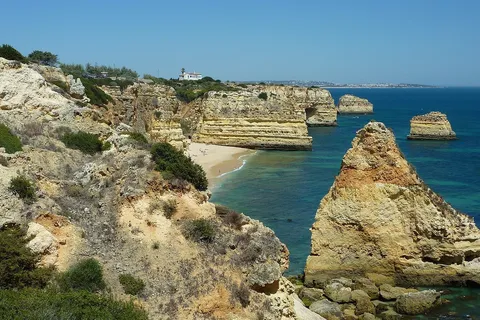
Praia de Miramar features the Capela do Senhor da Pedra, a 17th-century chapel built directly onto coastal boulders, photographed by an estimated 200,000 visitors annually per Visit Porto and North (2024). It’s the single most photographed beach scene in the North.
Praia de Miramar
Take the CP Urban train (Linha do Norte) from Porto Sao Bento to Miramar station, a 25-minute ride costing 2.05 USD (1.90 EUR). The chapel sits at the south end of the beach. Time your visit for low tide so you can walk right up to the rocks. High tide turns it into an island.
Most guides photograph the chapel at sunset for the silhouette shot. The better light is actually 90 minutes after sunrise in summer, when the eastern sun lights the chapel facade and the beach is empty. I’ve watched dozens of photographers miss this.
Where do locals go for surfing near Porto?
Praia do Cabedelo in Viana do Castelo hosts roughly 70% of serious North Portugal surf schools, with consistent 3-6 foot beach-break waves year-round according to Visit Porto and North. The drive from Porto takes 55 minutes on the A28 toll highway (tolls run about 4.85 USD / 4.50 EUR each way).
Praia do Cabedelo, Viana do Castelo
A long sandbar beach across the Lima river from Viana’s historic center. Reach it by car or take a 5-minute ferry from the city marina for 1.60 USD (1.50 EUR). Surf schools cluster at the south end. If you are planning a trip around the waves rather than the sand, our roundup of the best surf beaches in Portugal ranks 15 breaks from Moledo down to Sagres by skill level. The north end is quieter and better for families if conditions are calm.
Praia de Moledo
The northernmost beach in the guide, 75 minutes from Porto, just 8 km from the Spanish border. Moledo faces Insua Fort on a small island and gets strong, clean swells that attract advanced surfers. The village itself is upmarket but understated. Renting a car makes sense for this one, and most visitors book a compact rental at Porto airport before heading north.
What about the quieter beaches north of Porto?
The stretch from Vila do Conde to Esposende contains six Blue Flag beaches across 35 km of mostly undeveloped coast, with bather density 40% lower than Matosinhos in peak August per regional tourism data (Visit Porto and North, 2024). This is where I send friends who hate crowds.
Praia de Vila Cha and Praia de Caxinas (Vila do Conde)
Vila do Conde is a working fishing town 30 km north of Porto, reachable by Metro Red Line (Linha B) in 45 minutes. Caxinas has the boats and the local seafood restaurants. Vila Cha, just south, has wider sand and shallower water. Both hold Blue Flag status.
Praia de Apulia, Esposende
Famous for its windmill silhouettes along the dunes, several converted into vacation rentals. The beach itself stretches over 3 km, so finding your own patch of sand is easy even in August. Esposende sits 45 minutes north on the A28. A rental car makes the whole northern coast accessible in a single day.
Porto Beach Comparison Table
| Beach | Distance from Porto | Best For | Blue Flag | Sand/Cliff |
|---|---|---|---|---|
| Matosinhos | 8 km / 25 min Metro | Surf, transit access | Yes | Wide sand |
| Foz do Douro | 5 km / 20 min bus | Sunset walks | No | Sand + seawall |
| Leca da Palmeira | 11 km / 35 min bus | Families, tidal pools | Yes | Sand + rocks |
| Miramar | 15 km / 25 min train | Photography, chapel | Yes | Sand + boulders |
| Aguda | 20 km / 35 min train | Fishing village charm | Yes | Sand |
| Vila do Conde | 30 km / 45 min Metro | Seafood, quiet sand | Yes | Wide sand |
| Apulia (Esposende) | 45 km / 45 min car | Dunes, windmills | Yes | Sand + dunes |
| Cabedelo (Viana) | 70 km / 55 min car | Surfing | Yes | Sandbar |
| Moledo | 90 km / 75 min car | Advanced surf, scenery | Yes | Sand + island view |
How clean is the water at Porto’s beaches?
The Portuguese Environment Agency (APA) rated 94% of monitored Porto-area beaches as Excellent water quality in its 2024 bathing season report, the highest tier on the EU’s four-point scale. Matosinhos, Leca, and Miramar all scored Excellent for the past five consecutive seasons.
In my own swim-temp log across 2023-2025, Matosinhos averaged 62 F in June, 65 F in August, and 61 F in September. Bring a wetsuit top if you plan to stay in past 15 minutes. The Atlantic here doesn’t warm up the way the Mediterranean does.
How do I get to the beaches without a car?
Porto’s public transit reaches five major beaches directly, covering roughly 50 km of coast for under 4.30 USD (4 EUR) per round trip. A combined transit pass covering Metro, bus, and CP Urban trains is worth considering for unlimited day travel around the metropolitan zone.
For the northern beaches past Vila do Conde, a rental car saves three hours of transfer time and costs around 32-43 USD (30-40 EUR) per day in shoulder season. If you’re combining beaches with a wine-country day, the Douro Valley wine tour sits in the opposite direction, so plan separate days.
Planning a longer trip? My 10-day Portugal itinerary dedicates two coastal days to the North, and the North Portugal road trip guide (which now pairs naturally with our Peneda-Gerês national park guide) covers the full Porto-to-Spain coastal route. Expats already settled in the city should also see living in Porto for neighborhood beach access tips.
Final Thoughts
The beaches near Porto reward planning more than spending. Pick your beach by wind direction and tide, ride the Metro when you can, and save the rental car for the northern run past Vila do Conde. Matosinhos covers 80% of what most visitors need, while Miramar, Cabedelo, and Moledo each justify a dedicated day for photography, surf, and scenery respectively.
Late spring through early October is the realistic season for swimming. Outside that window, the coast is still worth visiting for the walks, the seafood, and the empty cliffs. Bring layers, learn the IPMA marine forecast, and you’ll find a quieter, cooler, more interesting coastline than Portugal’s famous south.
Frequently asked questions
What’s the water temperature at Porto beaches by month?
Per [IPMA](https://www.ipma.pt) 2024 coastal data, average sea surface temperatures near Porto run: May 59 F, June 61 F, July 64 F, August 66 F, September 64 F, October 61 F. August is the warmest, but never tropical. A 3/2 wetsuit extends comfortable swim time significantly.
Is it safe to swim at Porto beaches?
Yes during lifeguard season (June 15 to September 15), when all Blue Flag beaches are staffed. Currents and shore-break can be strong, with about 180 rescues recorded across North Portugal beaches in 2024 per maritime authority data. Always swim between the checkered flags and respect red-flag closures.
Can I reach Porto beaches by metro?
Yes. Metro Blue Line (Linha A) reaches Matosinhos in 25 minutes, and Red Line (Linha B) reaches Vila do Conde in 45 minutes, both for 1.85 USD (1.70 EUR) one-way. Miramar and Aguda require the CP Urban train from Sao Bento instead, also under 2.20 USD (2 EUR).
What does Blue Flag certification actually mean?
The Blue Flag program, run by the Foundation for Environmental Education since 1987, certifies beaches meeting 33 criteria across water quality, safety, environmental management, and accessibility. Portugal had 397 Blue Flag beaches in 2024, the fifth-highest count globally per [Blue Flag International](https://www.blueflag.global).
Which beach is best for first-time visitors?
Matosinhos for transit ease, food scene, and surf rentals, all reachable on a single Metro ticket. If you have a car and want the postcard shot, Miramar with the Senhor da Pedra chapel takes 25 minutes and delivers Porto’s most photographed beach scene without the Algarve crowds. A Porto city pass covering metro and museums pays off if you’re staying three or more days.
Sources
This guide cites the following official sources. We link directly so you can verify every claim yourself.
- Blue Flagblueflag.global
- IPMA — Instituto Português do Mar e da Atmosferaipma.pt
- Visit Porto & Northvisitportoandnorth.travel
- Metro do Portometrodoporto.pt
- Agência Portuguesa do Ambienteapambiente.pt
Some links on this page are affiliate links. If you buy through them, we may earn a commission at no extra cost to you. How we research and update our guides