

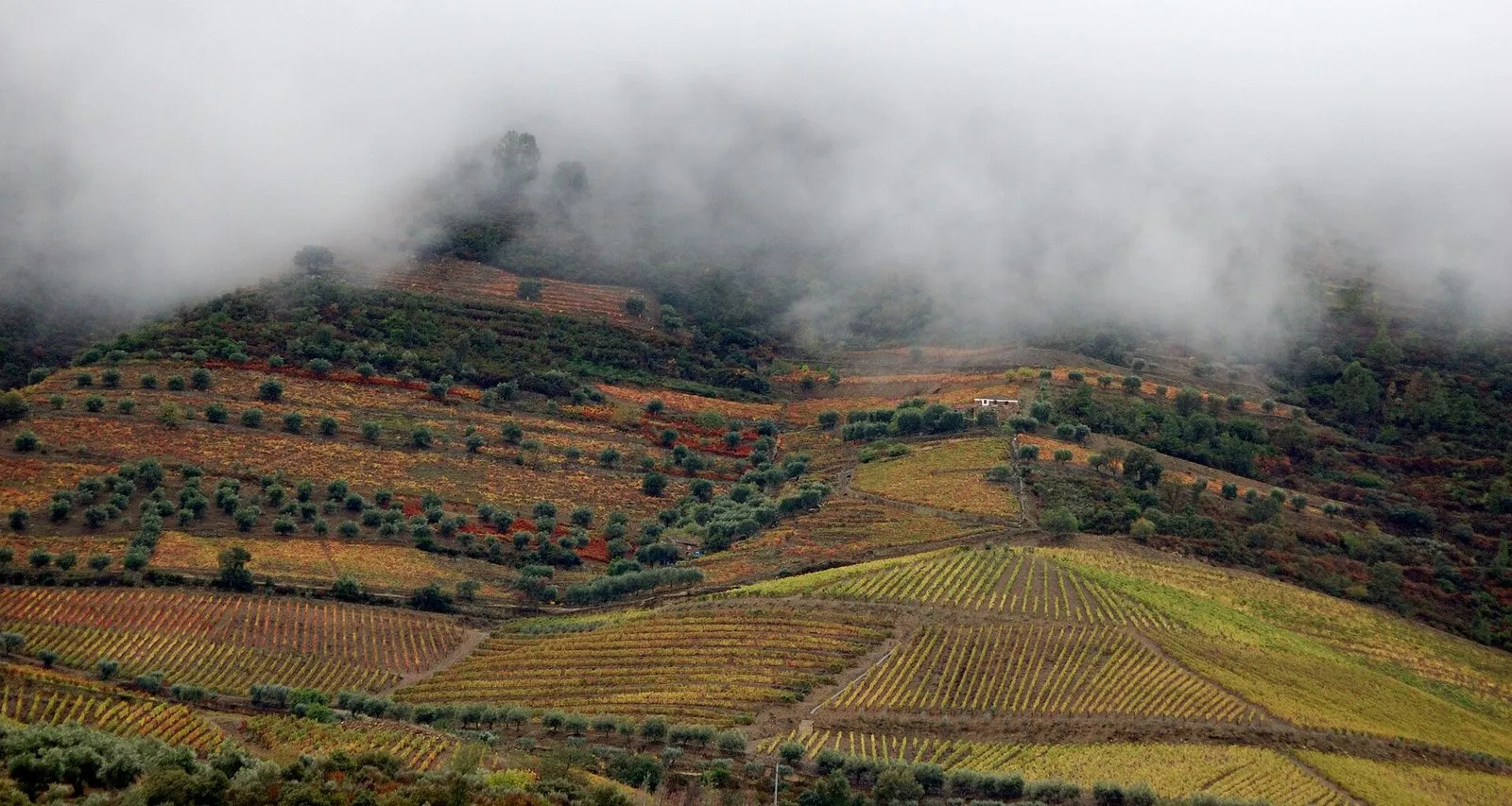

November is the quietest, cheapest and wettest month to visit mainland Portugal. Expect daytime highs around 60 to 66 degrees Fahrenheit in Lisbon and the Algarve, roughly half the summer crowds, hotel rates well below peak, and a genuine chance of three grey days in a row. If that trade sounds fine to you, it’s one of the best-value months of the year.
I live up in the Minho, and November here is the month the year turns. The vineyards go copper, the chestnut sellers appear on street corners, and the tourist coaches disappear almost overnight. Americans planning a first trip tend to write November off entirely, which is a mistake, but they also tend to picture it as a mild California autumn, which is a bigger one. It rains. Properly.
Key Takeaways: Lisbon and the Algarve average highs near 63°F in November with 10 to 12 rainy days; Porto and the north are cooler and wetter. Clocks fell back on October 25, so it’s dark by about 5:20 p.m. November 1 is a public holiday, and São Martinho on November 11 means roast chestnuts and new wine countrywide. Hotel rates drop sharply except during Lisbon’s Web Summit week.
What is the weather in Portugal in November?
Mild, wet and short on daylight. Lisbon typically runs highs of 62 to 66°F (17 to 19°C) and lows near 52°F (11°C). Faro and the Algarve sit a degree or two warmer. Porto averages a couple of degrees cooler and noticeably wetter, and the interior north drops close to freezing on clear nights. Official climate normals and daily forecasts come from IPMA, Portugal’s national weather institute.
| Place | Avg high | Avg low | Rainy days | Character |
|---|---|---|---|---|
| Lisbon | 63°F (17°C) | 52°F (11°C) | ~11 | Bright between fronts, warm in sun |
| Porto | 59°F (15°C) | 48°F (9°C) | ~14 | Wettest big city, green and moody |
| Faro / Algarve | 66°F (19°C) | 54°F (12°C) | ~8 | Mildest and driest mainland option |
| Braga / Minho | 58°F (14°C) | 46°F (8°C) | ~14 | Heavy rain, spectacular autumn colour |
| Funchal, Madeira | 72°F (22°C) | 63°F (17°C) | ~9 | Subtropical, warmest in the country |
| Serra da Estrela | 48°F (9°C) | 34°F (1°C) | ~13 | First snow possible late month |
The number that catches Americans out isn’t temperature, it’s daylight. Clocks went back on October 25, so the sun sets around 5:20 p.m. at the start of November and closer to 5:10 p.m. by the end. Sightseeing days are genuinely short. Plan outdoor things for mornings and museums or long lunches for the dark half of the afternoon.
The second thing to know is that Portuguese buildings are cold inside. Central heating is uncommon in older housing, stone walls hold damp, and a 57°F apartment with no heat feels far worse than a dry 30°F day in Boston. When you book accommodation, filter for heating specifically rather than assuming it exists. Our winter guide to Portugal covers packing in more detail, and most of it applies from mid-November onward.
Is November a good time to visit Portugal?
Yes, if you’re coming for cities, food, wine and history rather than beaches. It’s the best month of the year for value, and the drop in crowds is dramatic. Sintra’s palaces, Porto’s port lodges and Lisbon’s viewpoints go from queue-managed to almost civilised. Restaurants that need a two-week booking in July will seat you same-day.
It’s the wrong month if your trip depends on swimming, hiking long days, or island-hopping the Azores, where Atlantic weather gets unreliable. The sea off the Algarve still holds around 65°F, which some hardy northern Europeans swim in and most Americans do not.
| Month | Crowds | Weather | Prices | Best for |
|---|---|---|---|---|
| September | High | Excellent | High | Beaches without August chaos |
| October | Moderate | Good, turning | Moderate | Best all-round compromise |
| November | Low | Mild and wet | Low | Cities, wine, food, value |
| December | Low, then spiking | Cold and wet | Low until Christmas | Lights, markets, holidays |
If you’re still choosing, October in Portugal gives you warmer sea and longer days at a modest price premium, and September is the strongest weather month of the shoulder season. November wins on price and quiet, and loses on daylight.
What happens in Portugal in November?
Two dates matter. November 1 is Dia de Todos os Santos, All Saints’ Day, a national public holiday when banks, public offices and many shops close, and families visit cemeteries with flowers. In 2026 it falls on a Sunday, which softens the disruption but still means reduced services. The official holiday calendar is published at portugal.gov.pt.
November 11 is São Martinho, and it’s the one to plan around. It’s not a public holiday, but the whole country holds magustos: bonfires, roast chestnuts, and água-pé or jeropiga, the young half-fermented wine drunk while it’s still cloudy. Villages, town squares, schools and workplaces all do a version. The saying is “no São Martinho, vai à adega e prova o vinho” — on Saint Martin’s day, go to the cellar and taste the wine. It’s also reliably a warm sunny spell, the verão de São Martinho, though that’s folklore rather than forecast.
Lisbon’s Web Summit has run in early-to-mid November for years and is contracted to the city through the late 2020s. It brings tens of thousands of attendees and hotel rates in Lisbon and Cascais roughly double for that week. Check the exact dates before you book anything; if they clash with your trip and you’re not attending, shift by a week or base yourself elsewhere.
Beyond that, November is the tail of the olive and chestnut harvest, the start of the citrus season in the Algarve, and the month restaurants swap grilled sardines for caldo verde, cozido and roast kid. Our guide to Portuguese food covers the winter dishes you’ll start seeing on menus.
Where should you go in Portugal in November?
Go where the weather is a feature rather than a problem. That means the Douro, the Algarve, Madeira, and the big cities.
Douro Valley
This is the strongest November case in the country. The terraces turn gold, copper and red, the harvest crowds have gone, and quintas that are booked solid in September will give you an unhurried tasting. Low cloud sits in the valley in the mornings and burns off by lunch. Take the train from Porto along the Linha do Douro rather than driving, if you want to actually look at it. Our Douro Valley wine guide covers quintas and logistics.
The Algarve
Mildest and driest mainland region, and in November it stops being a resort strip and becomes a place people live. Tavira, Faro and the Ria Formosa are excellent in the off season. Many beach restaurants close, but the towns stay open. Walking the coastal trails is far more pleasant at 66°F than at 95°F.
Madeira
Subtropical, roughly 72°F, and functionally season-proof. If you want warmth in November without leaving Portugal, this is the answer. Levada walks, Funchal, and a much shorter flight from Lisbon than most people expect.
Lisbon and Porto
Both are better in November than in August, honestly. You can walk Alfama without queuing, get into Livraria Lello without a scrum, and eat somewhere good without booking three weeks out. Pack a real rain jacket for Porto. Our Lisbon restaurant roundup is more usable in November than any other month.
What to skip
The Azores get genuinely unsettled, with flight and ferry disruption between islands. High mountain hiking in Peneda-Gerês or Serra da Estrela is possible but weather-dependent and dark by five. Beach holidays anywhere on the mainland are over.
What does a week in Portugal in November cost?
Considerably less than summer. Mid-range hotels in Lisbon that run $180 to $250 a night in July commonly sit at $85 to $130 (~€75 to €115) in November, outside Web Summit week. Flights from the US East Coast drop too, though the Thanksgiving window is an exception. Consumer price and tourism data are published by the Instituto Nacional de Estatística, with longer-run series at PORDATA.
| Item | November | July |
|---|---|---|
| Mid-range Lisbon hotel, per night | $85–$130 (~€75–€115) | $180–$250 (~€160–€220) |
| Rental car, compact, per day | $25–$40 (~€22–€35) | $55–$90 (~€48–€80) |
| Lunch prato do dia, per person | $10–$14 (~€9–€12) | $11–$16 (~€10–€14) |
| Douro quinta tasting | $17–$28 (~€15–€25) | $23–$34 (~€20–€30) |
| Porto–Pinhão train, return | $14–$18 (~€12–€16) | Same |
Restaurant and transport prices barely move by season; accommodation and car hire are where the savings sit. Budget roughly $1,000 to $1,500 (~€880 to €1,320) per person for a week excluding flights, staying mid-range and eating well. That’s a rough planning figure, not a quote. For a fuller cost picture if you’re considering a longer stay, see our cost of living breakdown for expats.
One November-specific cost worth paying: travel insurance. Atlantic storm systems cause real flight disruption from mid-November onward, and a delayed connection through Lisbon in a storm is a normal occurrence rather than bad luck.
What should you pack for Portugal in November?
Layers, and waterproofs that actually work. A packable rain shell, a warm mid-layer, and shoes with grip. Portuguese calçada, the polished limestone paving in every historic centre, is genuinely slippery when wet and sends people to the emergency room every year.
Bring something warm to wear indoors. This is the advice returning visitors give most often and first-timers ignore. Restaurants, guesthouses and apartments are frequently unheated or lightly heated, and you will want a sweater at dinner. A small umbrella is more useful than a big one in coastal wind.
Skip the beach gear unless you’re going to Madeira. Do bring a swimsuit anyway if your hotel has a spa, which many off-season places lean into with discounted packages.
November rewards travellers who came for the country rather than the weather. You’ll get the Douro at its best colour, cities you can actually move through, restaurant tables without a fight, and prices that make a longer trip possible. You’ll also get wet at least once, be indoors by six, and want a sweater at dinner. Pack for that and it’s one of the most rewarding months Portugal has. Bring the rain jacket, book a quinta tasting, and go find a magusto on the eleventh.
Frequently asked questions
Does it rain every day in Portugal in November?
No. Lisbon averages around 11 rainy days in November and Porto around 14, meaning roughly half to two-thirds of days stay dry. Rain typically comes in Atlantic fronts lasting a day or two, followed by clear bright spells. The pattern is bands of weather, not constant drizzle, so a flexible itinerary beats a fixed one.
Is November 1 a public holiday in Portugal?
Yes. Dia de Todos os Santos, All Saints’ Day, is a national public holiday. Banks, public offices and many independent shops close, museums keep varied hours, and cemeteries are busy with families laying flowers. In 2026 it falls on a Sunday. December 1 and December 8 are the next national holidays after it. For the peak of the season, our guide to [Portugal in December](/travel/portugal-in-december/) covers weather by region, costs and Christmas timing.
Can you swim in Portugal in November?
Technically yes in the Algarve and Madeira, practically not for most Americans. Algarve sea temperatures hold around 65°F (18°C) in November, and Madeira a little warmer. Beaches are unpatrolled outside the summer season, Atlantic swells are stronger, and mainland beach facilities are largely closed. Treat November as a coastal walking month.
What is São Martinho and should I plan around it?
São Martinho on November 11 is Portugal’s chestnut-and-new-wine festival. Towns hold magustos with bonfires, roast chestnuts and água-pé, the cloudy young wine of the year. It isn’t a public holiday, so nothing closes, but it’s the single most atmospheric day of the month and worth timing a trip around if you can, particularly in the north.
Is Portugal cheaper in November?
Yes, significantly. Accommodation and rental cars are the biggest movers, often 40 to 50 percent below July rates. The exception is Lisbon during Web Summit week in early-to-mid November, when hotel prices roughly double citywide. Restaurant, transport and attraction prices stay broadly flat year-round.
Is November better than December in Portugal?
November is milder and cheaper; December has the atmosphere. Early December keeps November’s low prices while adding city lights and markets, then rates spike from about December 20. If you want quiet and value, come in November. If you want the season itself, our guide to [Christmas in Portugal](/daily-life/christmas-in-portugal/) explains how the Portuguese holidays actually work, and they don’t work the way American ones do.
Sources
This guide cites the following official sources. We link directly so you can verify every claim yourself.
- IPMA — Instituto Português do Mar e da Atmosferaipma.pt
- Governo de Portugalportugal.gov.pt
- INE — Instituto Nacional de Estatísticaine.pt
- PORDATApordata.pt
Some links on this page are affiliate links. If you buy through them, we may earn a commission at no extra cost to you. How we research and update our guides