




On this page14 sections
Key Takeaways: Galicia day trips from Portugal are some of the easiest border crossings in Europe. Both countries sit inside the Schengen Area, so there’s no checkpoint, but Spain runs one hour ahead of Portugal and that single detail ruins more itineraries than anything else. Tui is about 10 minutes from Valença. Vigo, Baiona, Santiago and Ourense are all doable in a day. The Cíes Islands need an advance permit.
I live about 40 minutes from the Minho river, and I cross into Spain more often than some of my neighbors drive to Porto. That’s the strange gift of Northern Portugal: an entire Spanish region, with its own language, its own seafood obsession and its own pilgrimage city, sits within an easy morning’s drive. If you’re American and used to state lines meaning nothing, Galicia will feel familiar in the best way. No booth, no stamp, no questions. Just a bridge over the Minho and suddenly the road signs change.
Below are six day trips I’ve done repeatedly, with honest drive times, the practical stuff nobody tells you, and the one mistake almost every visitor makes.
Is it really this easy to drive from Portugal into Spain?
Yes. Portugal and Spain are both Schengen Area members, which means there’s no routine border control when you drive across. On the Valença to Tui crossing you’ll pass a sign, a river and not much else. But easy doesn’t mean lawless. Carry your passport or Portuguese residence card anyway, because Spanish police can and do run identity checks inland, and hotels and ferry operators will ask for ID.
The other document that matters is your driver’s license. If you’re a US visitor renting a car, bring your home license plus an International Driving Permit. If you’re a resident, carry whatever license you legally drive on in Portugal. Spain recognizes it the same way.
The border being invisible creates a false sense of sameness. Galicia is not northern Portugal with different spelling. Lunch runs later, shops close harder in the afternoon, and Galician (galego) sits close enough to Portuguese that you’ll understand signs but stumble on speech. If you’re weighing the two countries more broadly, our Portugal vs Spain comparison for 2026 goes deeper on cost and lifestyle differences.
The one-hour time difference is the mistake everyone makes
Spain is one hour ahead of Portugal, year round. Portugal runs on WET (Western European Time) and Spain runs on CET (Central European Time). Both shift for daylight saving on the same dates, so the gap never closes. Leave Porto at 9:00 and you arrive in Vigo at what Spain calls 11:45, not 10:45.
I’ve watched people miss a Cíes ferry, a museum’s last entry, and a restaurant’s kitchen close, all because of this. Galician kitchens often stop serving lunch around 16:00 Spanish time, which is 15:00 on your phone if it hasn’t updated. Modern phones switch automatically once they catch a Spanish tower, but that can lag by several minutes in the valleys near Tui.
My rule: the moment you cross the Minho, look at your phone and say the Spanish time out loud. Then set every booking reminder in Spanish time. It sounds silly. It works.
Quick check: Every ferry time, tour time, restaurant reservation and closing time you read on a Spanish website is Spanish time. Every drive time in this article is measured in hours, not clock times, so you can add them to either.
What do the tolls and Via Verde actually cost?
Both countries charge tolls on their main motorways, and the systems don’t automatically talk to each other. The A3 from Porto north to Valença is tolled on the Portuguese side. On the Spanish side, the AP-9 running Tui to Vigo to Santiago is a toll motorway too.
Here’s the part to verify rather than assume: a Portuguese Via Verde transponder can work on Spanish AP motorways, but only if your account is enabled for Spain. It is not automatic on every plan. Log into your Via Verde account or call them before you go, and confirm the Spain option is active on the device you’re carrying. If it isn’t, use the cash and card lanes, which are clearly marked and always available.
Budget roughly $12 to $25 (~€10 to €22) each way in tolls for a Porto to Santiago run, depending on route and vehicle class. Treat that as approximate. Fuel in Spain is often slightly cheaper than in Portugal, so a lot of people at the border fill up on the Spanish side out of habit.
Renting a car? Confirm the cross-border policy first
Many Portuguese rental agreements permit travel into Spain, and plenty of people cross without ever thinking about it. But some agencies charge a cross-border fee, some require advance notice, and a few restrict certain vehicle categories entirely. Insurance coverage can also change once you leave the country of rental.
Call or email the agency, get the answer in writing, and keep it on your phone. It takes five minutes and it’s the difference between a fine and a shrug. This matters more if you’re combining Galicia with a longer Northern Portugal road trip.
Which Galicia day trips from Portugal are worth your time?
Six destinations cover almost everything a first-timer wants: a real city, a border town, a fishing harbor, an island beach, a cathedral, and hot springs. Drive times below assume normal traffic from Porto’s north side and from Valença, the Portuguese border town directly across from Tui.
| Destination | Drive from Porto | Drive from Valença | Best for | Worth a full day? |
|---|---|---|---|---|
| Tui | ~1 hr 30 min | ~10 min | Cathedral, old town, easiest first crossing | No, half day |
| Vigo | ~1 hr 45 min | ~35 min | City energy, oysters, shopping, ferry port | Yes |
| Baiona | ~2 hr | ~45 min | Seaside walls, harbor, relaxed lunch | No, half day |
| Cíes Islands | ~2 hr + ferry | ~35 min + ferry | Beaches, hiking, summer only, permit required | Yes, full day |
| Santiago de Compostela | ~2 hr 30 min | ~1 hr 20 min | Cathedral, pilgrim atmosphere, old quarter | Yes |
| Ourense | ~2 hr 15 min | ~1 hr 15 min | Thermal hot springs, riverside, low crowds | Yes |
Tui: the ten-minute Spain
Tui sits directly across the Minho from Valença, connected by an iron bridge designed in the 19th century. Walk it if the weather’s decent. The fortified cathedral looks more like a castle than a church, the old town is genuinely medieval, and the whole visit takes two or three hours.
This is the trip I recommend to anyone nervous about crossing. Do Valença’s walled fortress in the morning, cross for lunch in Tui, come home. Total driving from Porto is under three hours round trip.
Vigo: Galicia’s working city
Vigo is a real port city, not a postcard. It’s noisy, hilly and food-obsessed. The Mercado da Pedra and the adjoining Rúa Pescadería, known locally as the oyster street, is where you eat oysters shucked in front of you at a folding table. Expect roughly $14 to $22 (~€12 to €19) per dozen, approximate and seasonal.
Vigo is also the main ferry port for the Cíes Islands, so plenty of people combine the two. If you enjoy comparing food cultures, the contrast with our Portuguese food guide is sharper than you’d expect for two regions sharing a river.
Baiona: the harbor town with the good walls
Baiona claims the first news of Columbus’s return reached Europe here, and there’s a replica caravel in the harbor. The real draw is the Monte Real fortress peninsula, now a parador, with a walking path around the walls and open Atlantic on three sides. It pairs naturally with a beach day if you’re already exploring the best beaches near Porto and want a Spanish variation.
Cíes Islands: the one you must book ahead
The Cíes Islands are part of the Atlantic Islands of Galicia National Park, and visitor numbers are capped. During the high season, meaning Easter and roughly mid-May to mid-September, you need a free authorization from the Xunta de Galicia before you can buy a ferry ticket, and the ferry operators check the code. Requests open around 90 days ahead, and once your code is issued you typically have only a couple of hours to complete the ferry purchase before it lapses. Ferries run seasonally, concentrated in summer, from Vigo, Cangas and Baiona.
I’m deliberately not quoting a quota number or a ticket price, because both change by season and by year and outdated figures cause real problems. The process is what matters: request the authorization through the Xunta’s official system first, receive your code, then book the ferry. Do it early, because summer weekends fill fast. Start at the Xunta de Galicia site and cross-check ferry schedules with the operator directly.
The islands have almost no infrastructure by design. One small shop, a campsite, limited food. Bring water, sunscreen and lunch. Americans expecting a national park visitor center will be surprised.
Santiago de Compostela: worth the drive even if you’re not walking
Santiago is the endpoint of the Camino, and the old city has a density of stone and atmosphere that survives the crowds. Arrive by 11:00 Spanish time, walk the cathedral square, eat late, drive home in daylight. The Portuguese Camino actually starts down in Porto and passes near Valença, so you’ll see pilgrims on your route north.
From Porto it’s the longest of these drives at roughly two and a half hours. Doable in a day, tiring but worth it. Turismo de Galicia publishes current opening hours and pilgrim office information.
Ourense: hot springs in a river valley
Ourense is inland, about an hour and change from Valença, and it’s built around naturally hot thermal water. Some pools are free public ones along the Miño river, others are paid spa complexes charging somewhere in the $6 to $18 (~€5 to €15) range, approximate. Bring a towel and flip-flops. Go on a weekday if you can.
This is my favorite winter crossing. Cold air, hot water, almost no tourists. If you like that kind of low-key outdoor day, it rhymes with what draws people to Peneda-Gerês National Park on the Portuguese side.
Can you do it without a car?
Yes, though with less flexibility. The Celta service links Porto and Vigo, operated jointly by Portugal’s CP and Spain’s Renfe, with a small number of departures per day. One thing to know for 2026: because of engineering works on the Spanish section, the Spanish leg has been running as a replacement bus between Valença and Vigo-Guixar, with no intermediate stops. Journey times can vary with traffic, so confirm the current arrangement with CP before you book. Buses also run the corridor, including services from Porto and Braga toward Vigo and Santiago.
Timetables change, sometimes with seasonal engineering work, so check CP and Renfe directly instead of trusting a schedule you read on a blog, including this one. Remember that Spanish departure times are posted in Spanish time.
If you’re based inland, living in Braga puts you within reasonable reach of the border by bus as well.
When should you go?
May, June and September are the sweet spot. July and August bring Spanish domestic tourism at full volume, and Cíes permits get scarce. Galicia is genuinely rainy, more so than the Algarve by a wide margin, and Atlantic weather flips fast. Check IPMA before you leave Portugal and look at Galician forecasts separately, because the Minho valley and the coast behave differently.
Winter works fine for Ourense, Santiago and Tui. It does not work for Cíes, which is effectively a summer destination. For broader seasonal planning across the country, see our Portugal travel guide for 2026, and Visit Portugal for the official side.
The bottom line
Galicia day trips from Portugal are, honestly, the most underrated perk of living up north. Six destinations, no border formalities, and a whole different food culture within two hours of Porto. Get three things right and the rest takes care of itself: set your watch to Spanish time the moment you cross, confirm your tolls and rental policy before you leave, and book Cíes far earlier than feels necessary.
Start with Tui on a Saturday morning. If it goes well, and it will, work your way up to Santiago. I’ve been doing this for years and the bridge over the Minho still feels like a small piece of magic every single time.
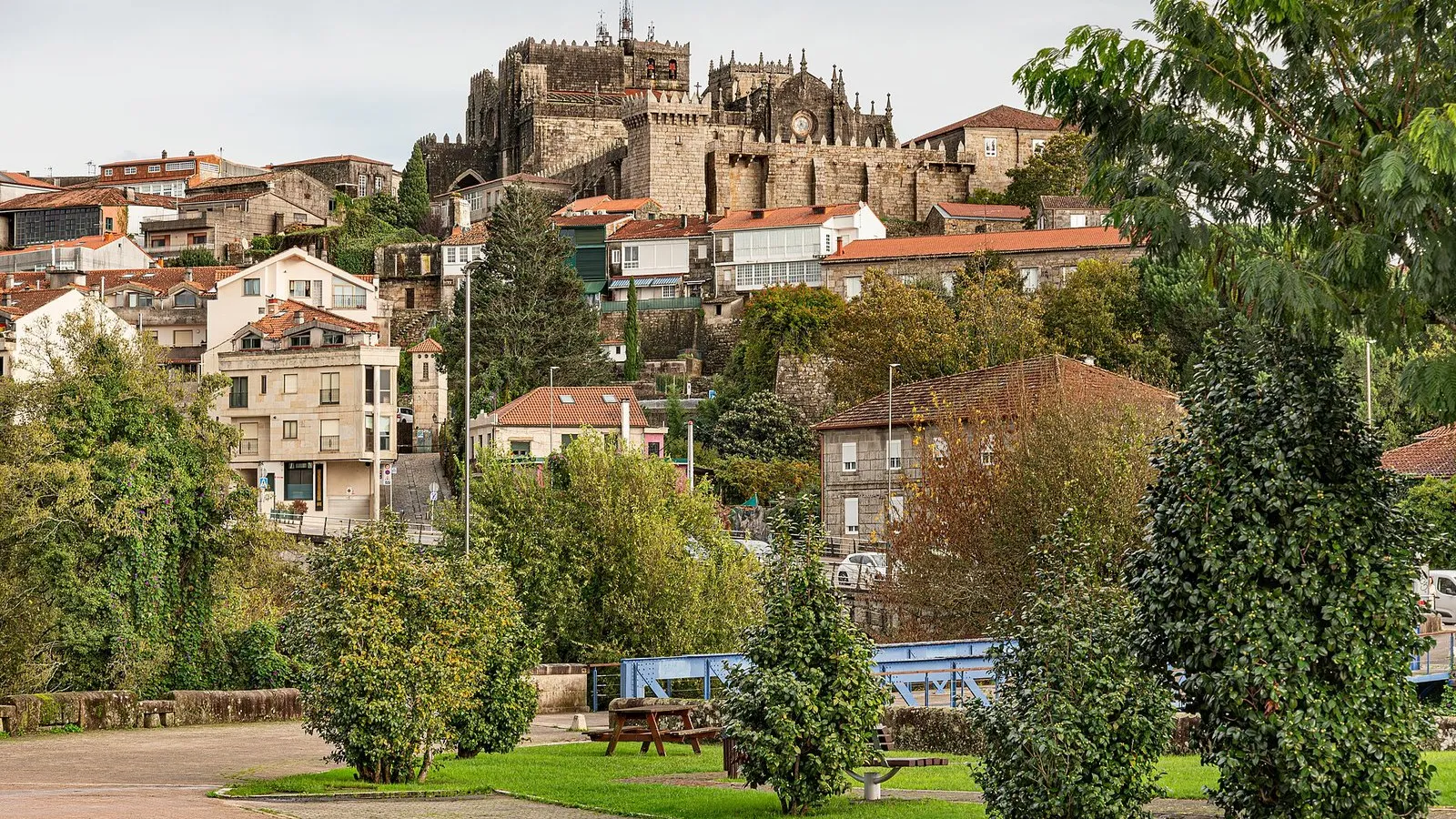
Featured photo: Tui, Pontevedra, Galicia, by Jorge Franganillo, CC BY 4.0, via Wikimedia Commons.
Frequently asked questions
Do I need my passport to cross from Portugal into Spain?
There’s no routine border check, since both countries are in the Schengen Area. But you should carry your passport or Portuguese residence card. Spanish police conduct identity checks inland, and hotels, ferries and car rental desks will ask for photo ID regardless of how you arrived.
What time is it in Spain compared to Portugal?
Spain is one hour ahead of Portugal all year. Portugal uses WET, Spain uses CET, and both change for daylight saving on the same dates, so the gap stays constant. Every Spanish opening hour, ferry departure and reservation you book is in Spanish time.
Will my Via Verde transponder work on Spanish motorways?
Only if your account has the Spain option enabled. It’s not automatic on every plan or device. Check with Via Verde before your trip. If it isn’t enabled, Spanish toll plazas accept cards and cash in clearly marked lanes, so you’re never stuck.
How do I visit the Cíes Islands?
Request an authorization from the Xunta de Galicia through their official system first, then book a ferry from Vigo, Cangas or Baiona. Ferry operators verify the authorization code. Visitor numbers are capped, ferries run seasonally, and summer slots go quickly, so book well in advance.
Can I take my Portuguese rental car into Spain?
Usually yes, but confirm with the agency. Some contracts allow it freely, others add a cross-border fee or require advance notice, and insurance terms can change outside the rental country. Get the answer in writing by email and keep it saved on your phone.
Which Galicia trip is best for a first visit?
Tui, without question. It’s minutes from Valença, needs no booking, and gives you a complete Spanish old town in an afternoon. Once you’ve done that crossing once, Vigo and Santiago stop feeling like a production and start feeling like errands.
Sources
This guide cites the following official sources. We link directly so you can verify every claim yourself.
- Xunta de Galiciaxunta.gal
- Turismo de Galiciaturismo.gal
- CP — Comboios de Portugalcp.pt
- Renferenfe.com
- IPMA — Instituto Português do Mar e da Atmosferaipma.pt
- Visit Portugalvisitportugal.com
Some links on this page are affiliate links. If you buy through them, we may earn a commission at no extra cost to you. How we research and update our guides