





On this page13 sections
- How does public transport work in Portugal?
- What does a monthly pass cost in Lisbon?
- What does a monthly pass cost in Porto?
- What is the Passe Ferroviário Verde, and what does it actually cover?
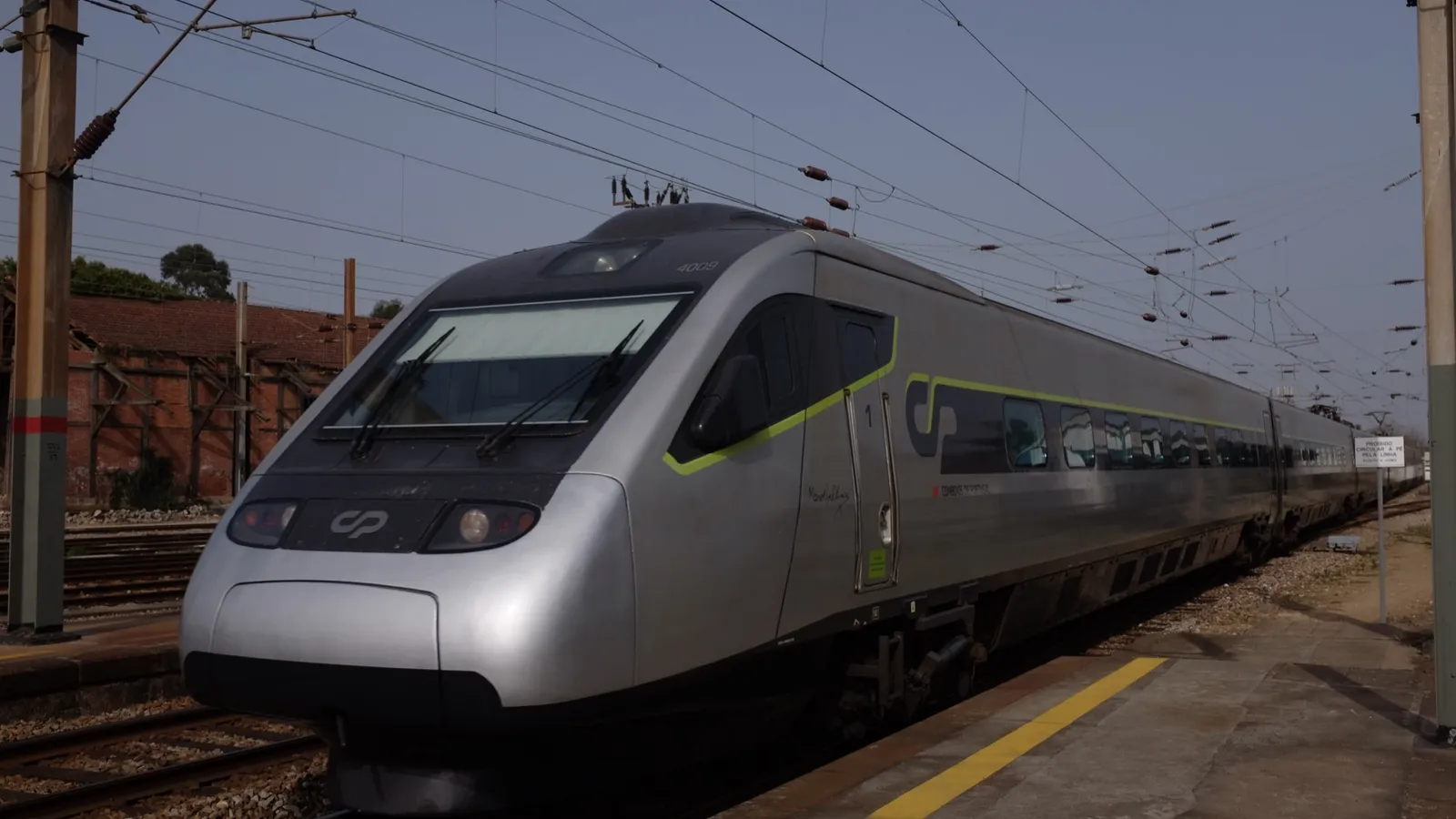
- What train types will I actually ride?
- Metro, tram, bus, and ferry: the rest of the network
- Single tickets: Viva Viagem, Navegante Ocasional, and Zapping
- Intercity coaches: Rede Expressos and FlixBus
- What if you live outside Lisbon or Porto?
- How do residents get a personalized transport card?
- Comparing costs: where does a pass pay for itself?
- Your next step
Key Takeaways: In the Lisbon area, the Navegante Municipal pass costs €30 a month for one city and the Navegante Metropolitano costs €40 for the whole metro area, covering metro, bus, tram, train, and ferry. Porto’s Andante uses the same two prices: €30 municipal, €40 metropolitan. Nationally, CP’s Passe Ferroviário Verde gives unlimited Regional, Inter-regional and 2nd-class Intercidades travel for €20 a month, and since the third week of September 2026 it also covers Lisbon and Porto urban trains. Everyone up to age 23 can get these passes for free under a scheme running since December 2024. Outside the two metro areas, service thins out fast, and many residents still need a car.
Public transport in Portugal works well if you live in or near Lisbon or Porto, and gets patchier the further you move from either city. This guide breaks down what the major passes actually cost in 2026, which trains and metro lines you’ll use day to day, and what residents need to do to get set up.
How does public transport work in Portugal?
Portugal’s public transport is organized around two integrated metropolitan systems, Lisbon’s Navegante and Porto’s Andante, plus a national rail operator (CP) and a patchwork of regional and intercity bus companies. If you live inside either metro area, one pass typically covers metro, bus, tram, commuter rail, and (in Lisbon) ferries. Outside those zones, transport is run city by city or by regional bus concessionaires, and coverage is far less consistent.
Both Lisbon and Porto also have single-use payment options (Viva Viagem/Navegante Ocasional and Andante) for visitors or people who ride only occasionally, priced by zone or by trip rather than by subscription.
What does a monthly pass cost in Lisbon?
The Lisbon metro area runs on the Navegante system, and pricing has stayed flat for 2026, the seventh year in a row without an increase, according to TMLmobilidade. There are two core monthly tiers.
| Pass | Coverage | Monthly price |
|---|---|---|
| Navegante Municipal | One municipality (e.g., just Lisbon, or just Sintra) | €30 |
| Navegante Metropolitano | All 18 municipalities of the Área Metropolitana de Lisboa, including Metro, Carris, CP urban lines, Fertagus, Transtejo/Soflusa ferries | €40 |
If you commute daily between a suburb and central Lisbon, for example Sintra or Almada into the city, the Metropolitano tier is the one that works: the Municipal pass stops at your municipality’s border, so every cross-border train, ferry or bus ride would be paid on top. Three cross-border round trips a month at typical single fares already cost more than the €10 difference.
Discounts: +65, family, and under-23
Navegante has reduced profiles for groups such as seniors and families, and some municipalities add their own discounts on top, so the price you pay depends on where you live; check navegante.pt or a Navegante sales point for your case. Separately, since December 1, 2024, everyone up to age 23, student or not, can get a free monthly pass (gov.pt). It’s loaded onto Navegante in Lisbon and Andante in Porto, and the government’s own announcement says the only thing you need is proof of age; the pass can be activated in the Navegante and Andante apps.
What does a monthly pass cost in Porto?
Porto’s Andante system mirrors Lisbon’s: the Andante Municipal costs €30 a month for travel within one municipality, and the Andante Metropolitano costs €40 for every line and operator in the Área Metropolitana do Porto, including Metro do Porto, STCP buses and CP urban trains. The metropolitan authority kept both prices unchanged for 2026 and updated only occasional tickets (amp.pt).
For single rides, Andante’s occasional tickets are zone-based: a Z2 ticket (the most commonly sold, covering over 60% of occasional trips) stayed at €1.40 in 2026, while Z3 rose slightly to €1.85. The zone number reflects how many fare zones your trip crosses, not a fixed geographic boundary, so check the zone before boarding if you’re unsure.
What is the Passe Ferroviário Verde, and what does it actually cover?
The Passe Ferroviário Verde is CP’s national rail pass, created by Decreto-Lei 73/2024 and on sale since October 2024. It costs €20 for 30 days, €40 for 60 days or €60 for 90 days, loaded onto a CP Card, and it’s open to Portuguese citizens and foreign residents (cp.pt).
What it covers:
- Regional and Inter-regional trains
- Intercidades in 2nd class, with a free seat reservation made in advance
- Coimbra urban trains
- Since the third week of September 2026, Lisbon and Porto urban trains and the Fertagus line across the Tagus (announced by the government on August 21, 2026)
What it doesn’t cover: Alfa Pendular, 1st class, and international trains such as the Celta to Vigo.
The September 2026 extension matters if you commute by train only. The government’s own example: someone going from Monte Abraão (Sintra) to Lisbon by train can switch from the €40 Navegante Metropolitano to the €20 rail pass and save €240 a year (portugal.gov.pt). If your commute also involves the metro or a bus at either end, the Navegante or Andante pass is still the one you need, because the rail pass stops at the station.
What train types will I actually ride?
CP runs several distinct service tiers, and ticket prices and booking rules differ between them:
| Service | Typical use | Booking |
|---|---|---|
| Alfa Pendular | Fast intercity (Lisbon–Porto, Lisbon–Faro) | Reserved seat, book ahead for best fares |
| Intercidades | Intercity, slightly slower, more stops | Reserved seat |
| Regional / Inter-regional | Smaller towns, longer routes at lower speed | Open seating, no reservation |
| Urban lines (Lisbon, Porto, Coimbra) | Commuter rail within metro areas | Covered by Navegante/Andante on many routes |
Tickets for Alfa Pendular and Intercidades are bought through cp.pt, the CP app, or ticket offices, and pricing depends on route and demand rather than a single fixed fare; check cp.pt directly before booking rather than relying on a cached number, since intercity fares move with demand.
Metro, tram, bus, and ferry: the rest of the network
Beyond Navegante and Andante, each city runs its own operators:
- Lisbon Metro: the underground network serving Lisbon and neighbouring Amadora and Odivelas, integrated into Navegante.
- Metro do Porto: a light-rail network reaching beyond Porto into Matosinhos, Maia, Vila Nova de Gaia, Gondomar and Póvoa de Varzim, integrated into Andante.
- Metro Sul do Tejo: light rail on the south bank of the Tagus (Almada, Seixal), also inside the Navegante zone.
- Metro Mondego (Coimbra): a bus rapid transit (BRT) system, not a rail metro despite the name. Its urban Coimbra section opened August 29, 2025, and the line to Serpins/Lousã opened December 16, 2025; a further branch to the university hospital was expected to complete in the first quarter of 2027 (portugal.gov.pt).
- Carris (Lisbon) and STCP (Porto): the main city bus and tram operators, both inside their respective metro passes.
- Transtejo/Soflusa (TTSL): the Tagus ferry operator connecting Lisbon to the south bank (Cacilhas, Seixal, Montijo, Barreiro), included in the Navegante Metropolitano.
Single tickets: Viva Viagem, Navegante Ocasional, and Zapping
If you’re not committing to a monthly pass, both cities sell reloadable cards for occasional use. In Lisbon, the 2026 fares on Metro and Carris are €1.90 for a single ticket, €1.72 per ride with Zapping (pay-as-you-go credit on the card) and €1.92 if you tap a bank card (metrolisboa.pt). In Porto, Andante’s occasional tickets are priced by zone: €1.40 for Z2, the most common trip, and €1.85 for Z3.
For visitors, Lisbon’s 24-hour tickets cost €7.25 for Carris and Metro, €10.35 adding the Cacilhas ferry, and €11.40 adding CP trains (metrolisboa.pt). At €1.72 per Zapping ride, the basic day ticket pays off from the fifth ride.
Intercity coaches: Rede Expressos and FlixBus
For towns without a train line, or for cheaper long-distance travel, Rede Expressos and FlixBus both run extensive coach networks connecting Lisbon, Porto, and smaller cities. Both are worth checking for routes CP doesn’t serve directly, but book through their own sites (rede-expressos.pt, flixbus.pt) since fares vary by date and route and aren’t published as fixed prices.
What if you live outside Lisbon or Porto?
This is the honest gap in the system. Once you’re outside the two metropolitan areas, there’s no equivalent flat-rate monthly pass covering an entire region, and bus frequency can drop to a handful of departures a day in smaller towns, sometimes fewer on weekends. If you’re settling in a rural district or a small interior town, expect to combine occasional regional buses with a car for daily life. If that’s your situation, it’s worth reading our guides on getting a Portuguese driver’s license and Via Verde for tolls, since driving becomes the default rather than the backup.
How do residents get a personalized transport card?
For either Navegante or Andante, you’ll generally need:
- Valid photo ID (passport, or your residence permit once you have it)
- A photo, if the sales point asks for one
- Proof of eligibility for any discounted profile (age, student status, pension)
In Lisbon, ask at a Navegante sales point such as a Metro, Carris or CP ticket office, or start at navegante.pt. In Porto, go to an Andante shop (linhandante.com lists them). Requirements and turnaround differ between operators, so check before you queue. The rail pass is separate: it goes on a CP Card, requested at a CP ticket office and then reloaded in the CP app, on cp.pt or at a ticket machine (cp.pt).
For top-ups, the Navegante and Andante apps (and the CP app for the rail pass) let you reload a monthly pass without queuing.
Comparing costs: where does a pass pay for itself?
In Lisbon, the €30 Navegante Municipal pays for itself after 18 Zapping rides at €1.72, so anyone commuting five days a week (about 40 to 44 rides a month) comes out well ahead. In Porto, the same €30 pass covers itself after 22 Z2 rides at €1.40. For anyone regularly crossing into the wider metro area, whether for work, an airport run, or visiting friends in a different suburb, the €40 metropolitan pass is usually the better deal even before counting the flexibility. And if your whole commute is on a train, compare it against the €20 rail pass first.
Your next step
Figure out which zone or pass tier matches your actual commute before signing up: a Navegante Municipal or Andante 2-zone pass is fine if you rarely leave your city, but anyone commuting across a metro area, or riding CP trains regularly, should compare the Metropolitano tier or the Passe Ferroviário Verde against their real trip count for the month. If you’re also budgeting for a car as a backup, our guides on cost of living for expats, living in Lisbon, and living in Porto go deeper on how transport fits into a full monthly budget, and our day trips from Lisbon guide is a good next stop once you’ve got your pass sorted.
Frequently asked questions
How much does public transport cost per month in Portugal?
It depends on where you live. In greater Lisbon, the Navegante Municipal pass (one municipality) is €30 a month and the Navegante Metropolitano (whole metro area, including CP, Fertagus, and ferries) is €40. In greater Porto, Andante works the same way: €30 for the Andante Municipal and €40 for the Andante Metropolitano. Outside these two metro areas, there is no equivalent flat-rate pass, and residents typically rely on regional bus operators or a car.
Is public transport free for young people in Portugal?
Since December 1, 2024, everyone up to age 23, student or not, can get a free monthly transport pass under a government-funded scheme, loaded onto Navegante in Lisbon and Andante in Porto. The only requirement the government lists is proof of age, and the pass can be activated in the Navegante and Andante apps or at a ticket office.
What is the Passe Ferroviário Verde and who can use it?
It is CP's national rail pass for Portuguese citizens and foreign residents: €20 for 30 days, €40 for 60 or €60 for 90, loaded onto a CP Card. It covers Regional and Inter-regional trains, Intercidades in 2nd class (with a free seat reservation), and Coimbra urban trains. From the third week of September 2026 it was extended to Lisbon and Porto urban trains and Fertagus. It does not cover Alfa Pendular, 1st class or international trains.
Do I need a car if I live outside Lisbon or Porto?
In most cases, yes, at least occasionally. Metro-area passes and dense bus networks cover Lisbon, Porto, and their immediate suburbs well, but rural interior towns and smaller cities often have limited timetables, sometimes a handful of daily buses. Many expats in villages or small towns end up buying or leasing a car for groceries, medical appointments, and work.
How do I get a personalized Navegante or Andante card?
Bring photo ID (passport or residence card) and expect to be asked for a photo; discounted profiles such as under-23 or senior passes need proof of eligibility. In Lisbon, ask at a Navegante sales point such as Metro, Carris or CP ticket offices; in Porto, at an Andante shop. Requirements and turnaround vary by operator, so check navegante.pt or linhandante.com before you go.
Sources
This guide cites the following official sources. We link directly so you can verify every claim yourself.
- Tmlmobilidadetmlmobilidade.pt
- CP — Comboios de Portugalcp.pt
- Filesfiles.diariodarepublica.pt
- Governo de Portugalportugal.gov.pt
- AMPamp.pt
- Stcpstcp.pt
- Metro do Portometrodoporto.pt
- Governo de Portugalgov.pt
- Metrolisboametrolisboa.pt
- Governo de Portugalportugal.gov.pt
Some links on this page are affiliate links. If you buy through them, we may earn a commission at no extra cost to you. How we research and update our guides