



On this page8 sections
- Which Portuguese regions have their own Christmas customs?
- Where is the madeiro, and can visitors join?
- What are the caretos and the Festa dos Rapazes in Trás-os-Montes?
- What does Christmas look like in the Alentejo?
- How do the Algarve and its nativity scenes celebrate?
- What happens in Madeira before Christmas?
- How do the Azores celebrate Christmas?
- Which region should you pick?
Portugal Christmas traditions change a lot from one region to the next. The interior north and centre light a big bonfire (the madeiro) at midnight on Christmas Eve, Trás-os-Montes villages hold masked winter festivals, the Algarve grows sprouted grain around its nativity scenes, and Madeira holds dawn masses and a market night in Funchal.
The national basics are the same everywhere (the Christmas Eve supper, gifts at midnight, the shops shut on the 25th), and they are covered in our guide to Christmas in Portugal. This post is about what differs by region, and which of those customs a visitor can actually go and see. For city lights and markets, see Christmas markets in Portugal.
Municipal programmes for 2026 were not announced as of 13 November 2026. The customs below are annual, but check the local council or tourism office for dates before you book.
Which Portuguese regions have their own Christmas customs?
Seven areas have well-documented local customs. Lisbon and the Centre coast are left out because no regional source covered them.
| Region | Key custom | When | Signature food |
|---|---|---|---|
| Minho and Douro | Madeiro bonfire, Cantares ao Menino | Dec 24, then to Epiphany | Bacalhau, then roupa-velha |
| Trás-os-Montes | Festa dos Rapazes, caretos | Dec 26 to Jan 6 | Cooked octopus or bacalhau, roast meat on the 25th |
| Beiras | Madeiro (Penamacor is known for a large one) | Dec 24 | Roast goat on the 25th |
| Alentejo | Fogueira do Menino, cante ao Menino with the ronca, Janeiras | Dec 24 to early Jan | Stuffed turkey, coscorões |
| Algarve | Presépio algarvio with sprouted grain | Dec 8 to Jan 6 | Bolo de mel |
| Madeira | Missas do Parto, Noite do Mercado | Dec 15 to 24 | Vinha d’alhos sandwiches |
| Azores | Lapinha nativities, house visits | Dec 24 to Jan 6 | Filhós de abóbora, fruit cake |
Where is the madeiro, and can visitors join?
The madeiro is a communal bonfire in the church square or yard. It is mainly practised across interior Portugal, from Trás-os-Montes down to the Alentejo, including parts of the districts of Bragança, Guarda, Castelo Branco and Portalegre. It is lit at midnight on Christmas Eve while Midnight Mass goes on inside.
The wood gathering is part of the custom. Some villages set logs aside early in winter, and others send out a group to collect them. In the Castelo Branco area, single young men have traditionally done the collecting. The church bell announces the group’s arrival, villagers help build the fire, and it can end up as tall as the church. Some people attend Mass while others stay by the fire through the night with stories, songs and wine, and the embers are kept for the winter.
Regional sources place the madeiro in the north and centre. In Minho, many villages gather around one after the Missa do Galo, and Trás-os-Montes has it too. In the Beiras, Penamacor is described as having one of the country’s largest bonfires. Roast goat with small potatoes is the typical meal on December 25 in the Beiras, after a Consoada of bacalhau with potatoes, cabbage, eggs and chickpeas.
In the Alentejo it is called the Fogueira do Menino. From early December residents stack wood in the main squares, and a large fire is lit on December 24. Barrancos is named as a place where people stay by the fire until the Missa do Galo. Castelo de Vide lights its fire on New Year’s Eve instead.
These are village events, so keep back from the flames and ask locals before joining in. Eat before you go and plan the drive back. The northern regions are also covered in our north Portugal road trip.
What are the caretos and the Festa dos Rapazes in Trás-os-Montes?
The Festa dos Rapazes, also called the Festa de Santo Estêvão, is described in the regional winter-festival agenda as probably the most important of the winter festivals in the Terra Fria Transmontana. It has its roots in old rites of passage from adolescence to adulthood. In the morning the young men parade through the streets in colourful costumes and the traditional caretos (masked figures), provoking, rattling cowbells and interacting with the onlookers.
The Festa dos Reis (Epiphany) is also still celebrated in many villages with these masked figures, so the season runs from Santo Estêvão to January 6. The 2024/25 agenda lists the Festa dos Rapazes de Varge, the Festa dos Rapazes de Aveleda, the Festa de Santo Estêvão de Ousilhão, the Festa de Santo Estêvão in Rebordelo and the Chocalheiro de Bemposta, among others, and Salsas and Baçal host Festa dos Reis events with caretos. The 2026/27 agenda was not located as of 13 November 2026, and individual villages set their own dates.
For a visitor, this is the winter event that is hardest to plan around. Plan on a car, a base in Bragança, Mirandela or Miranda do Douro, and a morning start. Ask the municipal tourism office which village is holding its festa that year, and ask before photographing the masked figures up close.
The food in Trás-os-Montes on the 24th is bacalhau or cooked octopus with egg, boiled potato and cabbage. Christmas Day brings canja and a roast such as turkey, suckling pig, lamb or pork, with migas doces and dried fruit among the sweets.
What does Christmas look like in the Alentejo?
Beyond the Fogueira do Menino, the Alentejo is known for its singing. The Janeiras are sung from house to house in early January in Évora, Elvas, Terrugem, Redondo and Vila Viçosa, and hosts customarily give the singers a small donation or gift.
Elvas has its own variation. The cante ao Menino, which was performed in churches and not door to door, is accompanied there by the ronca, a clay instrument with a membrane across its mouth and a reed that the player wets and rubs to produce a hoarse sound. On December 17, 2024, more than 2,000 people, mostly schoolchildren, played the ronca together at the Coliseu in Elvas in an attempt to set a Guinness record, as part of the “Viver a Tradição!” project run with the city council.
Monsaraz turns its walled village into a life-sized nativity, with scenes from the life of Christ around town. On the table, the Consoada is boiled cod with migas de couve or broa, then stuffed turkey with cured meats on the 25th. Look for coscorões, azevias and carolo cookies. Our Alentejo travel guide covers where to stay in these towns.
How do the Algarve and its nativity scenes celebrate?
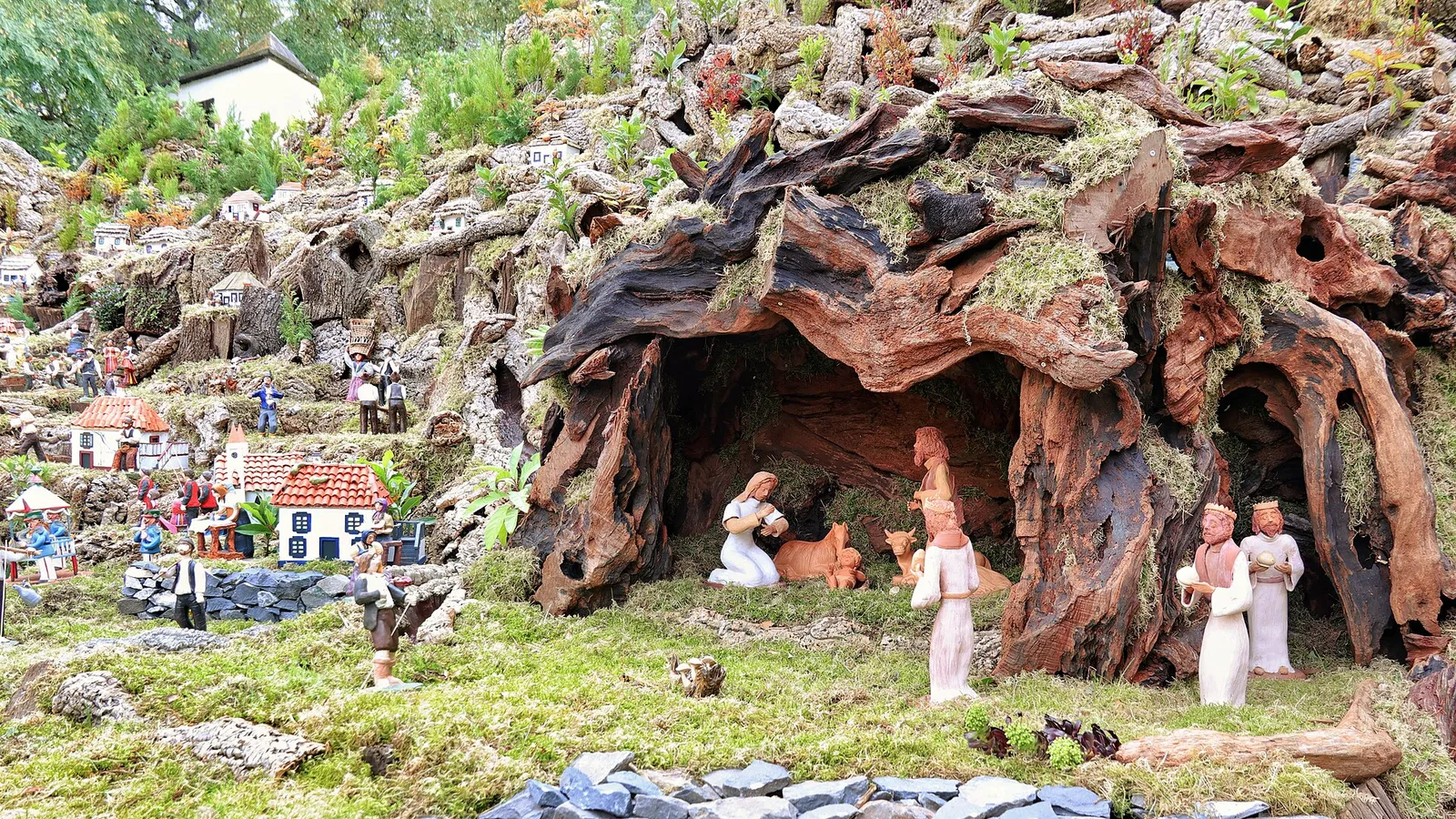
The presépio algarvio was traditionally built on a small tiered platform, often a stack of drawers with three steps, covered with a sheet or linen towels. Around the figure of the Child go searinhas, shoots of wheat, barley, corn, rye or alpiste grown in cups or saucers.
The grain is sown on December 8, the feast of Nossa Senhora da Conceição, and kept until Dia de Reis on January 6, when it is planted in the soil as a hope for good harvests. Oranges also decorate the platform. Loulé is named as a place where the stepped nativity is still made, and the Algarve’s typical dessert is bolo de mel, made with cane honey, dried fruit and spices, alongside almonds and other dried fruits.
The sprouted grain stays out until January 6, so check with Loulé’s town hall or tourism office for nativity displays you can visit. The Algarve road trip itinerary can anchor a winter drive.
What happens in Madeira before Christmas?
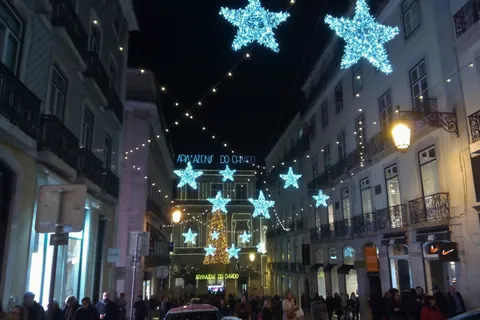
Madeira’s calendar starts early. Funchal’s lights switch on December 1, and the island’s celebrations run until January 7.
The Missas do Parto begin on December 15. Each parish holds nine masses, one for each month of Mary’s pregnancy, and some start as early as 5 a.m. Afterwards the church square often fills with folk music, hot cocoa, liqueurs and poncha. Pick a parish church in or near Funchal and go on a morning when you can be out at first light.
The Noite do Mercado is on the night of December 23 at the Mercado dos Lavradores in Funchal. The surrounding streets close to traffic and turn into an open-air market for fruit, vegetables, flowers, sweets and drinks, and inside the market people sing carols for over an hour, a tradition that began more than 40 years ago. The classic snack is a carne de vinha d’alhos sandwich, along with homemade liqueurs.
Also in Funchal, a giant nativity scene with hundreds of small figures covers the fountain at Largo da Restauração, and the Cantar dos Reis falls on the eve of Epiphany. Bolo do caco, broas, poncha and bolo-rei round out the island’s festive table. The official page links to a 2026 to 2029 tourism calendar but gave no 2026 dates for these events. Madeira’s New Year’s Eve fireworks have their own post: Madeira New Year fireworks.
How do the Azores celebrate Christmas?
The lapinha is the Azorean nativity. These small presépios are shown in glass cases and trace back to the Franciscan convents of São Miguel. Between Christmas and January 6, locals drive around São Miguel to look at them, and parish churches keep theirs lit for visitors. Named nativity stops include Furnas, Casa do Arcano, Manaias and Prior Evaristo Gouveia.
From Christmas Eve to Epiphany, families also visit each other’s homes to see the presépio, a custom called “correr os meninos”. Hosts serve liqueurs and sweets, and visitors traditionally put a set question to the hosts before entering. Homemade passion fruit, milk, anise and orange liqueurs are typical.
Food leans sweet and local. Filhós de abóbora, malassadas, massa sovada and a dense fruit cake (the most common cake) appear on the table. In Furnas, cozido cooked in volcanic ground is served on Christmas Day and New Year’s Day. Closures are heavier than on the mainland. Nearly all shops and supermarkets are closed on December 25, and buses and inter-island ferries do not run, so book ahead. See the Azores travel guide for island logistics.
Which region should you pick?
Madeira has the most fixed dates (December 15, 23 and 24), so it is the easiest to plan. The madeiro and the Trás-os-Montes festas need a car and flexible dates. The Alentejo combines a bonfire, singing and small walled towns. For the dishes behind many of these menus, see our Portuguese food guide.
Frequently asked questions
What is the madeiro in Portugal?
The madeiro is a communal Christmas bonfire lit outside the church while Midnight Mass takes place on December 24. It is practised mainly in interior Portugal, in parts of the districts of Bragança, Guarda, Castelo Branco and Portalegre. Some people go to Mass and others stay by the fire through the night.
Where can I see the Festa dos Rapazes?
The Festa dos Rapazes, also called the Festa de Santo Estêvão, is held in villages of the Terra Fria Transmontana in northeast Portugal. The regional winter-festival agenda for 2024/25 lists Varge, Ousilhão, Aveleda and Rebordelo among others. Exact dates differ by village, so check the current agenda from the Bragança tourism route.
What are the Missas do Parto in Madeira?
They are nine early-morning masses held in each parish before Christmas, one for each month of Mary's pregnancy. They begin on December 15, and some start as early as 5 a.m. Celebrations often continue in the church square after Mass with folk music, hot cocoa, liqueurs and poncha.
What is the Noite do Mercado in Funchal?
It is the night of December 23 at the Mercado dos Lavradores. The streets around the market close to traffic and become an open-air market, and people sing Christmas carols inside the market for over an hour. Vinha d'alhos meat sandwiches are the classic snack.
Is bolo de mel eaten across Portugal?
No. Bolo de mel, a cake made with cane honey, dried fruit and spices, is named as a regional sweet in Madeira and the Algarve. Other regions have their own sweets, such as coscorões in the Alentejo and a dense fruit cake in the Azores.
What are the Janeiras?
The Janeiras are songs sung house to house in the days around Epiphany on January 6. In the Alentejo, hosts traditionally give the singers a small gift, such as dried fruit or a donation, once the song ends.
Sources
This guide cites the following official sources. We link directly so you can verify every claim yourself.
- 24noticias24noticias.sapo.pt
- E Konomistae-konomista.pt
- Rotaterrafriarotaterrafria.com
- Visitalentejovisitalentejo.pt
- Noticiasaominutonoticiasaominuto.com
- Barlaventobarlavento.pt
- Visitmadeiravisitmadeira.com
- Visitmadeiravisitmadeira.com
- Azoresgetawaysazoresgetaways.com
Some links on this page are affiliate links. If you buy through them, we may earn a commission at no extra cost to you. How we research and update our guides